Happy New Year


https://i0.wp.com/wallpaper4god.com/wallpapers/happy-new-year--funny_4232_1280x800.jpg
May the grace of God abound more and more as you journey through the New Year!

Powered by ScribeFire.

The lesson of Thanksgiving: private property is best


The lesson of Thanksgiving: private property is best.


The First Thanksgiving, painted by Jean Leon G...
Image via Wikipedia

If individuals can take from a common pot regardless of how much they put in, each person has an incentive to be a free-rider, to do as little as possible because what one fails to take will be taken by someone else.  Soon, the pot is empty.What private property does – as the Pilgrims discovered –is connect effort to reward, creating an incentive for people to produce far more.  Then, if there’s a free market, people will trade their surpluses to others for the things they lack.  Mutual exchange for mutual benefit makes the community richer. John Stossel

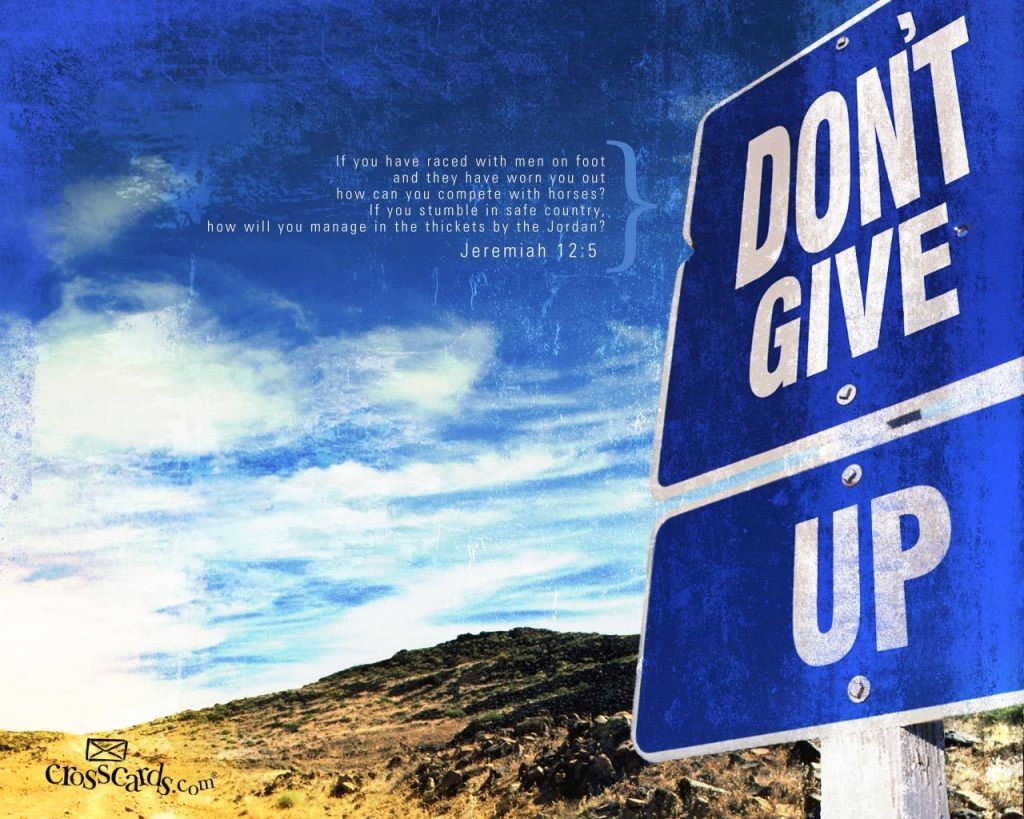
Never Give Up


As a Christian we have a higher power from which we can draw our strength from. Although there are many who rise up against you never forget that greater is He who is with you then he who is with them. We serve the greater good, the highest authority, and the final arbitrator of all things. He is the King of kings and the Lord of all lords. And you my child are a King’s kid.


Learning to Live Without By Living Within God's Laws


God didn’t give us a cowardly spirit but a spirit of power, love, and good judgment. 2 Timothy 1:7


In July 2010, the results of a Pew Survey of over 1,000 Christian households found an interesting result. The survey found that for those who consistently read their Bible every day, they have less mortgage payments, car payments, or unpaid credit cards. The less people read their Bible the more likely they were to have more debts among survey participants. There are two potential reasons for this clear difference.

The first reason is the discipline in one’s spiritual life often leads to greater disciplines in other areas of one’s life, including how someone manages their finances.

The second reason is those who consistently spend time in the scriptures are tapping into God’s wisdom and guidance for their daily financial decisions.

The survey found that daily Bible readers are more than twice as likely to give 10% or more of their income to God’s work at their church and other ministries. Daily Bible reading leads people to a conviction that God is their true Provider, and they are to be generous with whatever resources God entrusts to them during their lifetime.

Perhaps if the bible was not a forbidden book in our classrooms and public squares, more people would grow up fiscally responsible. Maybe if more people were exposed to the wisdom found in the pages of the bible, society as a whole would fair far better. If ‘we the people’ held our elected officials to a higher standard and required of them to demonstrate biblical values, perhaps our country would not find itself overdrawn, and overtaxed. Having more of our society engaged in bible study would possibly lead to an increase in charitable giving and therefore more resources would be available for the poor and sick among us.

No wonder the government wants to ban bible reading from as many places as possible because if more people tapped into the power of God available to them through the study of sacred scriptures there would be less need for government intervention in our daily lives.

And that is this week’s tail feather. Think about it.

But those who are waiting for the Lord will have new strength; they will get wings like eagles: running, they will not be tired, and walking, they will have no weariness. Isaiah 40:31 (BBE)

Along for the journey

7 Fascinating Facts About Founding Father Benjamin Franklin


I found this article very interesting and thought others would enjoy it as well. So here it is reprinted in part for my fellow travelers across the sky.

Benjamin Franklin
Image via Wikipedia

True, Founding Father Benjamin Franklin is on our $100 bill, but contrary to what many people believe, he was never president of the United States. He was far too busy to take on a job like that.As a scientist, writer, printer, philosopher, musician, politician, and inventor Franklin did more in a day than many people do in a lifetime. Here are some of our favorite Franklin facts.

He was a high school dropout. Franklin proved that you don’t need a fancy degree to succeed in life—due to family financial problems, he never graduated from high school.

He created America’s first library. In 1732, Franklin convinced a group of fellow intellectuals to create a library of their personal books, then added a subscription service, in which funds would be used to purchase new books for all to read. The Library Company of Philadelphia, as it was called, still exists today and has over 500,000 rare books.

He invented the first bifocal glasses, odometer, urinary catheter, lightning rod, and many other devices, yet never filed for a patent. Though any one of Franklin’s inventions could have made him a tremendous fortune, he wasn’t greedy about them. He believed that his work was for the common good, and “as we enjoy great advantages from the inventions of others, we should be glad of an opportunity to serve others by any invention of ours; and this we should do freely and generously,” he wrote in his autobiography. We bet he’d be a big fan of Creative Commons.

He Invented the Franklin Stove. In colonial America, most people warmed their homes by building a fire in a fireplace even though it was kind of dangerous and used a lot of wood. Ben figured that there had to be a better way. His invention of an iron furnace stove allowed people to warm their homes less dangerously and with less wood. Interestingly enough, Ben also established the first fire company and the first fire insurance company in order to help people live more safely.

He created a phonetic alphabet. Franklin’s alphabet got rid of six letters he thought were redundant, and added six new letters for other sounds. As you can probably tell, it never caught on.

As a young man, Franklin created a list of 13 virtues, and worked on obeying them throughout his life. Here is the list; you may find it helpful too:

Temperance: Eat not to dullness; drink not to elevation
Silence: Speak not but what may benefit others or yourself; avoid trifling conversations
Order: Let all your things have their places; let each part of your business have its time
Resolution: Resolve to perform what you ought; perform without fail what you resolve
Frugality: Make no expense but to do good to others or yourself; that is, waste nothing
Industry: Lose not time; be always employed in something useful; cut off all unnecessary actions
Sincerity: Use no hurtful deceit; think innocently and justly; speak accordingly Justice: Wrong none by doing injuries or omitting the benefits that are your duty Moderation: Avoid extremes; forbear resenting injuries so much as you think you deserve
Cleanliness: Tolerate no uncleanliness in body, clothes or habitation
Tranquility: Be not disturbed at trifles or accidents common or unavoidable Chastity: Rarely use venery but for health or offspring; never to dullness, weakness, or the injury of your own or another’s peace or reputation
Humility: Imitate Jesus and Socrates

20,000 people attended his funeral. Franklin truly was a rock star for his time—and he remains so today.

via 7 Fascinating Facts About Founding Father Benjamin Franklin | Gimundo | Good News… Served Daily.