
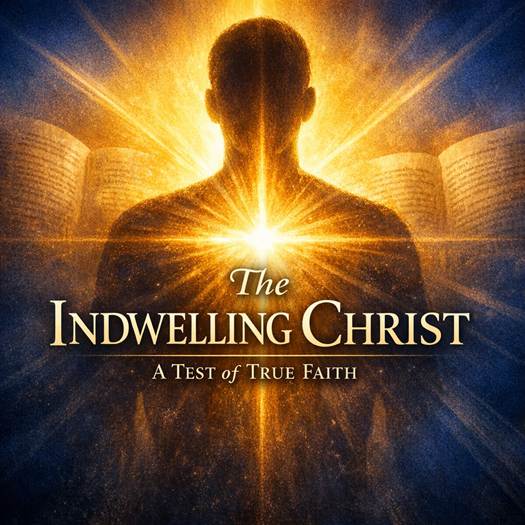
The Indwelling Christ: A Test of True Faith


A Call to Honest Examination

Paul’s command in 2 Corinthians 13:5 is not gentle counsel but a summons: “Examine yourselves to see whether you are in the faith; test yourselves.” He does not ask us to recall a moment of sincerity or to lean on a memory of spiritual awakening. He calls us to look honestly at the present reality of our inner life. The question is not whether we once believed, but whether Christ is truly dwelling within us now. Paul presses the point further: “Do you not realize that Christ Jesus is in you—unless, of course, you fail the test?” The test is not about religious activity. It is about indwelling. It is about whether the life of Christ is actually present and active within the believer.

Christ Within: The Only True Evidence

Scripture makes this standard unmistakably clear. Paul writes, “Christ in you, the hope of glory” (Colossians 1:27). If Christ is in us, there is hope. If Christ is not in us, there is no glory at all. John echoes this reality when he says, “He who has the Son has life; he who does not have the Son of God does not have life” (1 John 5:12). Life is not found in religious familiarity but in union with Christ Himself. Paul goes even further in Romans 8:9: “If anyone does not have the Spirit of Christ, he does not belong to Christ.” The dividing line is not church attendance, doctrinal agreement, or moral behavior. The dividing line is the presence or absence of Christ within.

The Danger of Overestimating Ourselves

This is why Paul warns us not to overestimate our spiritual condition. “Do not think of yourself more highly than you ought” (Romans 12:3). We are prone to assume devotion because we participate in religious environments. We sit in church, we sing the songs, we nod at the sermons, and we assume these things testify on our behalf. Yet Jesus confronted the most religious people of His day with devastating clarity: “This people honors Me with their lips, but their heart is far from Me” (Matthew 15:8). External proximity is not internal reality. The Pharisees prayed, fasted, tithed, taught Scripture, and yet Jesus said, “You are like whitewashed tombs… outwardly you appear righteous to men, but within you are full of dead men’s bones” (Matthew 23:27). They failed the test not because they lacked religious activity, but because they lacked the indwelling Christ.

The Voice That Reveals Our Allegiance

Jesus Himself defined the test of true discipleship with piercing simplicity: “My sheep hear My voice, and I know them, and they follow Me” (John 10:27). The evidence of belonging to Christ is not merely hearing Christian voices but hearing His. It is not following Christian culture but following Him. The modern church has trained many believers to outsource their spiritual discernment to pastors, authors, influencers, and institutions. Yet Jesus did not say, “My sheep hear their pastor’s voice.” He said they hear His. And He warned that many who assume they belong to Him will discover otherwise: “Not everyone who says to Me, ‘Lord, Lord,’ will enter the kingdom of heaven, but only he who does the will of My Father” (Matthew 7:21). Words are not proof. Obedience is.

The First Commandment as the True Measure

This is why the first commandment is the true measure of the heart. Jesus said, “You shall love the Lord your God with all your heart, and with all your soul, and with all your mind, and with all your strength” (Mark 12:30). That word all dismantles every rival authority. To love God with all your mind means His Word outranks the voices of media, academia, science, politics, and even our own understanding. Proverbs speaks directly to this: “Trust in the LORD with all your heart and lean not on your own understanding” (Proverbs 3:5). To love Him with all your heart means no affection competes with His. To love Him with all your strength means obedience is not occasional but the natural outflow of devotion. Jesus tied love and obedience together when He said, “If you love Me, you will keep My commandments” (John 14:15). Love without obedience is sentiment. Obedience without love is religion. True discipleship holds both.

Adam, Eve, and Abraham: Two Portraits of the Test

Scripture gives us two vivid portraits of this test. Adam and Eve failed it because they trusted another voice above God’s. The serpent questioned God’s character, and they embraced the lie. The text says, “When the woman saw that the tree was good for food… she took of its fruit and ate” (Genesis 3:6). They trusted their eyes over God’s Word. They leaned on their own understanding instead of His command. Their failure was not about fruit; it was about allegiance. Abraham, by contrast, passed the test because he trusted God’s character even when the command made no sense. When God said, “Take your son, your only son Isaac, whom you love… and offer him there” (Genesis 22:2), Abraham obeyed. Hebrews explains why: “He considered that God was able even to raise him from the dead” (Hebrews 11:19). Abraham trusted God’s voice above his own logic, above his emotions, above the visible circumstances. That is what passing the test looks like.

The Inner Witness of the Spirit

When Paul tells us to examine ourselves, he is calling us into that same clarity. He is asking whether Christ is truly the center of our affections, the anchor of our decisions, the voice that shapes our convictions, and the Lord who governs our steps. John gives us a simple diagnostic: “By this we know that we have come to know Him, if we keep His commandments” (1 John 2:3). Not perfectly, but sincerely. Not flawlessly, but faithfully. The presence of Christ produces repentance, humility, endurance, holiness, and a growing love for truth. The absence of Christ produces apathy, compromise, self‑rule, and selective obedience. Paul’s command is not meant to create fear but honesty. It is not meant to condemn but to reveal. And when Christ truly dwells within us, His Spirit bears witness with our spirit that we are children of God (Romans 8:16).

Christ in You: The Only Hope of Glory

For if Christ is in us, His presence will not remain hidden. His life will press outward. His voice will rise above the noise. His truth will confront our excuses. His holiness will shape our conduct. And His glory will begin to take form within us, even in quiet and unseen ways. But if Christ is not in us—if our faith is merely cultural, inherited, intellectual, or performative—then no amount of religious activity can compensate for His absence. Jesus warned of this with sobering clarity: “Apart from Me you can do nothing” (John 15:5). Without Him, we may appear spiritual, but we will lack the life that only He can give.

Returning to the Center

This is why Paul’s command matters. It calls us back to the center. It calls us to the first love. It calls us to the first commandment. It calls us to the living Christ who does not merely inspire from a distance but dwells within those who belong to Him. The hope of glory is not found in our performance, our knowledge, our traditions, or our religious habits. The hope of glory is Christ in us. And nothing less will do.

I Surrender All: A Devotional for Easter


The words of the hymn I Surrender All resonate deeply with the journey of faith. Written in 1896 by Judson W. Van DeVenter, this hymn emerged from a pivotal moment in his life. Van DeVenter, an accomplished artist, found himself torn between pursuing a career in the arts or stepping into full-time ministry. After wrestling with God’s call, he finally surrendered, choosing to dedicate his life entirely to serving Christ. This heartfelt act of yielding birthed one of the most beloved hymns in Christian worship—a timeless reminder of what it means to fully trust and submit to God.

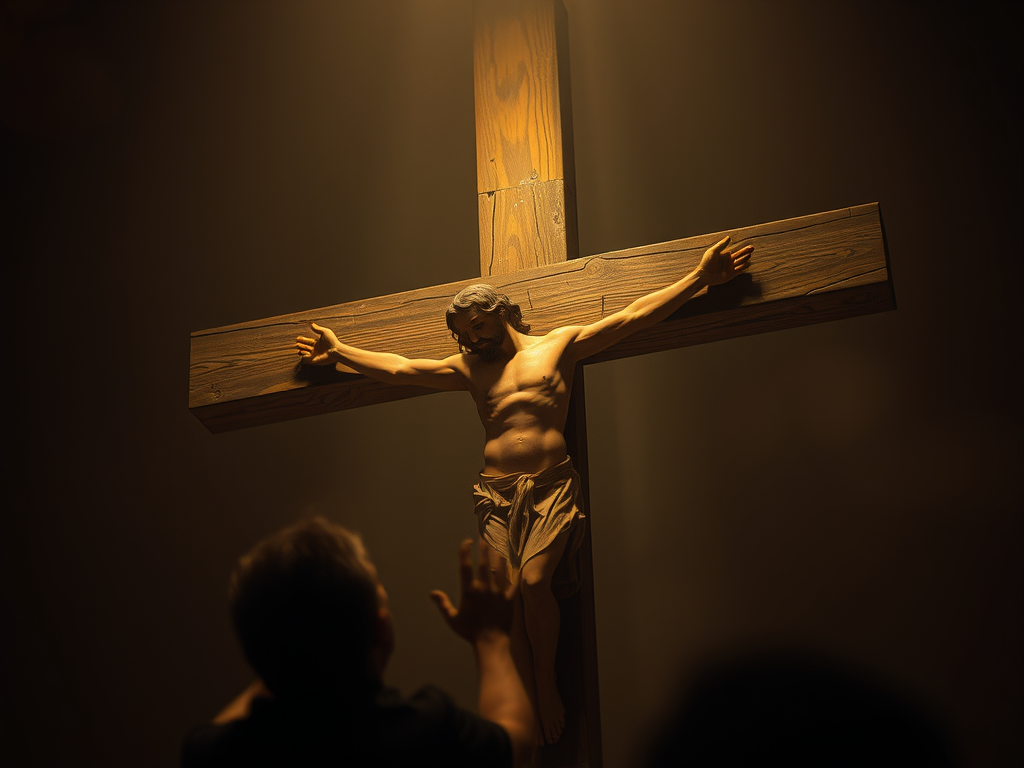
As we approach the heart of the Easter season, I Surrender All takes on an even deeper meaning. It reminds us of the ultimate act of surrender—Jesus Christ offering Himself on the cross for the redemption of humanity. The Son of God gave everything, holding nothing back, for the sake of love. His sacrifice invites us to examine our own lives and to ask: what might God be calling us to surrender in this season?

Surrender is not an easy concept. It challenges our desire for control, tests our faith, and often stretches us in uncomfortable ways. For some, surrender might mean letting go of fear or anxiety, trusting God to provide and guide. For others, it could involve reconciling broken relationships, relinquishing bitterness or pride, and choosing humility and love. Perhaps God is asking you to trust Him with your future, your career, or a dream you’ve been holding tightly to.

Easter is a time of reflection, renewal, and hope. Just as the empty tomb represents victory and new life, surrendering our hearts to God leads to transformation and peace. When we let go of our own plans and fully trust in Him, we find that His ways are higher, and His plans are greater than anything we could imagine.

Closing Prayer

Lord, as we reflect on the profound sacrifice of Jesus on the cross, may we open our hearts to fully surrender to You. Teach us to trust You with our fears, dreams, and burdens, knowing that in You, we find true peace and joy. Transform our hearts this Easter season and help us walk in the light of Your love. In Jesus’ name, Amen.

Cooperation is not Compromise


Integrity is not a conditional word. It doesn’t blow in the wind or change with the weather. It is your inner image of yourself, and if you look in there and see a man who won’t cheat, then you know he never will.” John D. MacDonald

When a man walks in integrity and justice, happy are his children after him. PROVERBS 20:7

It seems to me that the only time we hear the word compromise, or the concept of compromise is when the democrats do not have control of one house of the congress or the other. When they controlled both houses plus the White House I do not recall ever hearing the word compromise. Now that the American people voted to put some brakes on this current administration, every congressional impasse is met with the term compromise.

Have you noticed how it is usually the democrats telling the republicans that they need to compromise? If you can cite me examples of democrats willing to compromise with republicans I would welcome the response.

Compromising one’s ethics, integrity, and core values does not move morality and ethics forward, it dilutes them at best and negates them at worst.

Cooperation however can be achieved without compromising one’s principles and values. What we need are more men and women of conviction who will not compromise their values just to get along with the opposition.  With that being said I give you an article written by Debra Burgess. Be sure to stop by her website and show her some comment love.

Eagle out.

Cooperation For Integrity
By Debra Burgess

The time has come to learn what cooperation is. When I research it, I find the meaning to be “working or acting together for a common purpose or benefit”. Something stands out however; there is no synonym for its meaning to compromise.

Looking at historical references we can learn much. The downfall of nations all seem to begin in the heart of those who lead, or are in partnership with leaders. The downfalls begin because someone came into an agreement to compromise from what they knew to be right.

Imagine the possibilities if our leaders could be surrounded by those whose hearts are willing to cooperate but never compromise? Integrity could use some good press these days, but until we value it within ourselves we cannot appreciate its truth in others.

I love to encourage the heart of people to be who they are meant to be in Christ. My hope is anything offered of myself would be pleasing first to my Heavenly Father and secondly to bring a blessing to others.

http://www.debrabee.org

Enhanced by Zemanta

Who Died and Left you Boss?


You say, God says

Deutsch: Köln, Tora und Innenansicht der ehema...You say: “It’s impossible” God says: All things are possible (Luke 18:27)
You say: “I’m too tired” God says: I will give you rest (Matthew 11:28-30)
You say: “Nobody really loves me” God says: I love you (John 3:1 6 & John 3:34 )
You say: “I can’t go on” God says: My grace is sufficient (II Corinthians 12:9 & Psalm 91:15)
You say: “I can’t figure things out” God says: I will direct your steps (Proverbs 3:5- 6)
You say: “I can’t do it” God says: You can do all things (Philippians 4:13)
You say: “I’m not able” God says: I am able (II Corinthians 9:8)
You say: “It’s not worth it” God says: It will be worth it (Roman 8:28 )
You say: “I can’t forgive myself” God says: I Forgive you (I John 1:9 & Romans 8:1)
You say: “I can’t manage” God says: I will supply all your needs (Philippians 4:19)
You say: “I’m afraid” God says: I have not given you a spirit of fear (II Timothy 1:7)
You say: “I’m always worried and frustrated” God says: Cast all your cares on ME (I Peter 5:7)
You say: “I’m not smart enough” God says: I give you wisdom (I Corinthians 1:30)
You say: “I feel all alone” God says: I will never leave you or forsake you (Hebrews 13:5)

When it is all said and done God has the last word in all matters pertaining to life and death, therefore if anyone says something contrary to God’s word whom do you suppose will be proven wrong?

Today we are bombarded on all sides by ‘experts’ from every field of endeavor known to man but in the end all their combined expertise will pale when compared to the matchless majesty of God’s glory.  All the glory and honor bestowed upon man, and all the combined wisdom on the earth can not come close to the wisdom of God. So then the next time you want to have the last word think about it very carefully, for it would do you good to perhaps consider at least what God might just have to say about things.

Just another View from the Nest what say you?

But those who are waiting for the Lord will have new strength; they will get wings like eagles: running, they will not be tired, and walking, they will have no weariness. Isaiah 40:31 Open Link in New Window (BBE)

Along for the journey


__._,_.___
Enhanced by Zemanta

Wishful Thinking


“Using the same old materials of earth air, fire, and water, every twenty four hours God creates something new out of them. If you think you’re seeing the same show all over again seven times a week, you’re crazy. Every morning you wake up to something that in all eternity never was before and never will be again. And the you that wakes up was never the same before and will never be the same either.”
Frederick Buechner

Wishful Thinking: A theological ABC http://amplify.com/u/a1cguc

Enhanced by Zemanta