


Wednesday Worship: Jesus Paid It All


Opening Reflection

Hebrews 10 invites us to stand before the cross with clear eyes and a quieted heart. It reminds us that the law was never the destination. It was only the shadow of a greater reality yet to be revealed. The sacrifices of the Old Testament expose sin, but they never erase it. They bring people near, but they can not make them clean.

Christ, nevertheless, offered one sacrifice for sins for all time—and then He sat down. His work was finished. His offering was done. His blood accomplished what the law never could. It cleansed the conscience. It perfected those who draw near.

This is the truth that the beloved hymn Jesus Paid It All proclaims with such simplicity and power. Every believer confesses this. They have discovered that their hope does not rest in their own efforts. Instead, it rests in the finished work of Christ.


Scripture Anchor: Hebrews 10:12–14 (ESV)

“But when Christ had offered for all time a single sacrifice for sins, he sat down at the right hand of God… For by a single offering he has perfected for all time those who are being sanctified.”


Devotional

Hebrews 10 opens with a sobering reminder: the law was never meant to be the final answer. It was a shadow—a silhouette cast by something greater that had not yet appeared. The sacrifices of the Old Testament exposed sin, but they never erased it. They brought people near, but did not make them clean.

If the blood of bulls and goats had truly cleansed the conscience, the offerings would have stopped. But they didn’t. Year after year, the priests stood—always standing, always sacrificing—because the work was never finished. The very repetition of the sacrifices was proof of their insufficiency.

Hebrews 10:12 interrupts with the gospel in a single sentence. Christ offered one sacrifice for sins for all time. Then He sat down. The priests stood because their work was never done. Christ sat down because His work was finished.

This is the heart of the chapter: we do nothing because Jesus has done everything.

His sacrifice is not one more offering in a long line of attempts. It is the final offering. It is the perfect offering. It is the once-for-all offering. It actually cleanses the conscience and perfects those who draw near. The blood of Christ does what the law could never do—it makes us clean, whole, forgiven, and welcomed.

And this is where the hymn Jesus Paid It All becomes more than a song. It becomes a confession of faith that rises straight out of Hebrews 10. The hymn writer understood what the writer of Hebrews proclaimed. Our efforts and our striving cannot make us presentable before God. Our spiritual disciplines and attempts to “be better” are insufficient. None of these can make us presentable before God. They are good, but they are not atoning. They are helpful, but they are not saving.

We do not approach God because we have prayed enough. We do not approach God because we have behaved well enough. We do not approach God because we have avoided sin long enough. We approach God because Jesus paid it all.

And that changes everything.

Have you ever hesitated to come to God because you felt unworthy? Have you ever tried to “clean yourself up” before praying again? Have you ever believed the lie that you need a streak of good days before God will welcome you?

Hebrews 10 dismantles that lie. The hymn reinforces it. The cross settles it.

Your confidence before God is not rooted in your performance—it is rooted in Christ’s finished work. His sacrifice is not fragile. His blood is not temporary. His cleansing is not conditional. You are invited to draw near, not because you are worthy, but because He is.

So take a moment and ask yourself: Where am I still trying to offer God my own sacrifices?

  • My discipline
  • My consistency
  • My ministry
  • My moral effort
  • My attempts to “make up” for my failures

All of these things matter—but none of them save.

You are a son. You are a daughter. Not by your offerings, but by His.

And that is why generations have sung, and will continue to sing, that simple, liberating truth: Jesus paid it all. Not some. Not most. Not the part you can’t fix. All.


Hymn: Jesus Paid It All

Words: Elvina M. Hall (1865)
Music: John T. Grape (1868)

Verse 1
I hear the Savior say,
Thy strength indeed is small;
Child of weakness, watch and pray,
Find in Me thine all in all.

Refrain
Jesus paid it all,
All to Him I owe;
Sin had left a crimson stain,
He washed it white as snow.

Verse 2
Lord, now indeed I find
Thy power and Thine alone,
Can change the leper’s spots
And melt the heart of stone.

Refrain
Jesus paid it all,
All to Him I owe;
Sin had left a crimson stain,
He washed it white as snow.

Verse 3
For nothing good have I
Whereby Thy grace to claim;
I’ll wash my garments white
In the blood of Calv’ry’s Lamb.

Refrain
Jesus paid it all,
All to Him I owe;
Sin had left a crimson stain,
He washed it white as snow.

Verse 4
And when before the throne
I stand in Him complete,
“Jesus died my soul to save,”
My lips shall still repeat.

Refrain
Jesus paid it all,
All to Him I owe;
Sin had left a crimson stain,
He washed it white as snow.


Jesus Paid It All: take time to meditate upon this great hymn as you are reminded as to how great a love the Lord has bestowed upon us, sinners as we are.

About the Hymnwriter

Elvina M. Hall wrote the words to Jesus Paid It All. She was sitting in the choir loft of Monument Street Methodist Church in Baltimore. As she listened to the sermon, the lines began forming in her heart—a simple, profound declaration of Christ’s sufficiency. John T. Grape, the church organist, later composed the tune that carried her words into the worship of generations.

The hymn endures because its message is timeless: Christ has done what we could never do. His sacrifice is enough.


Closing Prayer

Lord Jesus, thank You for Your once-for-all sacrifice. Thank You that You have done what the law could never do. Thank You that we can draw near with confidence, not because of our worthiness, but because of Your finished work. Teach us to rest in the truth that You paid it all. Amen.


Benediction

May the God who perfected you through the sacrifice of His Son fill you with confidence. May He also fill you with peace and joy as you draw near to Him. Walk in the freedom of the cross. Know that Jesus paid it all. Nothing can be added to His finished work.
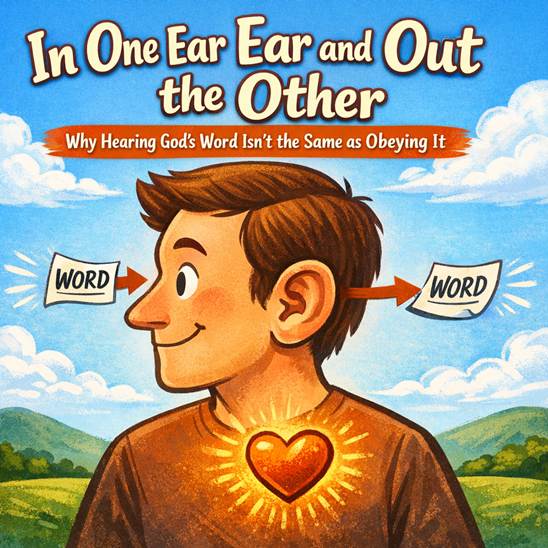

In One Ear and Out the Other: When the Word Never Reaches the Heart


A Funny Story With a Not‑So‑Funny Truth

Three men went deer hunting, and as they crossed a field on their way to the woods, a massive buck jumped up right in front of them. All three fired at the same moment. The buck dropped instantly, and the men hurried over—only to realize they had a problem. Who actually shot the deer?

As they stood there debating, a game warden approached to check licenses. Hearing the dilemma, he knelt down, examined the buck, and said, “One of you is a preacher, right?” Sure enough, one of them was. The warden nodded and said, “Well, the preacher’s the one who got him.” The men stared at him in disbelief. “How can you know that?” The warden shrugged. “Simple. The bullet went in one ear and out the other.”

It’s a humorous story, but beneath the laughter lies a sobering truth—one James warned the church about with prophetic clarity when he wrote, “Be doers of the word, and not hearers only, deceiving yourselves” (James 1:22).


When Hearing Becomes Self‑Deception

Hearing is not the problem. Hearing without obeying is. A message that goes in one ear and out the other never reaches the heart, and the heart is the only place where real transformation takes place. Jesus Himself said the greatest commandment is to “love the Lord your God with all your heart, with all your soul, with all your mind, and with all your strength” (Mark 12:30). The mind matters. The mind is essential. But the mind is not the destination. It is the doorway. The heart is the target.

The preacher in the story fired a shot that passed through the deer’s head but never touched the heart. It produced death, not life. It left a carcass, not a conversion. And that is exactly what happens when the Word of God is received only at the level of intellect. It may pass through the mind, but if it never penetrates the heart, it cannot produce obedience, repentance, or new life. It becomes information without transformation.


A Wound That Never Heals Becomes Fatal

Here is the deeper truth: a bullet that never reaches the heart can still kill you. It can wound you. It can tear flesh, rupture arteries, and leave you bleeding out. A wound is not harmless simply because it missed the center.

And the same is true of the Word when it is only received intellectually. A sermon aimed at the mind alone may not transform you, but it can still wound you. It can leave you convicted but unchanged, aware of truth but still resisting it. You can feel the sting of conviction without ever surrendering to it. And that kind of wound, left unattended, becomes spiritually fatal.

The writer of Hebrews says, “The word of God is living and active, sharper than any two‑edged sword, piercing to the division of soul and spirit, of joints and marrow, and discerning the thoughts and intentions of the heart” (Hebrews 4:12). The Word is designed to pierce. It is meant to cut deep enough to expose motives, confront sin, and bring healing through repentance. But when the Word is only admired, analyzed, or agreed with—when it is heard but not obeyed—it becomes a cut that never closes. Over time, the soul begins to hemorrhage. Not because the Word failed, but because the heart never yielded.


When the Lips Say “Amen” but the Heart Stays Distant

Jesus described this condition when He said, “This people honors Me with their lips, but their heart is far from Me” (Matthew 15:8). The mind can say “Amen” while the heart remains untouched. The intellect can applaud truth while the will refuses to bow to it.

James continues this warning by saying, “For if anyone is a hearer of the word and not a doer, he is like a man who looks intently at his natural face in a mirror… and goes away and at once forgets what he was like” (James 1:23–24). The problem is not the hearing. The problem is the forgetting. The problem is the lack of response. The problem is the absence of obedience.

Truth that only grazes the mind can still leave a person spiritually dying. Truth that never reaches the heart cannot save. Truth that never produces obedience becomes a slow bleed. Eternal death does not always come from outright rebellion. Sometimes it comes from a lifetime of sermons that never penetrated deeper than the intellect.


The Word Must Be Received With Surrender, Not Just Agreement

This is why preaching must aim for the heart. This is why hearing must lead to doing. This is why the Word must be received with surrender, not merely agreement. Jesus said, “Everyone then who hears these words of Mine and does them will be like a wise man who built his house on the rock” (Matthew 7:24). Hearing is the beginning. Doing is the evidence. Obedience is the fruit. Transformation is the result.

Do not let God’s Word pass through you without penetrating you. Do not let it skim the surface of your mind without sinking into the soil of your heart. Do not let it go in one ear and out the other. Slow down. Meditate. Respond. Obey. Let the Word reach the place where life is changed. Let it pierce, not to destroy, but to heal. Let it cut, not to wound, but to free. Let it strike the heart, for only there does the Word bring life. It isn’t about how much Bible you know or can quote but how much you actually put into practice.

Don’t let His Word go in one ear

and right out the other!

A Lesson Inside Goodwill


A Discount You Don’t Expect — And a Grace You Don’t Earn

I stopped into Goodwill as I often do. I quickly scanned for Corning Ware. It’s a treasure hunt among the shelves. It’s already a place where everything is marked down, everything affordable, everything priced for people who need a break.

The cashier asked whether I had any additional discounts. Specifically, they asked about a senior discount. I was caught off guard. A discount on top of a discount? At Goodwill?

I laughed and declined. Not because I couldn’t use the savings, but because I know the money helps people who need the opportunity. Still, the moment stayed with me. A discount on something already discounted. A kindness on top of a kindness.

And suddenly, Scripture whispered.

“Grace Upon Grace” — Not Stacked Blessings, But Steady Mercy

John wrote that “from His fullness we have all received, grace upon grace.” This isn’t grace like coupons or bonus points. It is grace in layers.

  • The first grace: God gives eternal life through Christ — the undeserved gift that changes everything.
  • The second grace: God continues to deal with His children patiently. He does so mercifully and with fatherly understanding. He guides them as they stumble through life.

He doesn’t throw a penalty flag every time someone missteps. He doesn’t eject His children from the game when they drift offside. He doesn’t call a foul every time they trip over their own humanity.

Scripture says:

  • He remembers that we are dust.
  • A bruised reed He will not break.
  • His mercies are new every morning.

This is grace upon grace. Not extra grace, but ongoing grace. It is the steady, patient, fatherly mercy of a God. He knows His children will stumble and still chooses to walk with them.

The Goodwill Lesson Hidden in Plain Sight

Goodwill already offers discounted prices. But then the cashier offered another discount — one that was unexpected and unrequested.

That moment became a reminder of how God deals with His people.

  • He saves — that is grace.
  • Then He continues to carry, forgive, restore, and patiently grow — that is grace upon grace.

People don’t always expect it. They don’t always think to ask for it. Sometimes they even decline it because they think they should pay their own way.

But God knows their frame. He knows their weaknesses. He knows their missteps before they make them.

And He chooses mercy anyway.

A Closing Thought

I walked out of Goodwill smiling. It was not because I saved money. It was because I was reminded of a God who gives more mercy than I realize. This happens even when I’m already living inside His grace.

Not stacked blessings. Not bonus coupons. Just a Father who refuses to give up on His children.

Grab a Friend and be the First to Witness the Power of Forgiveness in Theaters 2-25-11


Witness the Power of Forgiveness

Everything can change in an instant … and take a lifetime to unravel. When Mac McDonald loses his son in an accident, years of bitterness and pain erode his love for his family and leaves him angry with God … and everyone else.

Can Mac and Sam Wright, his new patrol partner, somehow join forces to help one another when it’s impossible to look past their differences—especially the most obvious one?

Every day, we have the opportunity to rebuild relationships and heal wounds by extending and receiving God’s grace. Offer THE GRACE CARD … and never underestimate the power of God’s love.
Learn more …

http://c0002737.cdn2.cloudfiles.rackspacecloud.com/thegracecard.swf

Permanent Records


Insight for your “Journey across the Sky”

A View from the Nest www.eagleviews.org

As far as the east is from the west, So far has He removed our transgressions from us. Psalms 103:12 (NKJV)

For I will be merciful to their unrighteousness, and their sins and their lawless deeds I will remember no more.” Heb 8:12 (NKJV)

image001

How many of us remember our school days and the permanent record? How many times have you, like me, been threatened with the words, “it is going into your permanent record”. It was the duty of the school to keep a permanent record of our activities both good and bad during our tenure. This permanent record was a history of who we were, when we were in that institution of higher learning. Ideally this permanent record would have been kept spotless and only list accomplishments, not the exploits of a wayward teen.

School discipline was something we feared as children. Being sent to the principals office was not a school trip we looked forward to taking. We feared the permanent record almost as much as we feared failing a class.

Some miscreants enjoyed the permanent record of misdeeds and foibles. To them it was a badge of honor, a written record of their misdeeds. They were proud of these outlandish acts that others thought were not so noteworthy. To them a trip to detention was an admirable goal. For me however it was something to be avoided at all costs.

image002Law enforcement has a record of all the lawbreakers in their data base as well. I wonder how many miscreants from high school found themselves with a permanent record of lawlessness? I wonder how many have permanent criminal records to coincide with their high school permanent records? I wonder how many of them spent time in a detention center of a different sort?
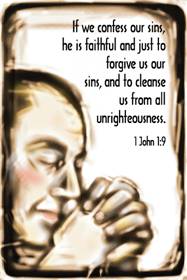
Truth be told we are all lawbreakers when it comes to the ways of God. The bible teaches clearly that no one is righteous. Romans 3:10 None of us seeks after what is true and right, we all like sheep have gone astray, each one following after our own way of doing things. Isaiah 53:6 We all have sinned and come short of God’s glory. Romans 3:23 We all have a record of wrongdoing so to speak. In the end we must stand before the principal and give an account of what we have done with our life. Revelation 20:12

Unlike the school district’s and law enforcement’s permanent records God does not keep a permanent record of wrongs. They are not written with a permanent marker. God made a way to erase all those permanent mistakes without having to endure detention. God’s way was to send someone else to detention in our place. God sent an advocate, a substitute, a scapegoat who would take our punishment for us. Jesus would take all our misdeeds with him to the cross of Calvary where they are forever engraved on his hands.

image003

If we accept Jesus as our Lord and Savior and acknowledge that he died for our sins, and if we repent of our sins, then Jesus will go to work on our permanent records to blot them out of God’s record book and replace them with forgiveness.

Therefore the only permanent marks in heaven are the marks in the hands, feet and side of Jesus. They are permanent reminders of the price he paid for our sins. A permanent mark of the sacrifice offered for our forgiveness. These scars are a permanent record of His love for us.

God loved the world this way: He gave his only Son so that everyone who believes in him will not die but will have eternal life. John 3:16 (GW)

But those who are waiting for the Lord will have new strength; they will get wings like eagles: running, they will not be tired, and walking, they will have no weariness. Isaiah 40:31 (BBE)