Reviving the Church: From Non-Prophet to Spirit-Led Community


“When the Church Becomes a Non-Prophet Organization”

🔥 The Silent Reformation: When the Gifts Go Missing

The Church today faces one of its most sobering realities. There is a quiet elimination of the very leadership gifts the Holy Spirit gave to equip and mature the Body. In many congregations, only the role of Pastor/Teacher remains visible. Even that role is often reduced to a weekly sermon and administrative oversight. The Evangelist was once a fiery voice calling the lost to repentance. Now, they are more often rebranded as a “missionary.” They are tucked away in foreign fields rather than stirring hearts at home.

But what of the Apostle? The Prophet? These foundational gifts (Ephesians 4:11–13) are not just absent—they are often unwelcome. Mainline churches have institutionalized themselves into a form of godliness in many cases. They deny the power and structure that God originally ordained.

This isn’t just a leadership issue—it’s a spiritual crisis. When the Church becomes a “non-prophet organization,” it loses its ability to:

  • Hear and declare the word of the Lord (Prophet)
  • Pioneer new territory and establish Kingdom order (Apostle)
  • Stir the hearts of the lost (Evangelist)
  • Shepherd and teach with clarity and compassion (Pastor/Teacher)

The result? A body that is undernourished, under-equipped, and often unaware of its true calling.

👤 Apostles as Fathers of the Faith

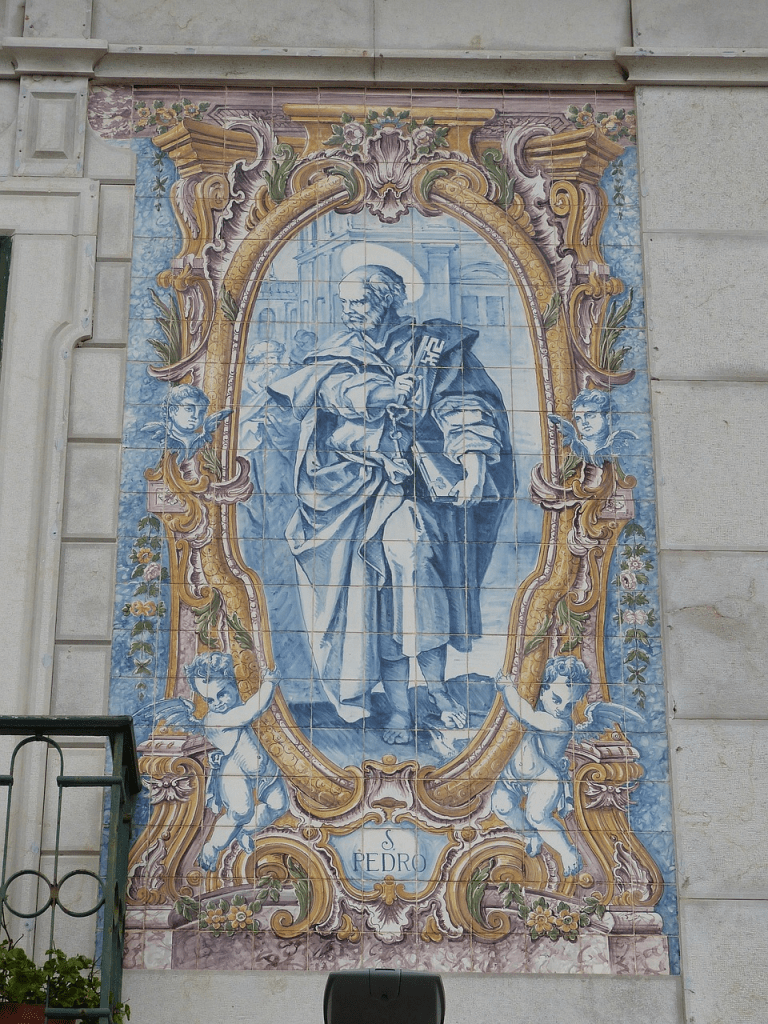
Apostle Peter

The early Church Fathers were direct disciples of the apostles. They were seen not just as theologians but as spiritual patriarchs. They preserved doctrine, corrected error, and nurtured the Church into maturity. Clement of Rome, for example, emphasized apostolic succession as a way to preserve the integrity of the faith. This idea of spiritual fatherhood was foundational to early Christian identity and governance.

Your framing of apostles as “fathers of the faith” aligns with this tradition. Apostles weren’t just pioneers. They were builders, correctors, and nurturers. They resembled a father raising children into maturity. Consider 1 Corinthians 4:15: “Though you have countless guides in Christ, you do not have many fathers…”

Fatherhood as a Lost Art in America

Modern sociologists and psychologists have echoed your concern about the decline of fatherhood in American culture:

  • Ray Williams describes America as becoming a “fatherless society,” with massive social consequences including poverty, crime, and emotional instability.
  • Psychology Today notes that the archetype of the father—as protector, moral guide, and stabilizer—has been eroded or distorted in modern narratives.
  • Don Unger, in Men Can, explores how the image and role of fathers have shifted, often being undervalued or misunderstood in both family and cultural life.

🔗 The Church and the Culture Mirror Each Other

The erosion of fatherhood in society is not just a sociological issue—it’s a spiritual one. The Church, by sidelining the apostolic and prophetic offices, has modeled a form of leadership that lacks fatherhood, correction, and generational vision. This absence has echoed into the culture, where natural fatherhood is now seen as optional, replaceable, or even irrelevant.

When the Church no longer raises up spiritual fathers, the result is a generation of believers who:

  • Struggle with spiritual identity
  • Resist correction and accountability
  • Lack maturity and direction
  • Chase trends instead of truth

This mirrors the broader cultural fallout of fatherlessness—emotional instability, rebellion, and a hunger for affirmation in all the wrong places.

The Crisis of Fatherhood: In the Church and the Culture

Explaining the need for these missing offices established by God shows a real lack of understanding on the part of the Reformation Church movement, which basically eliminated the Holy Spirit and gifts entirely. The Reformation Church movement, in its zeal to correct abuses, often swung the pendulum too far, sidelining the very gifts and offices that were meant to empower and mature the Body.

Restoring these offices isn’t just about leadership—it’s about reclaiming the Church’s identity and mission. Without apostles, prophets, evangelists, and Spirit-empowered pastors and teachers, the Church risks becoming a hollow institution rather than a living, breathing organism.

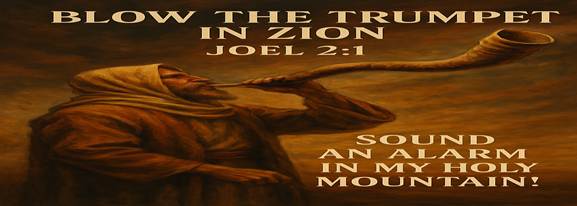
The trumpet sounds for a return to the fullness of God’s design—a Church that hears His voice, pioneers new territory, stirs the lost, and shepherds with compassion and clarity.

📖 Scriptural Support for Fatherhood

The Bible provides a wealth of guidance on the importance of fatherhood, both spiritual and natural:

  • Malachi 4:6: “He will turn the hearts of the fathers to their children, and the hearts of the children to their fathers; or else I will come and strike the land with total destruction.” This verse underscores the critical role of fathers in restoring relationships and preventing societal decay.
  • Ephesians 6:4: “Fathers, do not provoke your children to anger, but bring them up in the discipline and instruction of the Lord.” This highlights the father’s role in nurturing and guiding their children spiritually.
  • Proverbs 22:6: “Train up a child in the way he should go; even when he is old he will not depart from it.” This emphasizes the long-term impact of a father’s guidance.
  • 1 Corinthians 4:15: “Though you have countless guides in Christ, you do not have many fathers. For I became your father in Christ Jesus through the gospel.” This verse reflects the spiritual fatherhood role that apostles and church leaders are called to fulfill.

By integrating these scriptures, the Church can reclaim its role as a spiritual family, with fathers—both natural and spiritual—leading the way in nurturing, correcting, and guiding the next generation.

🔮 The Misunderstood Prophet: Truth in a Time of Tension

Prophet Daniel in the lion’s den

The prophetic office has always been controversial—because prophets don’t just comfort, they confront. They don’t just predict, they pierce. In a culture (and Church) that often prefers affirmation over accountability, the prophet’s voice is frequently silenced, sanitized, or sidelined.

🧱 What the Prophet Is Not:

  • Not a fortune-teller or spiritual entertainer
  • Not a self-appointed critic with a microphone
  • Not merely someone who “feels things deeply”

🔥 What the Prophet Is:

  • A mouthpiece for God’s heart and mind (Jeremiah 1:9)
  • A watchman who warns of danger (Ezekiel 33:7)
  • A plumb line for truth and holiness (Amos 7:7–8)
  • A builder who equips and strengthens the Church (1 Corinthians 14:3)

🚫 Why the Church Resists Prophets:

  • Prophets disrupt comfort zones
  • They expose hidden sin and institutional compromise
  • They challenge the status quo and call for repentance
  • They often speak what others are afraid to say

📖 Scriptural Anchors:

  • Jeremiah 1:10 – “See, I have set you this day over nations and over kingdoms, to pluck up and to break down, to destroy and to overthrow, to build and to plant.”
  • 1 Thessalonians 5:20–21 – “Do not despise prophecies, but test everything; hold fast what is good.”
  • Amos 3:7 – “Surely the Sovereign Lord does nothing without revealing his plan to his servants the prophets.”
  • Ephesians 2:20 – “Built on the foundation of the apostles and prophets, Christ Jesus himself being the cornerstone.”

Turning the Church Back into a “For Prophet” Organization

To restore the prophetic office is to restore the Church’s relevance and reverence. A Church that embraces the prophetic voice becomes:

  • A beacon of truth in a time of deception
  • A source of hope in a world of despair
  • A catalyst for repentance and revival
  • A community that hears and responds to the voice of God

The trumpet sounds for a return to the fullness of God’s design—a Church that hears His voice, pioneers new territory, stirs the lost, and shepherds with compassion and clarity. Let us not despise the prophetic gift but embrace it, test it, and hold fast to what is good.

🌱 The Evangelist: Sowers in the Vineyard

The role of the Evangelist is indispensable in the life of the Church. Without those who sow seeds of the Gospel, there can be no harvest. Evangelists are the planters in the vineyard, tirelessly working to bring the message of salvation to the lost.

📖 Scriptural Foundations:

  • Matthew 9:37–38: “Then he said to his disciples, ‘The harvest is plentiful, but the laborers are few; therefore pray earnestly to the Lord of the harvest to send out laborers into his harvest.’”
  • Romans 10:14–15: “How, then, can they call on the one they have not believed in? And how can they believe in the one of whom they have not heard? And how can they hear without someone preaching to them? And how can anyone preach unless they are sent? As it is written: ‘How beautiful are the feet of those who bring good news!’”
  • 2 Timothy 4:5: “But you, keep your head in all situations, endure hardship, do the work of an evangelist, discharge all the duties of your ministry.”

🌍 The Evangelist’s Mission:

Evangelist John the Revelator

Evangelists are not just preachers—they are heralds of the Kingdom, bringing the good news to every corner of the earth. Their mission is to:

  • Proclaim the Gospel with clarity and conviction
  • Call sinners to repentance and faith in Christ
  • Equip the Church to share the Gospel
  • Pioneer new ministries and outreach efforts

🚨 The Church’s Neglect:

Many churches have sidelined the role of the Evangelist, relegating it to foreign missions or occasional revival meetings. This neglect has led to a lack of evangelistic fervor within local congregations, resulting in stagnation and decline.

🌟 Restoring the Evangelistic Gift:

To restore the Church’s vitality, we must reemphasize the importance of the Evangelist. This includes:

  • Recognizing and affirming those with the gift of evangelism
  • Providing training and resources for effective Gospel outreach
  • Creating opportunities for evangelistic ministry within the local church
  • Celebrating the fruit of evangelistic efforts

The Evangelist is a God-ordained gift to the Church, essential for its growth and health. Let us not ignore this vital role but embrace it with the urgency and passion it deserves.

🌟 The Overlooked Gifts: A Call to Action

Beyond the Evangelist, there are many other spiritual gifts that are often ignored or underutilized in the Church today. These gifts, given by the Holy Spirit, are meant to build up the Body of Christ and advance the Kingdom of God.

📖 Scriptural Basis:

  • 1 Corinthians 12:4–7: “There are different kinds of gifts, but the same Spirit distributes them. There are different kinds of service, but the same Lord. There are different kinds of working, but in all of them and in everyone it is the same God at work. Now to each one the manifestation of the Spirit is given for the common good.”
  • Ephesians 4:11–13: “So Christ himself gave the apostles, the prophets, the evangelists, the pastors and teachers, to equip his people for works of service, so that the body of Christ may be built up until we all reach unity in the faith and in the knowledge of the Son of God and become mature, attaining to the whole measure of the fullness of Christ.”

🌈 A Diversity of Gifts:

The Holy Spirit has given a wide variety of gifts to the Church, including:

  • Teaching: The ability to explain and apply God’s Word effectively
  • Healing: A gift of faith and prayer to bring physical and spiritual healing
  • Administration: The ability to organize and lead with wisdom and efficiency
  • Hospitality: A heart to welcome and care for others
  • Discernment: The ability to distinguish between truth and error

🚀 A Call to Action:

The Church must:

  • Identify and nurture these gifts within its members
  • Create opportunities for these gifts to be exercised
  • Celebrate the diversity of gifts as a reflection of God’s creativity and purpose

By embracing the full spectrum of spiritual gifts, the Church can become the vibrant, Spirit-filled community God intended it to be. Let us not quench the Spirit but fan into flame the gifts He has given for the common good.

🌟 The Pastor/Teacher: Builders of Maturity

The role of the Pastor/Teacher is foundational to the Church’s mission of equipping believers and fostering spiritual growth. These leaders are not merely caretakers—they are builders, charged with developing disciples who can carry forward the work of the Kingdom.

📖 Scriptural Foundations:

  • Ephesians 4:11–13: “So Christ himself gave the apostles, the prophets, the evangelists, the pastors and teachers, to equip his people for works of service, so that the body of Christ may be built up until we all reach unity in the faith and in the knowledge of the Son of God and become mature, attaining to the whole measure of the fullness of Christ.”
  • Hebrews 5:12–14: “In fact, though by this time you ought to be teachers, you need someone to teach you the elementary truths of God’s word all over again. You need milk, not solid food! Anyone who lives on milk, being still an infant, is not acquainted with the teaching about righteousness. But solid food is for the mature, who by constant use have trained themselves to distinguish good from evil.”
  • 2 Timothy 2:2: “And the things you have heard me say in the presence of many witnesses entrust to reliable people who will also be qualified to teach others.”

🌱 The Pastor/Teacher’s Mission:

Pastors and teachers are called to:

  • Equip believers with a deep understanding of God’s Word
  • Foster spiritual maturity and discernment
  • Develop new leaders and disciples from within the congregation
  • Create a culture of growth and multiplication

🚨 The Church’s Challenge:

A vibrant church is one that continually raises up leaders from within, rather than relying on external replacements for pastors and teachers. This requires intentional investment in discipleship and leadership development.

🌟 Restoring the Pastor/Teacher Role:

To restore the Church’s vitality, we must reemphasize the importance of the Pastor/Teacher. This includes:

  • Recognizing and affirming those with the gift of teaching and shepherding
  • Providing training and resources for effective discipleship
  • Creating opportunities for leadership development within the local church
  • Celebrating the fruit of spiritual growth and maturity

The Pastor/Teacher is a God-ordained gift to the Church, essential for its growth and health. Let us not ignore this vital role but embrace it with the urgency and passion it deserves.

🎁 Wrapping It All Together

The Church is called to be a living, breathing organism—a vibrant community that reflects the fullness of God’s design. This means embracing the diversity of gifts, restoring the offices of apostle, prophet, evangelist, pastor, and teacher, and nurturing the spiritual family with fathers and mothers who guide, correct, and inspire.

Let us rise to the challenge of becoming a “for prophet” organization once again. Let us hear the trumpet sound and respond with faith, courage, and action. The harvest is plentiful, the gifts are abundant, and the Spirit is ready to empower us for the work ahead.

May we be a Church that hears His voice, pioneers new territory, stirs the lost, and shepherds with compassion and clarity. The time is now. The call is clear. Let us answer with all our hearts.

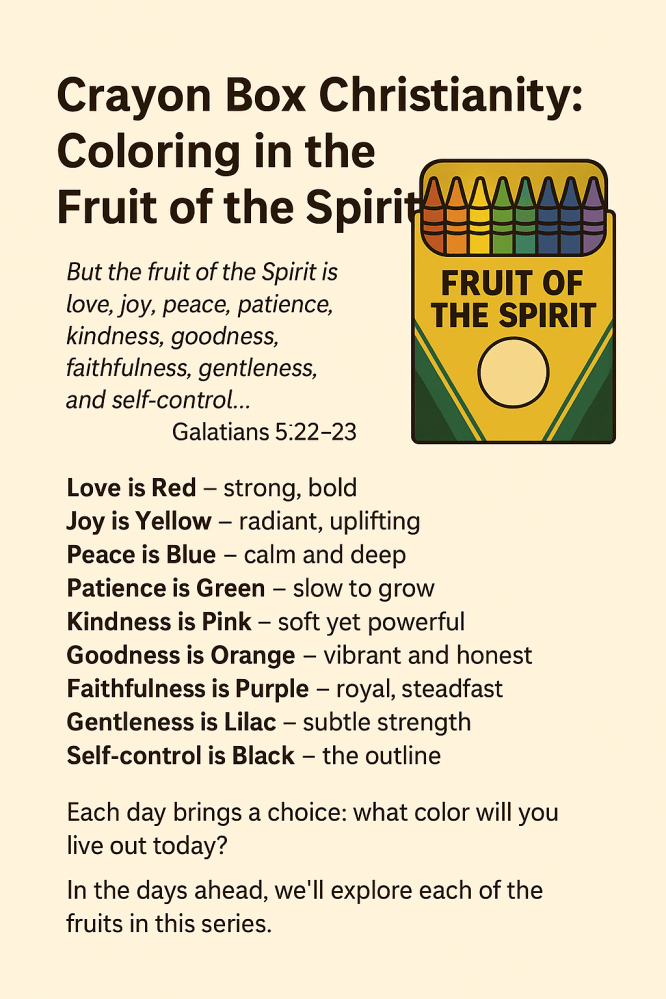
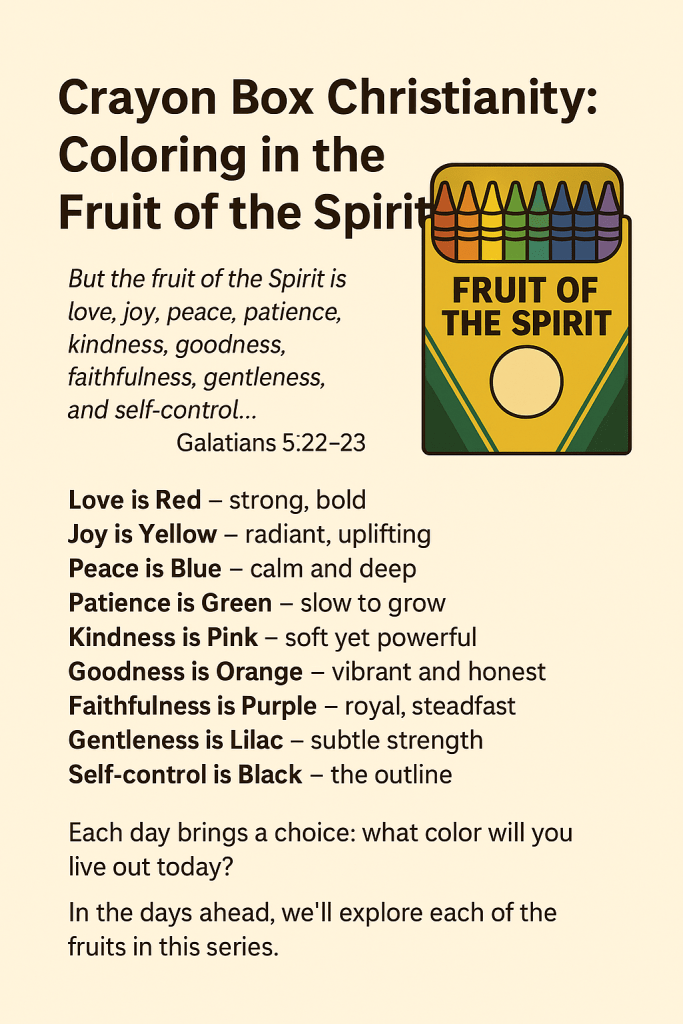
Crayon Box Christianity: Coloring in the Fruit of the Spirit


But the fruit of the Spirit is
love, joy, peace, patience, kindness, goodness, faithfulness, gentleness, and self-control.
Galatians 5:22–23

Ever opened a fresh box of crayons and just paused? The smell of wax. The vibrancy. Each one sharpened and ready—full of promise.
That’s how the Holy Spirit works in us: coloring our lives with divine traits that reflect God’s heart.

Let’s color it in:

❤️ Love is Red – Bold. Foundational. The base coat of grace.
💛 Joy is Yellow – Bright. Uplifting. The sunshine that refuses to be dimmed.
💙 Peace is Blue – Calming. Steady. A cool current in chaotic waters.
💚 Patience is Green – Growing. Grounded. Gentle strength in every season.
💕 Kindness is Pink – Tender. Compassionate. Soft enough to heal wounds.
🧡 Goodness is Orange – Vibrant. Honest. A visible virtue.
💜 Faithfulness is Purple – Loyal. Regal. Not swayed by storms.
🌸 Gentleness is Lilac – Subtle. Strong. A whisper that moves mountains.
🖤 Self-control is Black – The outline. The boundary. The wisdom that holds everything in place.

Every day, the Spirit hands us the crayon box.
The question isn’t “Are you gifted?”
It’s “What fruit-color are you letting shine today?”

Even if you’re feeling broken, worn down, or only good for scribbles, God can still use you to create beauty—on someone’s heart, in someone’s storm, through someone’s doubt.

Stay tuned: this is just the first stroke of the canvas.
Next up, we’ll dive into each Fruit of the Spirit—one color at a time—and see how God’s palette transforms our walk.

Make sure you sign up to receive all devotionals in this series: Coloring in the Fruits of the Spirit.

Title: Stop Wasting Gifts: The Shocking Truth About Church Unity


Random Ramblings from the Resident Raptor

Intro

Is your church – the place you count on for spiritual food and fellowship – unknowingly holding itself back? What if I told you that many congregations, maybe even yours, are unintentionally undermining their own unity and strength? How? By overlooking or downplaying the very gifts God has given them to flourish. It’s a tough pill to swallow, but the truth is, countless spiritual talents are gathering dust – unused, unappreciated, or even dismissed. This leads to a fractured and less effective Body of Christ. Stick with me as we dig into the biblical truth that every spiritual gift is essential, and how truly welcoming this God-given diversity isn’t just a nice idea, but the absolute key to a vibrant, interconnected church.

Section 1: The Problem – Wasting Gifts, Sabotaging Unity

We talk a lot about unity in the church, don’t we? It’s a beautiful idea, even a command from God. Jesus himself prayed passionately for it in John 17 – that his followers would be one, so the world would believe. But what does that unity look like? Is it about everyone thinking, acting, and serving in the exact same way? Not a chance. The Bible shows us a unity that’s born from diversity – like a beautiful harmony of different notes, not just one long, boring hum.

The problem, the “shocking truth,” is that many churches have quietly stumbled into a trap. We’ve, often without meaning to, created a sort of ranking system for spiritual gifts. Some gifts get all the attention, put on a pedestal – you know, the more visible ones like preaching, teaching, or leading worship. Meanwhile, other gifts – often the quieter, less public, or maybe less understood ones – get pushed to the side, seen as less important, or sometimes completely ignored.

Think about it. When was the last time your church got as excited about celebrating the gift of helps, or mercy, or administration as it did for a powerful sermon? When did you last hear a message emphasizing how crucial those with gifts of discernment, hospitality, or giving are to the church’s health and outreach?

Now, this usually doesn’t come from a bad place. Often, it’s just due to misunderstanding, not enough teaching on the subject, or a cultural tendency to value what looks most impressive on the surface or gives the quickest results. But the result? Gifts get wasted. And when gifts are wasted, the One who gave them isn’t fully honored, and His Body, the church, suffers. We’re telling parts of the Body that they’re not needed, or at least, not as much. This flies right in the face of what the Bible teaches and is a surefire way to wreck the very unity we say we want. It doesn’t breed unity; it breeds division, not over big theological debates, but over something as basic as undervaluing God’s diverse gifts.

Section 2: Agitating the Problem – The Shocking Truth & Consequences

So, what really happens when a church devalues or ignores certain spiritual gifts? This is where that “shocking truth” lands a punch. It’s not just a small hiccup; it’s a major blow to the church’s energy and its mission.

First off, disunity and division start to grow. The Apostle Paul, in 1 Corinthians 12, uses the human body as an example. He asks, “If the foot should say, ‘Because I am not a hand, I do not belong to the body,’ that would not make it any less a part of the body.” [1 Corinthians 12:15]. When certain gifts are constantly overlooked or not appreciated, the members with those gifts can feel just like that foot – pushed to the side, believing they don’t truly belong or that what they offer isn’t valued. This can lead to frustration, resentment, and eventually, people just checking out. Folks might pull back, not ’cause they don’t love God, but because they just don’t see where their unique, God-given talents fit in. This creates cliques, an “us vs. them” vibe between the “star players” and the seemingly “less gifted,” which is a sad irony in the Body of Christ. Paul warns us about this, saying “there should be no division in the body, but that its parts should have equal concern for each other.” [1 Corinthians 12:25].

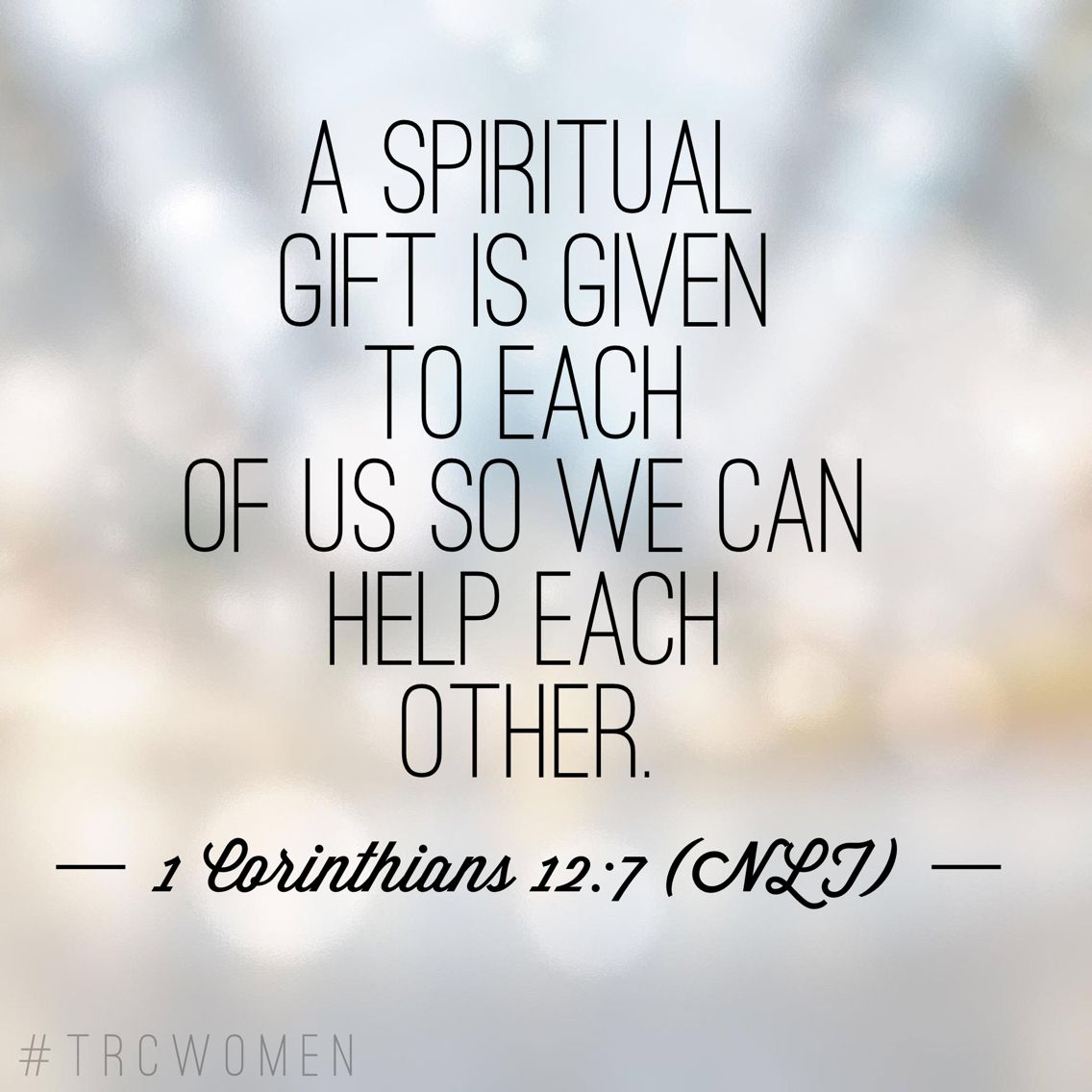
Secondly, the church’s overall effectiveness gets crippled. Imagine an army where only the front-line soldiers are valued, and the supply lines, and intelligence, and medical teams are ignored. How well would that army do? It’s the same with the church. We have a mission – to make disciples, to be salt and light, to care for a hurting world. If we’re only using a small slice of the available gifts, we’re essentially fighting with one hand tied behind our back. We miss out on critical insights from those with wisdom, compassionate care from those with mercy, vital organization from those with administration, and essential support from those with the gift of helps. The “common good,” which Paul says is why the Spirit shows up with these gifts, is seriously reduced. [1 Corinthians 12:7]. The church becomes less flexible, less resilient, and less able to meet the many needs both inside its doors and out in the community it’s called to serve.

Thirdly, individual believers get stunted in their spiritual growth and personal fulfillment. Spiritual gifts aren’t just for the church’s benefit; they’re also how we connect with God and grow in our faith. When believers aren’t encouraged or given chances to use their God-given gifts, they miss out on the joy and spiritual development that comes from serving in their own unique way. They might feel unfulfilled, wonder about their purpose, or even start doubting God’s work in their lives. God wants every believer to be an active, contributing player, not just a spectator. Ignoring this leads to a church full of underdeveloped members, instead of a body growing up strong in Christ.

And maybe the biggest shocker? We end up painting a wrong picture of God. The variety of gifts reflects God’s amazing, multifaceted nature – His creativity, His wisdom, His love in all its different expressions. When we limit or rank gifts, we’re showing a small, warped version of who God is. A church that truly honors all gifts, on the other hand, displays the incredible range of God’s genius and His fair, loving heart for all His children.

The truth is, a church that wastes gifts is a church settling for less than what God has in mind. It might look busy, but it’s not truly healthy or unified in the way the Bible describes. This isn’t just some minor theological point; it’s a spiritual wake-up call that needs our attention.

Section 3: The Biblical Solution – Every Gift is Essential

The good news is, the Bible doesn’t just point out the problem; it gives us a clear and powerful solution. That solution is all about understanding and truly embracing the biblical idea that every spiritual gift is vital, given by the same Spirit, for the same goal: to build up the Body of Christ in unity and love.

So, where do we find this in the Bible? Well, 1 Corinthians 12 is a great place to start – it really breaks it all down. Paul kicks off by saying, “Now there are varieties of gifts, but the same Spirit; and there are varieties of service, but the same Lord; and there are varieties of activities, but it is the same God who empowers them all in everyone. To each is given the manifestation of the Spirit for the common good.” (1 Corinthians 12:4-7). Did you catch that? Varieties of gifts, but the same Spirit, the same Lord, the same God. That right there tears down any reason to lift one gift above another because of how “important” it seems. They all come from God Himself.

Paul then lists a whole range of gifts: wisdom, knowledge, faith, healing, miracles, prophecy, discerning spirits, tongues, and interpreting tongues. [1 Corinthians 12:8-10]. And importantly, he doesn’t stop there. Over in Romans 12:6-8, he adds more: serving, teaching, encouraging, contributing (or giving), leadership, and showing mercy. Ephesians 4:11 lists apostle, prophet, evangelist, shepherd (pastor), and teacher, explaining their job is to equip God’s people for ministry. Then you’ve got Peter chiming in, in 1 Peter 4:10-11, saying, “As each has received a gift, use it to serve one another, as good stewards of God’s varied grace.”

The message loud and clear from all these passages is really twofold:

Diversity is God’s Idea: God intentionally hands out a wide variety of gifts. This isn’t some cosmic oopsie or a design flaw; it’s His perfect plan. This variety is meant to show off His own incredible nature and to make sure the church is ready for every good thing He wants it to do.

We Absolutely Need Each Other: Paul’s body analogy is key here. “The eye cannot say to the hand, ‘I have no need of you,’ nor again the head to the feet, ‘I have no need of you.’ On the contrary, the parts of the body that seem to be weaker are indispensable.” (1 Corinthians 12:21-22). That’s a pretty radical idea, isn’t it? The parts that ‘seem weaker’ are actually essential! Every single gift, every single member, has a critical role. Nobody is self-sufficient. We need each other. This interdependence is how God builds humility and genuine care within the church.

Getting this biblical picture totally changes how we see things. It’s not about which gifts are “better” or “more spiritual.” It’s about realizing that all gifts are from God, all are necessary, and all should be honored and used to build up the church and bring glory to God. A gift’s value isn’t about how flashy or public it is, but how faithfully it’s used to serve others in love.

Section 4: Embracing Diversity – The Key to a Thriving Church

So, what happens when a church stops just nodding at the idea of spiritual gifts and really starts to nurture all of them? Something amazing. It blossoms into a thriving, vibrant community that truly reflects God’s design.

What does this actually look like day-to-day?
A thriving church that embraces gift diversity is one where:

Everyone gets equal honor: Just like Paul said, “God has so composed the body, giving greater honor to the part that lacked it, that there may be no division in the body, but that the members may have the same care for one another.” (1 Corinthians 12:24-25). This means making a real effort to recognize and appreciate those gifts that often fly under the radar. It means leaders go out of their way to affirm the value of every contribution – from the person setting up chairs (service/helps) to the one offering a quiet word of comfort (mercy/exhortation) – with the same genuineness they affirm the preacher.

Interdependence isn’t just tolerated, it’s celebrated: Instead of creating an atmosphere of “superstar” Christians or leaning too heavily on a few staff members, the church actively builds a culture where people see how much they need each other’s gifts. Teaching highlights how different gifts work together. Opportunities are intentionally created for ministries where diverse gifts can team up and make an even bigger impact.

Every member is an active minister: That old line between “clergy” and “laity,” at least in terms of who does ministry, starts to fade. Every believer is understood to be a minister, equipped by the Spirit with gifts to serve. The church becomes a hub for equipping and sending people out, not just a place for passive listening.

The mission becomes more effective: With a fuller toolbox of gifts in play, the church can engage in a wider variety of ministries and outreach. It can meet a broader range of needs, both within its own family and in the wider community. That “common good” Paul talked about expands, and the church’s witness becomes more powerful and believable.

But let’s be real, there are some common myths that can get in the way:

“My gift is too small or insignificant.” Friend, the Bible says even the “seemingly weaker” parts are essential. There are no small gifts in God’s eyes, just different functions.

“Only certain people have ‘real’ spiritual gifts.” Nope! Scripture is clear that each believer is given a manifestation of the Spirit. [1 Cor 12:7, 1 Peter 4:10]. The adventure is in discovering and developing them.

“Gifts are only for ‘super-spiritual’ people.” Gifts are grace-gifts (the word “charismata” literally means that!). They’re not rewards for being spiritually awesome, but tools God gives for growth and service, as His Spirit decides.

Embracing the whole spectrum of spiritual gifts isn’t about perfectly checking off a list of talents. It’s about building a culture where every single person feels valued, every God-given ability is seen as a vital piece of the puzzle, and every member is empowered to play their unique part in the beautiful, complex, and divinely orchestrated Body of Christ.

Section 5: Practical Steps & Call to Action

Okay, so getting all this is great, but putting it into action? That’s the real challenge, right? So, how can we actively stop wasting gifts and build this culture of unified diversity in our churches?

For Individuals:

Pray and Discover: Not sure what your spiritual gifts are? First off, pray about it. Ask the Holy Spirit to show you how He’s wired you. Look into good resources, maybe try a spiritual gifts assessment – just remember they’re helpful starting points, not the final word. Think about what you’re passionate about, what you seem to do well, and where you see needs that pull at your heart.

Serve and Experiment: Often, the best way to find and grow your gifts is simply by jumping in and serving. Step out in faith and try different areas of ministry. You might just be amazed at what God stirs up in you.

Value Others’ Gifts: Make it a point to notice and affirm the gifts you see in others, especially those different from your own. Thank the person who quietly serves behind the scenes, encourage the one who shows deep compassion, support the one who keeps things organized.

Resist Comparison: Don’t get caught in the trap of comparing your gifts to someone else’s. As Paul warned, that just leads to feeling down on yourself or getting puffed up with pride. Focus on faithfully using what God has given you.

For Churches (Leadership & Congregation):

Teach Comprehensively on Gifts: Make it a regular thing to teach about the full range of spiritual gifts – their purpose, and why every-member ministry is so important. Don’t just highlight the up-front gifts. Share stories of how diverse gifts are building up your church.

Create Diverse Opportunities: Make sure there are plenty of different ways for people to use their gifts. This might mean taking a fresh look at current ministries or even starting new ones that let different talents shine. Think outside the usual church program box.

Equip and Empower: Actively help members find and use their gifts. Offer training, mentoring, and resources. Trust people and empower them to take the lead in areas where their gifts are.

Model Humility and Interdependence: Leaders, this one’s big for you. Show that you rely on the gifts of others, both in your leadership team and in the wider church family. Publicly affirm and make use of diverse gifts.

Foster a Culture of Affirmation, Not Competition: Work hard to create an atmosphere where every contribution is genuinely valued and celebrated, and where there’s no feeling of competition between different ministries or gifted people.

Pray for Unity and Wisdom: Keep praying for the Holy Spirit to bring unity to your church and to give you all wisdom on how to best use the gifts He’s so generously given.

CTA

What’s one step you can take this week to either discover your own spiritual gift, or to affirm and encourage someone else in theirs? Share your thoughts or experiences in the comments below – let’s learn from each other! And if this message hits home, think about sharing it with your church leaders or small group.

Conclusion

So, let’s be honest: when we ignore or devalue the diverse spiritual gifts God has poured into His church, we unintentionally help create disunity, we slow down our growth, and we limit our impact. But the biblical truth is even more powerful: every gift is vital, every member is essential, and embracing this God-given diversity is the road to a truly unified, thriving, and effective Body of Christ.

Just picture it for a moment: a church where every single person knows they are valued, equipped, and necessary. Imagine the creative solutions, the deep compassion, the dynamic outreach, the profound unity that would flow from a community like that. This isn’t just some pie-in-the-sky dream; it’s God’s actual design.

It’s time to stop letting these precious gifts go to waste. Let’s commit, together, to recognizing, honoring, and unleashing the full spectrum of spiritual talents within our congregations. Because when every part of the Body is working properly, built up in love, the church becomes an unstoppable force for God’s glory and the world’s good. The unity Christ prayed for isn’t found in being all the same, but in the beautiful, interdependent mosaic of His gifted people.

This has been a View From the Nest: And that is the way I see it! What say you?

Learning to Live Without By Living Within God's Laws


God didn’t give us a cowardly spirit but a spirit of power, love, and good judgment. 2 Timothy 1:7


In July 2010, the results of a Pew Survey of over 1,000 Christian households found an interesting result. The survey found that for those who consistently read their Bible every day, they have less mortgage payments, car payments, or unpaid credit cards. The less people read their Bible the more likely they were to have more debts among survey participants. There are two potential reasons for this clear difference.

The first reason is the discipline in one’s spiritual life often leads to greater disciplines in other areas of one’s life, including how someone manages their finances.

The second reason is those who consistently spend time in the scriptures are tapping into God’s wisdom and guidance for their daily financial decisions.

The survey found that daily Bible readers are more than twice as likely to give 10% or more of their income to God’s work at their church and other ministries. Daily Bible reading leads people to a conviction that God is their true Provider, and they are to be generous with whatever resources God entrusts to them during their lifetime.

Perhaps if the bible was not a forbidden book in our classrooms and public squares, more people would grow up fiscally responsible. Maybe if more people were exposed to the wisdom found in the pages of the bible, society as a whole would fair far better. If ‘we the people’ held our elected officials to a higher standard and required of them to demonstrate biblical values, perhaps our country would not find itself overdrawn, and overtaxed. Having more of our society engaged in bible study would possibly lead to an increase in charitable giving and therefore more resources would be available for the poor and sick among us.

No wonder the government wants to ban bible reading from as many places as possible because if more people tapped into the power of God available to them through the study of sacred scriptures there would be less need for government intervention in our daily lives.

And that is this week’s tail feather. Think about it.

But those who are waiting for the Lord will have new strength; they will get wings like eagles: running, they will not be tired, and walking, they will have no weariness. Isaiah 40:31 (BBE)

Along for the journey

March Edition of Pop Goes the Gospel Blog Carnival


'Pop Goes the Gospel'

Welcome to the March 2010 edition of Pop Goes the Gospel blog carnival. Each month we travel around the blogosphere to offer posts to encourage and challenge you as we take the Gospel into Pop Culture.

Although we only had a few submissions this month there is still plenty of food for the soul, and engaging content to peruse. Take time to read each article and be sure to comment that to let the author know you read their article here. Now on with the Carnival! Peanuts! Popcorn! Candy Apples!

Feature Article

This month we feature a brand new blog on Pop Goes the Gospel.  John a newbie to the blogosphere will attempt to relate his experiences as a father to his relationship with the Father. We welcome John and be sure to stop on over to his blog and give him a hardy welcome from all of us seasoned bloggers. It is wise to encourage each other in their walk with the Lord. There may come a time when you will need a word of encouragement so be sure to sow some seeds of encouragement so you too can reap a full harvest in due time.

John McCollam presents Fathers and Sons posted at Spirit Work. John’s first post to his brand new blog is an insightful look at fatherhood.

In Bible Study

NCSue presents What kind of “justice” is that? posted at IN HIM WE LIVE AND MOVE AND HAVE OUR BEING. NCSue offers a great post on true justice from God‘s perspective. Justice is not retribution but restoration. Now then the next time you hear the word justice see if it meets the biblical standard for just and right.

Trent Cotton presents The Christian Sword ? The Guard posted at Christian Men-Christian Warriors. Trent is back with yet another great post this one of a series on the sword of the spirit. Trent does a great job and his site is worth the time it takes to glean some goodness from the word of God.

In Media

Jasmine Smith presents 25 Essential Android Apps for Bible Study posted at Accredited Online Bible Colleges, saying, “If you haven’t made Android your major mobile device, perhaps the following Bible study apps for may convince you to go that route.” If you are an android user then this list of aps is for you.

Bible SEO presents Christian Guitar Lessons, Chords & Tabs posted at BibleSEO Blog, saying, “Top free resources for Christian Guitarists, offering free guitar lessons, chords, tabs.” If you play guitar then spend some time strumming through this list of instructional sites for the Christian guitar player.

John Laugherton presents 25 Ways to Use the Kindle for Bible Study posted at bible college, John takes bible study to the Kindle platform with an extensive list of the benefits of using the latest technology to make your bible study byte size.

In Culture

Joe Plemon presents The Money Quiz: Do You Serve God or Money? posted at Personal Finance By The Book, saying, “Jesus said that we cannot serve two masters. This quiz will help the reader see how he is doing.”

Megan presents Inspired By Fiction: Olympics and Scripture posted at Inspired By Fiction, Megan wins the Gold for her observations of the Winter Olympics. Athletes compete for a crown that one days fades but as Christians we are seeking a crown that never fades. Well done Megan and welcome to the carnival.

In Family

Darcy Bell presents The Overwhelming Concept of “Father” posted at HE said what?, saying, “Fatherhood is a concept than all Christian men should understand, but few often do.” Darcy offers a well written post regarding the responsibilities of being a Christian husband and father. If more dads would think this critically about their responsibilities to those under their care society would be better served. Well done Darcy and thanks for sharing your posts with us. This is a must read for dads and husbands everywhere.

That concludes this edition.

Submit your blog article to the next edition of pop goes the gospel using our carnival submission form.

Past posts and future hosts can be found on our blog carnival index page.

Technorati tags: , .