The Depth of Divine Love


The love of God is a force beyond human comprehension. It stretches beyond the highest heavens, deeper than the ocean’s abyss, wider than the horizon we can see. It is limitless, boundless, and eternal. Robert Lowry’s hymn “The Love of God” reminds us that even if the sky were a scroll and the seas filled with ink, we could never fully capture the vastness of God’s love. This truth should stir us—not to despair at our inability to grasp it, but to rejoice in the endless grace that surrounds us.

Such love is not passive or distant. It is a love that pursues, restores, and redeems. From the pages of Scripture to the evidence in our daily lives, God’s love is active, reaching into our brokenness and lifting us up. Consider how this love transformed lives throughout history—how it turned sorrow into joy, fear into peace, and separation into reconciliation. This is the love that Christ demonstrated on the cross, the love that holds us even when we falter.

Yet, we often struggle to accept such profound love. We question whether we are worthy, whether we have done enough, whether our past mistakes disqualify us. But God’s love is not measured by our actions; it is given freely, with no conditions, no limits.

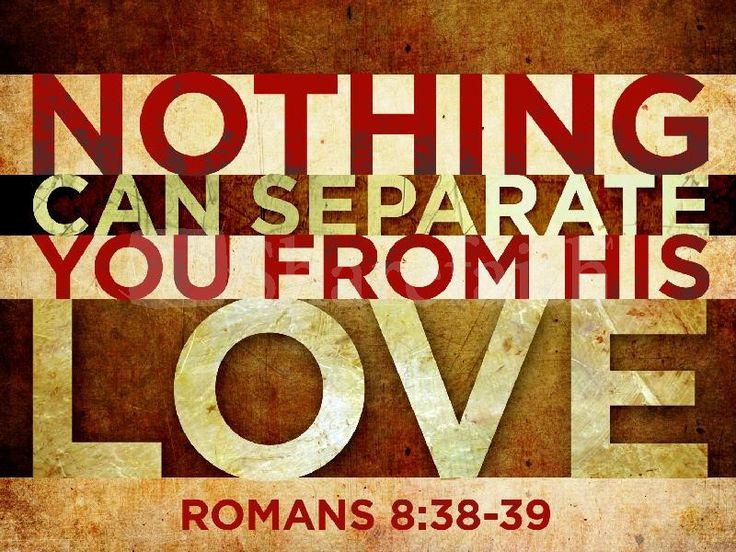
“For I am convinced that neither death nor life, neither angels nor demons, neither the present nor the future, nor any powers, neither height nor depth, nor anything else in all creation, will be able to separate us from the love of God that is in Christ Jesus our Lord.” Romans 8:38-39

When we allow ourselves to embrace it, we find rest, purpose, and the assurance that His love is forever.

“Could we with ink the ocean fill,
And were the skies of parchment made,
Were every stalk on earth a quill,
And every man a scribe by trade,
To write the love of God above
Would drain the ocean dry,
Nor could the scroll contain the whole
Though stretched from sky to sky.”

This vivid depiction reminds us that God’s love is beyond human comprehension. It overflows, unable to be contained or fully expressed in words

The Ever-Flowing Stream: A Reflection on God’s Goodness and Mercy


In the journey of life, we often find ourselves weary, longing for refreshment—physically, emotionally, and spiritually. Yet, in these moments of exhaustion, we are reminded of God’s unwavering goodness and mercy, a source of renewal that never runs dry.

Isaiah 58:11 beautifully captures this promise:

“The Lord will guide you continually, giving you water when you are dry and restoring your strength. You will be like a well-watered garden, like an ever-flowing spring.”

These words paint a vivid picture of God’s care and provision. An ever-flowing stream is not stagnant nor dependent on external circumstances—it keeps moving, keeps refreshing, and keeps supplying life to everything it touches. This is how God sustains us, offering His mercy and grace freely, ensuring that we never have to navigate life alone.

God’s Mercy Never Runs Dry

Just as water revives a parched land, God’s mercy revives our souls. Even when we fall short, even when we feel drained by the trials of life, His love remains steadfast. Through every hardship, He is there—pouring out peace, strength, and wisdom, guiding us step by step.

Finding Refreshment in His Presence

Like a traveler coming upon a fresh spring in the desert, we are invited to drink deeply of God’s goodness. We find this spiritual nourishment through prayer, through His Word, and through daily moments of surrender. When we immerse ourselves in Him, we are renewed, strengthened, and transformed.

Living as an Overflowing Spring

The beauty of God’s mercy doesn’t end with us—it flows outward. Just as He refreshes us, He calls us to be a blessing to others. When we extend kindness, share encouragement, and love unconditionally, we become vessels of His ever-flowing goodness, carrying His refreshment into a thirsty world.

Conclusion

No matter how dry or weary life feels, God’s goodness and mercy remain constant. His stream of love never ceases, His grace never runs out, and His presence never abandons us. May we trust in His provision, knowing that He is the wellspring of life, offering peace and renewal in every season.

\

A CALL TO THE WANDERER


The Parable of the Lost Sheep

15 Now the tax collectors and sinners were all drawing near to hear him. And the Pharisees and the scribes grumbled, saying, “This man receives sinners and eats with them.”

So he told them this parable: “What man of you, having a hundred sheep, if he has lost one of them, does not leave the ninety-nine in the open country, and go after the one that is lost, until he finds it? And when he has found it, he lays it on his shoulders, rejoicing. And when he comes home, he calls together his friends and his neighbors, saying to them, ‘Rejoice with me, for I have found my sheep that was lost.’ Just so, I tell you, there will be more joy in heaven over one sinner who repents than over ninety-nine righteous persons who need no repentance.

The Parable of the Lost Coin

“Or what woman, having ten silver coins,[a] if she loses one coin, does not light a lamp and sweep the house and seek diligently until she finds it? And when she has found it, she calls together her friends and neighbors, saying, ‘Rejoice with me, for I have found the coin that I had lost.’ 10 Just so, I tell you, there is joy before the angels of God over one sinner who repents.”

The Parable of the Prodigal Son

11 And he said, “There was a man who had two sons. 12 And the younger of them said to his father, ‘Father, give me the share of property that is coming to me.’ And he divided his property between them. 13 Not many days later, the younger son gathered all he had and took a journey into a far country, and there he squandered his property in reckless living. 14 And when he had spent everything, a severe famine arose in that country, and he began to be in need. 15 So he went and hired himself out to[b] one of the citizens of that country, who sent him into his fields to feed pigs. 16 And he was longing to be fed with the pods that the pigs ate, and no one gave him anything.

17 “But when he came to himself, he said, ‘How many of my father’s hired servants have more than enough bread, but I perish here with hunger! 18 I will arise and go to my father, and I will say to him, “Father, I have sinned against heaven and before you. 19 I am no longer worthy to be called your son. Treat me as one of your hired servants.”’ 20 And he arose and came to his father. But while he was still a long way off, his father saw him and felt compassion, and ran and embraced him and kissed him. 21 And the son said to him, ‘Father, I have sinned against heaven and before you. I am no longer worthy to be called your son.’[c] 22 But the father said to his servants,[d] ‘Bring quickly the best robe, and put it on him, and put a ring on his hand, and shoes on his feet. 23 And bring the fattened calf and kill it, and let us eat and celebrate. 24 For this my son was dead, and is alive again; he was lost, and is found.’ And they began to celebrate.

A CALL TO RETURN

When the sheep strays, the shepherd does not rest until its voice fills the fold. When the coin hides beneath the dust, the woman’s lamp burns until its shine is restored. When the son wanders in rebellion and ruin, the Father’s gaze remains fixed on the horizon, eager for his return.

In Jesus’ parables, we glimpse heaven’s relentless pursuit of what seems irretrievably lost. Whether we are the wandering sheep, the misplaced coin, or the prodigal child, the message is the same: God’s love meets us not at the gates of perfection but amidst the ruins of our despair.

In His kingdom, the finding of the lost is a cause for celebration, for restoration is not begrudging—it is joyous. And just as the parables teach, we are invited to take part in the divine celebration, sharing His grace with others who feel they, too, have wandered too far. Come running to His open arms He will not turn you aside if you seek Him with a true heart longing for a return home.

This has been a view from the nest
Allen Frederick aka Eaglewings

I Surrender All: A Devotional for Easter


The words of the hymn I Surrender All resonate deeply with the journey of faith. Written in 1896 by Judson W. Van DeVenter, this hymn emerged from a pivotal moment in his life. Van DeVenter, an accomplished artist, found himself torn between pursuing a career in the arts or stepping into full-time ministry. After wrestling with God’s call, he finally surrendered, choosing to dedicate his life entirely to serving Christ. This heartfelt act of yielding birthed one of the most beloved hymns in Christian worship—a timeless reminder of what it means to fully trust and submit to God.

As we approach the heart of the Easter season, I Surrender All takes on an even deeper meaning. It reminds us of the ultimate act of surrender—Jesus Christ offering Himself on the cross for the redemption of humanity. The Son of God gave everything, holding nothing back, for the sake of love. His sacrifice invites us to examine our own lives and to ask: what might God be calling us to surrender in this season?

Surrender is not an easy concept. It challenges our desire for control, tests our faith, and often stretches us in uncomfortable ways. For some, surrender might mean letting go of fear or anxiety, trusting God to provide and guide. For others, it could involve reconciling broken relationships, relinquishing bitterness or pride, and choosing humility and love. Perhaps God is asking you to trust Him with your future, your career, or a dream you’ve been holding tightly to.

Easter is a time of reflection, renewal, and hope. Just as the empty tomb represents victory and new life, surrendering our hearts to God leads to transformation and peace. When we let go of our own plans and fully trust in Him, we find that His ways are higher, and His plans are greater than anything we could imagine.

Closing Prayer

Lord, as we reflect on the profound sacrifice of Jesus on the cross, may we open our hearts to fully surrender to You. Teach us to trust You with our fears, dreams, and burdens, knowing that in You, we find true peace and joy. Transform our hearts this Easter season and help us walk in the light of Your love. In Jesus’ name, Amen.

We Know So Much that Just Isn’t So


Ronald Reagan

“It isn’t so much that liberals are ignorant. It’s just that they know so many things that aren’t so.” Ronald Reagan

They say great minds think alike, or better put the student can only be as smart as the teacher (Matthew 10:25). Perhaps that is why Ronald Reagan shared the same thought as did Paul when he was writing to Timothy about those who did not believe what Paul was teaching. Paul said in 2 Timothy 3:7 they are “always learning and never able to come to the knowledge of the truth.” Paul was referring to men or women who were willful, boastful, proud, arrogant, self-absorbed, money hungry, chasing after pleasures and not seeking God. These folks are constantly chasing one passion or another, looking for the next big thing, seeking fame and fortune, never acknowledging God, in fact, attacking what is good if it interferes with their personal pursuits. They are always learning but never able to grasp what is real and true. They believe that what they believe is truth, but who can blame them since they were taught by those who believed they too possessed great knowledge and charged handsomely for others to get that knowledge.

Unfortunately, all that knowledge left them bereft of truth but now they have been awarded a certificate of accomplishment validating their intellect, although like Reagan said, they know so many things that just aren’t so.

How is this possible? Can we avoid being led astray by our intellects? Is there a point where we become too smart for our own good? Continue reading “We Know So Much that Just Isn’t So”