Candles for the Temple, Stones for the Christ


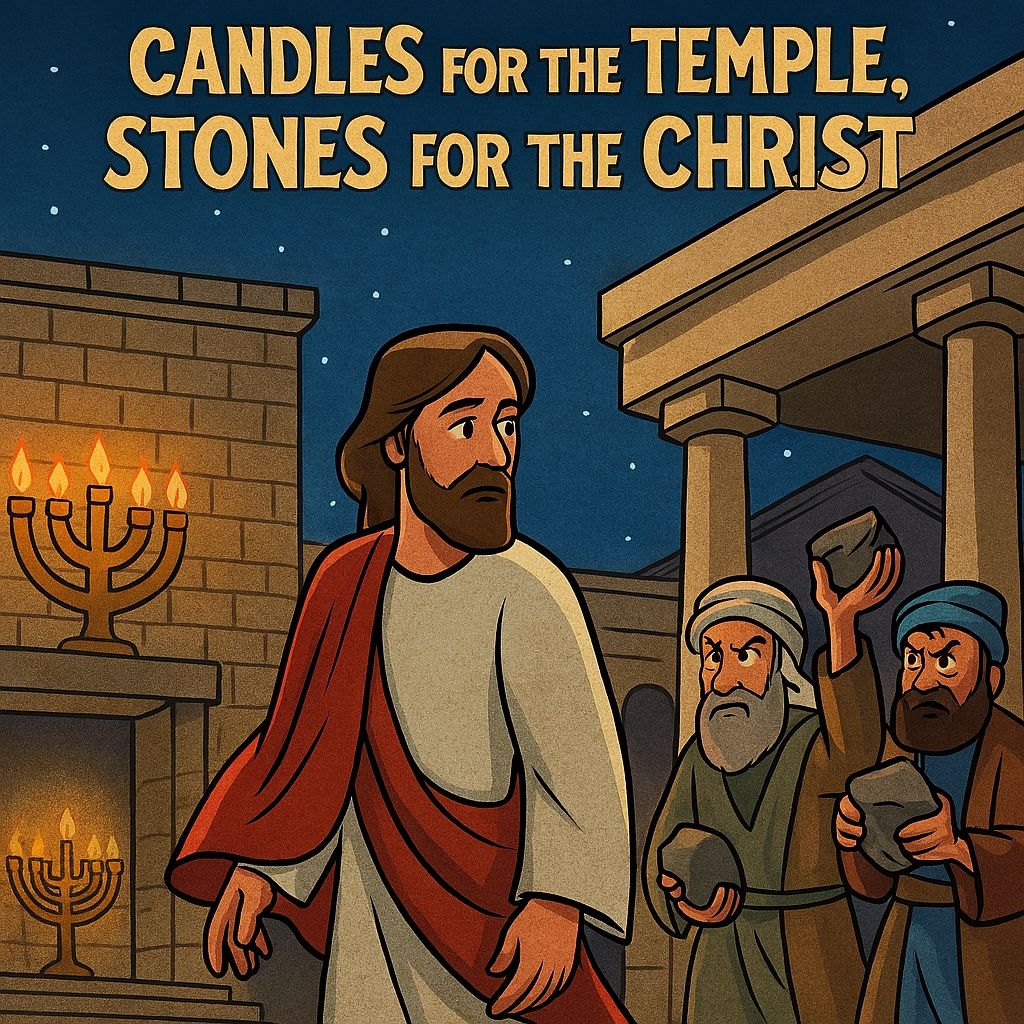
It was winter in Jerusalem. The temple glowed with borrowed fire, its lamps trembling against the night. Oil surrendered itself to the wick, a fragile flame destined to die. Songs rose in memory of deliverance, yet the Deliverer Himself walked unwelcomed beneath the colonnade.

Candles for the temple, stones for the Christ.


Stones in Their Hands, Darkness in Their Hearts

The stones they carried were not merely weapons—they were confessions. Hardened hands revealed hardened hearts. They lit external lights to honor a miracle of oil, but their souls remained unlit, their lives filled with shadow. The menorah burned in the temple, but the flame of faith was extinguished within them.


The Porch of Exclusion

Christ did not stand in the center of the temple, enthroned as High Priest. He walked the porch, the margins, the place of debate and suspicion. Even His location was a parable: the true Temple treated as an intruder to their festivities. Dedication was celebrated in stone, but the Dedicator Himself was pushed aside.


The Ancient Substitution

This pattern is older than the stones themselves:

  • The Ark adored, while the God of the Ark ignored.
  • The Temple exalted, while the Lord of the Temple rejected.
  • The Feasts observed, while the God of the feasts forgotten.

And the pattern endures: wafers raised while Christ is sidelined, Christmas packaging adored while the Lord of all is reduced to a seasonal diversion. Humanity clings to symbols because they can be controlled; it resists substance because it demands surrender.


Admonitions as Questions

  • Do we decorate the season and neglect dedication?
  • Do we polish the temple while ignoring the God of the temple?
  • Do we idolize the wrapper while discarding the gift?
  • Do we cling to ritual light while resisting the eternal Light?

The Call

The Festival of Lights burned in the temple, but the Light of the world was nearly snuffed out in the colonnade. Stones in their hands mirrored the stony hardness of their hearts. Candles in their temple masked the darkness of their lives. And Christ on the porch revealed their refusal to welcome Him as High Priest.

Rededicate not the stone, but the soul. Adore not the wrapper, but the Gift. Welcome not the flicker of ritual, but the brilliance of His presence

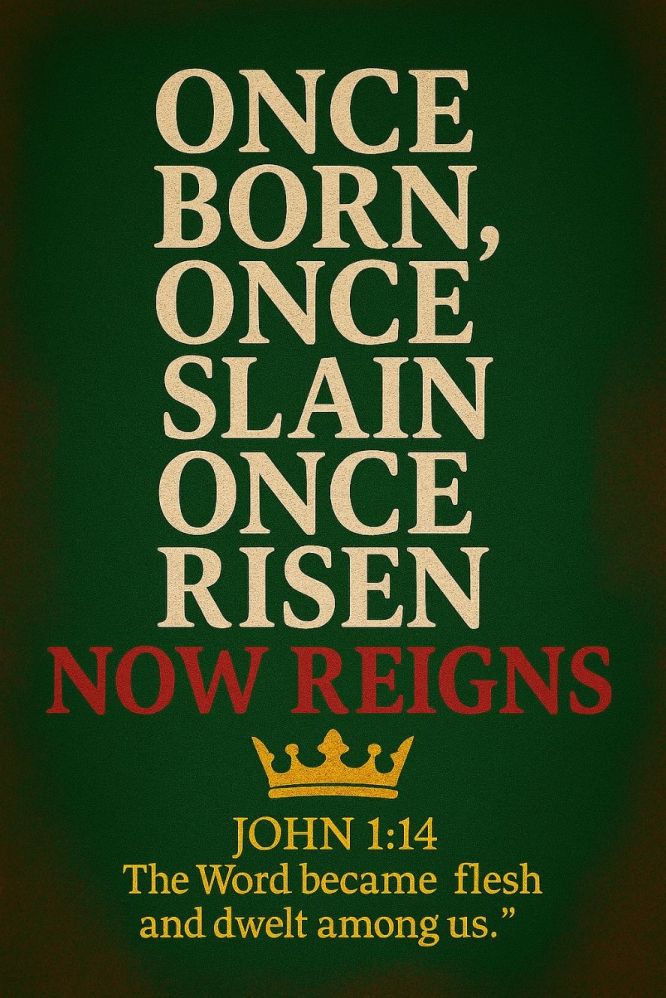
Once Born, Once Slain, Once Risen, Now Reigns


The church has been lulled into cycles of repetition, borrowing pagan customs and sentimental traditions that obscure the gospel. But the Word of God cuts sharper than any ritual. Here are four truths that stand immovable, each one a pillar of the greatest story ever told.

Christ was born once.

The incarnation was not a seasonal myth or a cycle to be replayed every December. “The Word became flesh and dwelt among us” (John 1:14). That moment in Bethlehem was the opening act of redemption, the eternal God stepping into human frailty. He came once, and that was enough. To rehearse His birth as if it were an annual event is to reduce the incarnation to pagan repetition.

Christ died once.

The cross was not symbolic theater—it was the decisive sacrifice. “Christ died for sins once for all, the righteous for the unrighteous, to bring you to God” (1 Peter 3:18). Pagan gods die endlessly in cycles, but Christ’s death was final. It satisfied the wrath of God, fulfilled prophecy, and broke the curse. There is no need for repetition; the penalty has been paid in full.

Christ rose once.

The resurrection is the hinge of history. “He was raised on the third day according to the Scriptures” (1 Corinthians 15:4). Unlike Baal or Sol Invictus, Christ does not rise each year with the sun. He rose once, never to die again. His empty tomb is the triumph that validates our faith and secures eternal life. This is not seasonal hope—it is eternal reality.

Christ forever reign.

The story does not end at the tomb. “He must reign until He has put all His enemies under His feet” (1 Corinthians 15:25). His ascension enthroned Him, and His reign is ongoing. He is not a Babe to be revisited each December—He is the King who rules now and will return in glory. The finale is not nostalgia but the appearing of Christ in power.

Admonition

Stop rehearsing pagan cycles. Stop lighting candles for what has already been fulfilled. Preach the gospel: once born, once slain, once risen, now reigns—soon to return.

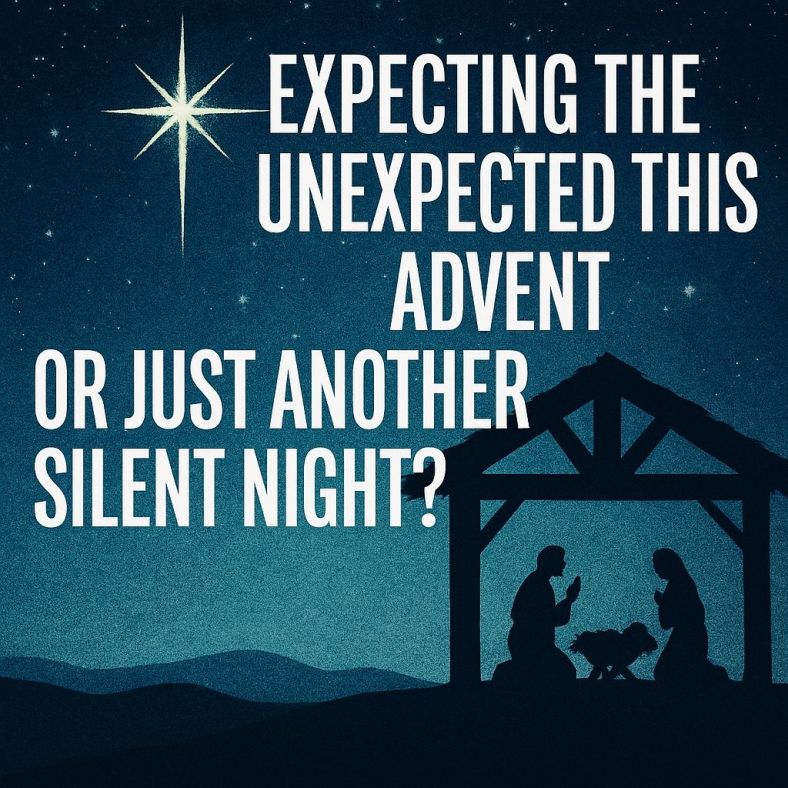
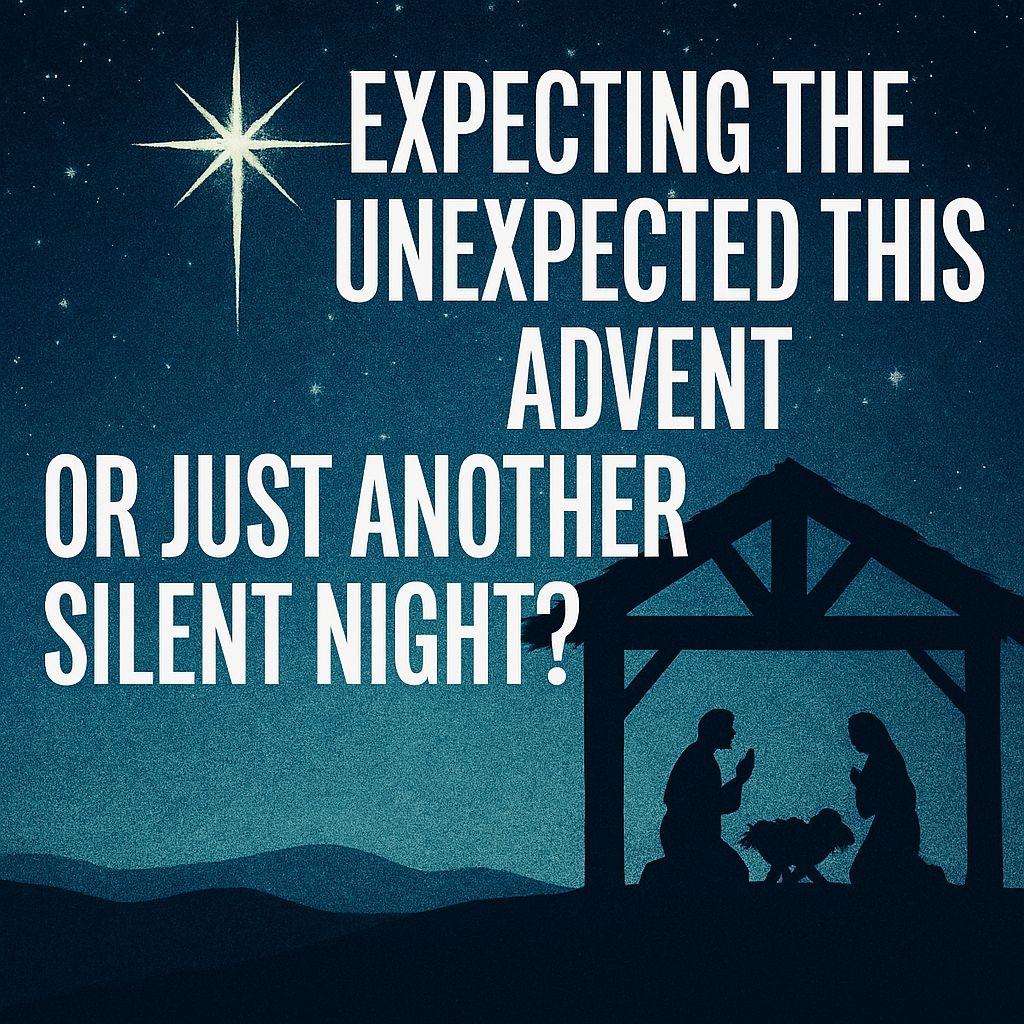
Expect the Unexpected


For four hundred years the heavens were silent. “The word of the LORD was rare in those days; there was no widespread revelation” (1 Samuel 3:1). From Malachi to Matthew, no prophet spoke, no angel appeared, and generations were conditioned to believe nothing would ever change. Yet at the appointed time, “when the fullness of time had come, God sent forth His Son” (Galatians 4:4).

Zechariah & Elizabeth

They prayed for a child. Years of barrenness and advancing age convinced them it was no longer in the cards. Discouragement? Perhaps. Resignation? Certainly. Biology said it was too late. Yet Gabriel appeared in the temple and declared, “Your prayer has been heard” (Luke 1:13). Heaven answered a prayer long thought dead. Their doubts remind us that God’s timing often collides with our resignation. His mercy surprises us when we least expect it.

“For My thoughts are not your thoughts,
Nor are your ways My ways,” says the Lord.
 “For as the heavens are higher than the earth,
So are My ways higher than your ways,
And My thoughts than your thoughts. Isaiah 55:8-9


Mary

Mary wasn’t seeking an immaculate conception. She wasn’t imagining herself as the fulfillment of Isaiah’s prophecy. She was simply living quietly in Nazareth. Yet Gabriel greeted her: “You have found favor with God” (Luke 1:30). Her first response was confusion: “How can this be, since I do not know a man?” (Luke 1:34). Mary’s bewilderment shows us that favor often comes wrapped in impossibility, and surrender is the only doorway to miracle.

Joseph

Joseph’s world collapsed when he learned Mary was pregnant. Human reasoning told him the obvious: she had been unfaithful. He resolved to end the betrothal quietly, because he knew how this works… except heaven interrupted. “Do not be afraid to take Mary as your wife, for that which is conceived in her is of the Holy Spirit” (Matthew 1:20). Joseph’s wrestling reminds us that obedience often requires us to lay down logic and trust God’s word above our assumptions.

Shepherds

Shepherds were the lowest of the low, never picked first, always picked last. They weren’t expecting anything spectacular to happen in their lives. Yet God needed a witness. “Behold, I bring you good tidings of great joy which will be to all people” (Luke 2:10). The angelic choir split the skies above their fields, not the palace or the temple. The shepherds remind us that heaven’s glory often comes to the overlooked. God delights in choosing those who are last to be first. (Matt 20:16)


The Admonition

None of them were looking. None of them were expecting. Yet each was chosen for a divine appointment. Heaven broke silence, history shifted, and God did what man could not.

He came unto His own, and His own received Him not (John 1:11). More missed His birth than experienced it. The angelic choir did not awaken the whole town; only the shepherds saw. The world slept while heaven sang. And so it will be again. “For as in the days before the flood, they were eating and drinking, marrying and giving in marriage, until the day that Noah entered the ark, and did not know until the flood came and took them all away, so also will the coming of the Son of Man be” (Matthew 24:38–39).

Beloved, this is not a season for nostalgia. Advent is not merely remembrance of Bethlehem—it is readiness for the skies. “Watch therefore, for you do not know what hour your Lord is coming” (Matthew 24:42). “Therefore you also be ready, for the Son of Man is coming at an hour you do not expect” (Matthew 24:44). “In a moment, in the twinkling of an eye, at the last trumpet… the dead will be raised incorruptible, and we shall be changed” (1 Corinthians 15:52).

With all these witnesses and with the Scriptures as our foundation, we know Jesus will soon appear. We do not know when, but we are without excuse—for He told us He would return, and He told us how. “If I go and prepare a place for you, I will come again and receive you to Myself” (John 14:3). “Behold, I am coming quickly, and My reward is with Me, to give to every one according to his work” (Revelation 22:12).

Therefore, we must believe and be ready. “Blessed are those servants whom the master, when he comes, will find watching” (Luke 12:37). “Let us not sleep, as others do, but let us watch and be sober” (1 Thessalonians 5:6). “For yet a little while, and He who is coming will come and will not tarry” (Hebrews 10:37).

The Watchman’s Call

Do not be lulled to sleep by ritual or routine. Do not be distracted by the noise of the world. Heaven broke silence once, and it will break silence again. Expect the Unexpected. Believe His word. Be ready for His appearing.

A Proclamation for Advent


The Herald’s Proclamation

We are not entertainers, nor seasonal well-wishers. We are heralds of the Most High, entrusted with a royal decree that cannot be diluted or deferred. The gospel we proclaim is not a cultural tradition, nor a sentimental greeting—it is the eternal announcement of victory through Jesus Christ.

We declare that:

Christ died for our sins according to the Scriptures.

He was buried, and He rose again on the third day.

He ascended in triumph and will return in glory.

This is the good news—the power of God unto salvation for all who believe. It is the message entrusted to us, the trumpet blast that awakens the nations, the light that pierces the darkness.

We are commanded to preach repentance and forgiveness of sins in His name to all nations. We are charged to make disciples, baptize, and teach obedience to His Word. We are sent as witnesses, empowered by the Spirit, to proclaim liberty to the captives and sight to the blind.

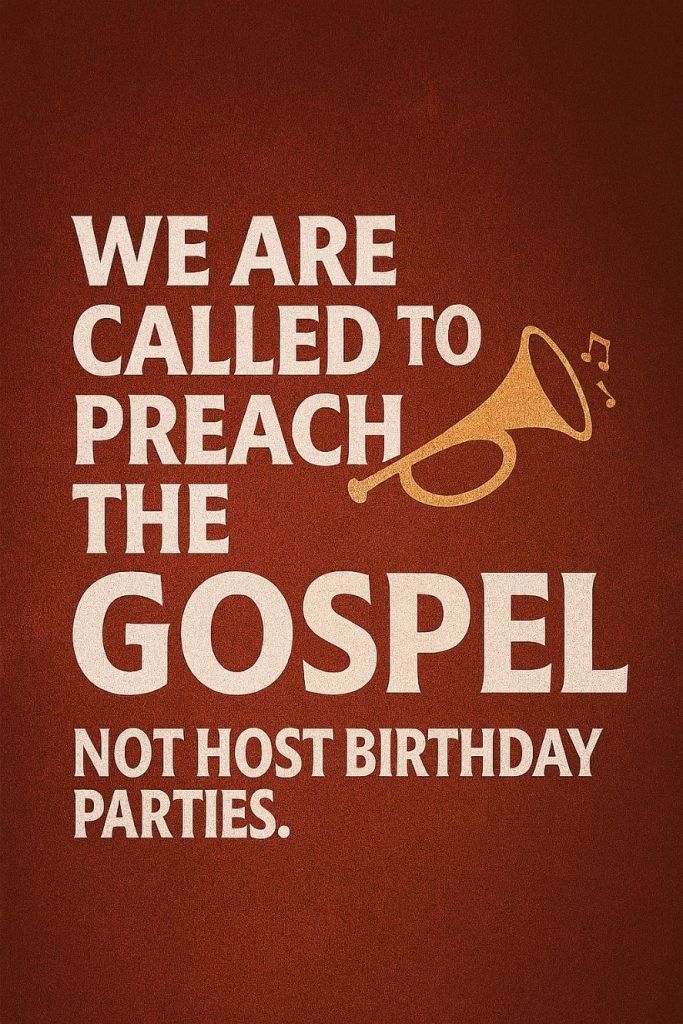
We do not gather to flatter Him with birthday wishes, as though He were a man bound by time. We gather to proclaim Him as the eternal Son, the risen Lord, the reigning King.

Final Charge

Preach the gospel—not wish Him a happy birthday.

Unmasking the Masquerade: Testing the Spirits in an Age of Digital Deception


In recent weeks, headlines have sounded an alarm across the digital landscape. Popular accounts on X were once thought to be American voices of patriotism. However, these were actually foreign operations disguised as frontline journalism. Behind the avatars of stars and stripes were individuals posting from Turkey. Others were posting from Nigeria, Eastern Europe, and beyond. These individuals hid behind the fiery rhetoric of “citizen journalists” and “grassroots patriots.” Their goal was not dialogue but division—sowing discord, amplifying outrage, and spreading lies under the guise of neighborly concern.

The exposure of these masqueraders is more than a digital scandal; it is a prophetic signal. Scripture warned long ago that “certain individuals have secretly slipped in among you… ungodly people, who pervert the grace of our God” (Jude 4). What Jude described in the first century now plays out in real time across our social feeds. Wolves in sheep’s clothing have traded pulpits for platforms, but the strategy remains unchanged: infiltrate, deceive, and divide.

This moment calls for vigilance. John’s exhortation rings louder than ever: “Beloved, do not believe every spirit, but test the spirits to see whether they are from God, for many false prophets have gone out into the world” (1 John 4:1). The Bereans modeled this discernment, examining the Scriptures daily to confirm truth (Acts 17:11). In our age, the same diligence must be applied—not only to sermons but to headlines, viral posts, and trending hashtags. Outrage is the bait; deception is the hook.

The danger is not merely foreign influence but spiritual intoxication. Peter’s warning is urgent: “Be sober-minded; be watchful. Your adversary the devil prowls around like a roaring lion, seeking someone to devour” (1 Peter 5:8). Emotional reactions—anger, fear, tribal loyalty—are the fuel of deception. To be sober-minded is to resist the intoxication of outrage. It means walking in clarity and peace even when the digital storm rages. Paul echoes this call in 2 Corinthians 11:14, reminding us that “Satan himself masquerades as an angel of light.” The masquerade is not new; only the costumes have changed.

The Prophetic Parallel

Consider the prophetic parallel: these foreign-run accounts cloaked themselves in patriotism or compassion. Their origin was foreign and their intent was division. They did not seek mere popularity or digital influence. Their purpose was to inject falsehood into the public square. They pretended to be legitimate voices concerned for our welfare. It is sinister and evil. They speak the language of their father—the devil—who is the father of lies (John 8:44). Just as Satan disguises himself as an angel of light, these voices masquerade as patriots. They pose as journalists or neighbors, but their words are poisoned. The saints must be vigilant. They should store up truth that cannot be corrupted. They must refuse to be swayed by the counterfeit compassion of deceivers.

And so the Word presses us further: “Look to yourselves, that you do not lose those things we worked for, but that you may receive a full reward” (2 John 1:8). The danger is not only being misled by false voices, but losing the very testimony and inheritance we have been entrusted with. Vigilance is not optional—it is the safeguard of salvation’s reward.

The watchman’s task is unchanged. Ezekiel 33 describes the watchman who sees danger and sounds the alarm. Today, the danger is digital infiltration, and the alarm is discernment. The church must not be naïve. Many false prophets have gone out into the world, and many false voices have gone online into our feeds. The masquerade has been unmasked, but the masquerade itself continues. The saints must be vigilant, discerning, Berean, and sober-minded.

Yes, Elon Musk’s “unmask” feature on X has exposed many false profiles, but the greater unmasker is the Holy Spirit. “When He, the Spirit of truth, comes, He will guide you into all truth” (John 16:13). The Spirit is our safeguard, our discerner, and our guide. Jesus Himself declared: “My sheep hear My voice, and I know them, and they follow Me” (John 10:27). The best defense against deception is not technology, but obedience to the Shepherd’s voice.


✒️ Closing Admonition

Take heed, little flock. Many voices seek to ensnare, but you shall know the truth, and the truth will set you free. The Shepherd’s voice is clear, and His sheep will obey no other.


Tagline

“Let God be true, and every man a liar” (Romans 3:4).