“For it is time for judgment to begin at the household of God” (1 Peter 4:17).
A generation is returning to our doors, but what they find may prompt heaven’s pruning shears.
When God get’s out His pruning shears
Introduction: The Surge That Isn’t a Revival
Headline Trend: Church attendance in the U.S. has risen to 32% in 2025, reversing a 15-year decline.
Bible Engagement: Gen Z and Millennial men are driving a quiet resurgence in Bible interest.
But the Question Remains: Are we returning to God—or just returning to the building?
The Ancient Pattern
This isn’t new. Ezekiel watched as God’s glory departed the temple—but judgment began at the sanctuary (Ezekiel 9:6). The priests wept between the porch and altar. Josiah found the Book of the Law buried under religious debris (2 Kings 22). Hezekiah cleansed temples turned into idol storage (2 Chronicles 29).
History’s rhythm: Revival, compromise, judgment, repentance, restoration. We’re somewhere in that cycle, and the Master Gardener is examining His vineyard.
The Barren Fig Tree: When Orthodoxy Produces No Life
Jesus told this parable with divine patience and terrifying finality:
But mercy intervened—one more year. One more chance. One more vinedresser willing to get dirty.
What It Means to Dig Around the Roots
“Sir, let it alone this year also, until I dig around it and put on manure” (Luke 13:8).
The vinedresser doesn’t just water leaves or polish bark. He digs deep around the roots. This is invasive, uncomfortable work:
• Exposing what’s hidden—the root systems of tradition, pride, fear
• Disturbing the comfortable—challenging why we do what we do
• Examining the foundation—is it drawing from Living Water or stagnant wells?
I know churches that recite ancient catechisms weekly—beautiful, orthodox, dead. They have male elders, biblical structure, reformed theology. They can parse Greek verbs but can’t perceive God’s presence. They guard tradition like temple police while the glory has long departed.
When God sends a vinedresser to dig—someone with dirt under their nails and tears in their eyes—they often reject the mercy meant to save them. Why?
• The digging hurts—it exposes roots wrapped around rocks of tradition
• The manure stinks—fresh anointing offends religious sensibilities
• The change threatens—what if we’ve been wrong all these years?
The Final Season
Sometimes God says to His vinedressers: “Leave. Watch. Let them choose.”
This isn’t abandonment—it’s the final mercy. The tree must choose: submit to the shears or face the axe. Accept the fresh manure or remain barren. Let the vinedresser dig or die with dignity intact.
The Heartbreak of the Vinedresser
Those called to dig around foundations carry unique wounds. They see what could be. They offer what’s needed. They’re usually rejected by the very ones they’re sent to save.
But here’s the prophetic truth: The vinedresser’s testimony becomes evidence. Their rejected service becomes witness. Their tears become intercession. And their departure? Sometimes it starts the clock on that final year of grace.
Are we in that final year of grace?
When Kingdoms Eclipse the Kingdom
The Temple Chant
Jeremiah warned: “Do not trust in these deceptive words: ‘This is the temple of the Lord, the temple of the Lord, the temple of the Lord'” (Jeremiah 7:4). Today’s version? “We’re growing! We’re relevant! We’re reaching the culture!”
But institutional pride is not spiritual power. Packed pews don’t equal pure hearts. We’re building temples of applause while Jesus stands outside, knocking—not at our cathedral doors, but at the door of our hearts.
I watched it happen in the 1980s. Jimmy Swaggart’s ministry reached millions—crusades, television, music that moved hearts to tears. But somewhere, the ministry became a kingdom. The messenger eclipsed the Message.
God doesn’t share His glory. The pruning was public, painful, and necessary. Not to destroy, but to humble. Not to end, but to redirect. “Every branch that does bear fruit he prunes, that it may bear more fruit” (John 15:2).
The Fruit Inspector Cometh
When young seekers enter our churches, what fruit do they find?
Or plastic fruit? Programs, performances, productions?
Jesus warned: “You will recognize them by their fruits” (Matthew 7:16). Not attendance. Not budgets. Not branding. Fruit.
The Hope in the Pruning
God prunes what He loves. He disciplines His children (Hebrews 12:6). The shears in His hand aren’t weapons—they’re tools of restoration.
Where should seekers go?
Look for churches with pruning scars. Leaders humbled and healed. Congregations marked by costly obedience through suffering.
Find places digging around roots, adding manure of repentance, waiting for true fruit. These communities exist—usually smaller, always authentic, forever marked by encounters with the living God.
The Choice: Living Tree or Whitewashed Tomb
Now every church—every believer—stands at the ancient fork:
The Wide Path: Whitewashed Tombs
Jesus reserved His harshest words for this choice:
Markers:
Orthodox outside, dead inside
Protecting tradition over presence
Reciting truth without transformation
Offering hungry seekers stones painted like bread
Counting attendance while heaven counts fruit
The Narrow Path: Trees of Life
Another way—costly, uncomfortable, glorious:
Markers:
Roots deep in living water, not tradition
Bearing fruit that feeds the hungry
Submitting to the Vinedresser’s shears
Choosing disturbance over death
Becoming shelter for seekers, not museum for saints
The Question That Determines Everything
Will you be a tree that feeds the hungry or a tomb that impresses the religious?
Young seekers aren’t looking for catechisms. They want Christ. They smell death through whitewash. They hunger for life, even from scarred, pruned trees.
Choose now. The Vinedresser waits with His shears. The season of grace won’t last.
The Urgent Hour
Judgment begins at God’s house because we know better. We have the Word. The Spirit. The history. When we offer religious performance instead of living water, we’re failing—we’re under judgment.
But mercy knocks. The Gardener offers one more season. The question: Submit to shears, or wait for the axe?
This generation hungers for God. Let’s stop feeding them everything else. Submit to pruning, return to first love, bear fruit that remains.
The alternative? “Every tree that does not bear good fruit is cut down and thrown into the fire” (Matthew 7:19).
The choice is ours. The hour is late. The Gardener is waiting.
"Thou shalt love the Lord thy God with all thy heart,
and with all thy soul, and with all thy mind,
and with all thy strength." (Mark 12:30, KJV)
A Prophetic Op-Ed on Half-Hearted Worship
1. Opening Summary: The Worship Gap We Refuse to Name
We sing“I Surrender All” while clutching our idols. We declare“All to Jesus I freely give” while negotiating terms in secret. Worship has become so polished, so routine, that few pause to ask: “Do I mean this?”
We critique the theology of songs from Bethel, Hillsong, and Elevation, yet ignore the theology of our own hearts. We dissect lyrics for doctrinal purity but never examine the disconnect between our lips and our lives.
It’s the same pattern Scripture exposes again and again:
Israel sang and danced at Sinai, then built a golden calf.
They praised God for deliverance, then longed for Egypt’s leeks and melons.
They shouted “Hosanna!”, then cried “Crucify Him!” days later.
We sing “I Surrender All”, then live “I Surrender What’s Convenient.”
And still, the Spirit asks:
“Do you love Me?” “Do you really love Me?”
This op-ed isn’t about worship styles—it’s about worship substance. It’s not a critique of music—it’s a confrontation of motive. It’s time to stop pretending and start repenting.
2. All to Jesus I surrender…
We sing it with trembling lips and lifted hands. But heaven hears the truth beneath the melody: “I surrender some.”
“You shall love the Lord your God with all your heart and with all your soul and with all your mind and with all your strength.” (Mark 12:30) “If anyone would come after Me, let him deny himself and take up his cross daily and follow Me.” (Luke 9:23)
All. Daily. No turning back. These are not poetic suggestions—they are the terms of discipleship.
3. All to Him I freely give…
Freely? Or conditionally?
“When you make a vow to God, do not delay to fulfill it… It is better not to vow than to make a vow and not fulfill it.” (Ecclesiastes 5:4–5)
Singing this hymn without intent to obey is not just emotional exaggeration—it’s spiritual dishonesty. It’s laying a gift at the altar with strings still tied to it.
4. Worldly pleasures all forsaken…
We say we’ve forsaken the world, but our appetites betray us.
“Do not love the world or the things in the world.” (1 John 2:15) “We remember the fish we ate in Egypt… the cucumbers, the melons, the leeks, the onions, and the garlic.” (Numbers 11:5)
Israel was free, but their cravings were still enslaved. Lot’s wife looked back and was frozen in judgment (Genesis 19:26). The Laodiceans were lukewarm, and Jesus said He would spit them out (Revelation 3:16).
“No one who puts his hand to the plow and looks back is fit for the kingdom of God.” (Luke 9:62)
5. A Personal Warning
I recall a homeowner once asking me to dedicate their house to the Lord. Before I could speak the prayer, the Spirit prompted me to caution them: “Once something is dedicated to the Lord, it is no longer yours to do with as you please.”
I declined the dedication. I blessed the home and its occupants, but I would not consecrate what they were not prepared to surrender. That wasn’t fear—it was reverence.
It was the same Spirit who exposed Achan’s buried treasure (Joshua 7), Ananias and Sapphira’s partial offering (Acts 5), and Peter’s vow that crumbled under pressure (Matthew 26).
6. Make me, Savior, wholly Thine…
Wholly? Or just on Sundays?
“Present your bodies as a living sacrifice, holy and acceptable to God, which is your spiritual worship.” (Romans 12:1) “You are not your own, for you were bought with a price.” (1 Corinthians 6:19–20)
An hour on Sunday is not surrender—it’s an Ananias-offering, a portion dressed up as the whole.
7. The Prophetic Punch
We dissect the lyrics of others while ignoring the lies in our own lungs. We sing “I surrender all” while clutching our idols. We dedicate homes, ministries, and relationships with ceremony but not consecration.
But the Spirit isn’t fooled by our chorus—He’s waiting for our cross.
“Simon, son of John, do you love Me?” (John 21:15) “Do you really love Me?”
8. The Call to Return
This is not a call to sing louder. It’s a call to live surrendered.
Lay down the divided allegiances.
Stop negotiating with God.
Love Him with all your heart, soul, mind, and strength.
Take up your cross daily.
Stop pretending. Start repenting.
9. Closing Refrain
Lot’s wife looked back. Israel longed back. Peter fell back. Laodicea leaned back. But Christ calls us to press forward—cross in hand, eyes fixed on Him. Do you love Me? Do you really love Me?”
Last Saturday, cities across the nation echoed with the resolute voices of thousands gathered at the “No Kings” rallies. These protests, fueled by a deep dissatisfaction with the current government, marked a pivotal moment of public outcry and spiritual unrest. As the crowds marched and chanted, the air was thick with tension and anticipation, setting the stage for a drama that transcends politics and touches the very heart of our cultural and spiritual identity. Tonight, we begin our report by looking back at these rallies and the powerful message they sent across the land. This whole scene is reminiscent of a similar scene that took place more than 2000 years ago. The similarities are striking! Let’s take a trip down memory lane.
REPORTING LIVE FROM THE NO KINGS RALLY
Good evening, listeners. This is your anchor coming to you live with a special report unfolding at the crossroads of faith and culture. Tonight, we witness a drama as old as time itself—the Passion, replayed not on a distant stage, but in the very streets and courts of our world today. The crowd is restless, voices rise in fervor, and the stakes could not be higher. Stay tuned as we bring you the unfolding story, the key players, and the truth that refuses to be silenced.
Opening Broadcast
This is the Watchman, reporting live from the arena of ideological warfare. The crowd is surging. The chants are coordinated. The signs are sharp. But beneath the slogans and spectacle, the ancient drama unfolds again.
The Passion is replaying—not in Jerusalem, but in every city square. The players are familiar. The tactics unchanged. The target? Still Truth. The verdict? Still pending.
First Quarter: The Stirring of the Crowd
The governing authorities have taken the field—not to calm, but to agitate. They’ve deployed their playbook:
Stir unrest
Isolate the righteous
Judge-shop for friendly venues
The crowd responds on cue. Chants erupt like drumlines:
“No kings!” “Give us Barabbas!” “Crucify conviction!”
The volume is deafening. But the loudest voice doesn’t get the last word.
Second Quarter: The Royal Court of Righteousness Takes the Stand
Each ideological mascot steps forward, cloaked in moral certainty:
The Advocate of Accommodation demands tolerance—on his terms. He’s not here to listen. He’s here to legislate your repentance.
The Priest of Preference rejects divine order. He quotes Caesar, not Scripture. His altar is built on feelings, not truth.
The Protest Scribe unfurls his scroll. It’s long. It’s loud. It’s lawless. He wants justice—but only for his tribe.
The Judge of Identity declares, “I am who I say I am.” But Truth replies, “I Am who I Am—and you are not Me.”
The Herald of Hurt limps forward. Her wounds are real—but her weapon is resentment. She demands healing without surrender.
Halftime: The Judges Wash Their Hands
Just like Pilate, today’s judges are shopping for friendly courts. They want rulings that affirm the crowd, not the Constitution. They misapply the law to preserve their own peace. They fear the mob more than they fear God.
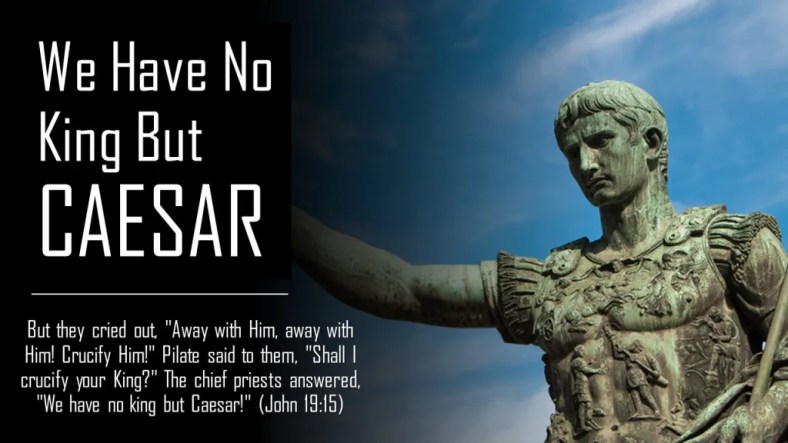
“Shall I crucify your King?” “We have no king but Caesar.”
Third Quarter: The Spectacle Builds
The crowd grows louder. The costumes more theatrical. The media amplifies the illusion of strength.
But the Watchman sees:
The spectacle is smoke.
The unity is Babel.
The power is borrowed.
They chant for chaos over peace. They crown comfort over conviction. They crucify Truth—and call it progress.
Fourth Quarter: The Rising
They think they’ve won. They think the tomb is sealed. They think the Lamb is silenced.
But Truth is not dead. Truth is not buried. Truth is rising.
“He was oppressed and afflicted, yet He did not open His mouth.” — Isaiah 53:7 “You will know the truth, and the truth will set you free.” — John 8:32 “Woe to those who call evil good and good evil.” — Isaiah 5:20
Final Call from the Booth
This is the Watchman, signing off. Crowds chant. Judges fold. Scribes scribble.
But the Lamb still reigns! And the final whistle belongs to Him.
“You have judged the Son of Man by your standards. But He will judge you by His.”
"Do you not know that in a race all the runners run, but only one gets the prize? Run in such a way as to get it." — 1 Corinthians 9:24
Allen Frederick
It’s awards season again. It’s that time of year. Red carpets unfurl like modern-day scrolls of glory. The world pauses to crown its chosen ones. Grammys, Emmys, Doves, Nobels, AMAs, Bestseller lists, viral clicks, and algorithmic applause—each a golden carrot dangling before the hungry soul. The pursuit of recognition has become a full-time religion, and the altar is crowded.
But there’s another ceremony underway. Quieter. Older. Eternal. It’s not televised, but it’s recorded. Not in HD, but in heaven. Hebrews 11 calls it the Faith Hall of Fame. No tuxedos. No acceptance speeches. Just a roll call of the faithful—many unnamed, most uncelebrated, all remembered by God.
Hebrews 11 honors God’s award winners—the Hall of Faith. It names giants of faith who endured by trusting God’s promises despite unseen trials and worldly scorn. Here are some of those honored by God:
By faith Abel offered a better sacrifice than Cain, through which he was commended as righteous, God commending him by accepting his gifts. Though he died, he still speaks.
By faith Enoch was taken up so that he did not see death, “for before he was taken he was commended as having pleased God.”
By faith Noah, being warned by God about things not yet seen, in reverence prepared an ark to save his household.
By faith Abraham obeyed when he was called to go out to a place he would later receive as an inheritance.
By faith Sarah received power to conceive, even when she was past age, because she considered Him faithful who had promised.
By faith Isaac blessed Jacob and Esau concerning things to come.
By faith Jacob, when dying, blessed each of Joseph’s sons and worshiped, leaning on his staff.
By faith Joseph, at the end of his life, spoke about the exodus of the Israelites and gave instructions concerning his bones.
By faith Moses, when he was born, was hidden by his parents for three months because they saw he was no ordinary child.
By faith Moses, when grown, refused to be called the son of Pharaoh’s daughter, choosing to suffer with God’s people rather than enjoy sin’s fleeting pleasures.
By faith the Israelites passed through the Red Sea as on dry land, but the Egyptians who pursued them were drowned.
By faith the walls of Jericho fell after the Israelites marched around them for seven days.
By faith Rahab the prostitute did not perish with those who were disobedient because she welcomed the spies in peace.
These are the ones God honors, not for fame or fortune, but for faithfulness and obedience. Their lives stand in stark contrast to the fleeting applause of the world, reminding us that God’s commendation is the true prize.
Paul sharpened the metaphor: “Do you not know that in a race all the runners run, but only one gets the prize? Run in such a way as to get it… They do it to get a crown that will not last, but we do it to get a crown that will last forever.” (1 Corinthians 9:24–25)
They wandered, suffered, obeyed, endured. No medals. No statues. No trending hashtags. Yet they are listed in the Lamb’s Book of Life. Heaven’s registry of those who chose the praise of God over the praise of man.
The Question of True Value
So we must ask: what do we value most?
Is it the fleeting ovation of man or the eternal commendation of God?
The applause of man is loud but short-lived. It fades with the next scandal, the next trend, the next algorithm tweak. It’s a currency that devalues quickly. One moment you’re the darling of the crowd, the next you’re a cautionary tale.
But the praise of God? It’s quiet, often unnoticed, but it echoes forever. It’s the “Well done” whispered by the Creator to the faithful servant. It’s the reward that moth and rust cannot corrupt, that no critic can revoke.
Jesus warned: “How can you believe when you receive glory from one another and do not seek the glory that comes from the only God?” (John 5:44). He knew the gravitational pull of human praise. He felt the temptation to perform for the crowd. But He chose obedience over optics. Truth over trend.
In a world obsessed with being seen, the faithful are called to be hidden. In a culture addicted to applause, we are summoned to endure silence. In an age of curated personas, we are invited to authenticity.
The Lamb’s Hall of Fame is not for the popular—it’s for the obedient.
Yet, we cannot ignore that excellence is required to gain a trophy. But lately, many trophies have lost their sheen, resembling more participation awards than honors of true merit. Anyone can get TikTok likes with the right gimmick, but there is only one way to gain the crown of life.
This is clearly taught in passages James 1:12, which says, “Blessed is the one who perseveres under trial because, having stood the test, that person will receive the crown of life that the Lord has promised to those who love him.” It is not earned by worldly acclaim or fleeting achievements but by a steadfast, obedient faith that endures to the end.”
So run your race. Not for applause, but for allegiance. Not for likes, but for love. Not for fame, but for faith.
Because the only Hall of Fame that matters is the one built by nail-scarred hands.
Running the Race That Wins the Crown
Let us therefore, since we are surrounded by so great a cloud of witnesses, lay aside every weight, and the sin which so easily ensnares us, and let us run with endurance the race that is set before us,
looking unto Jesus, the author and finisher of our faith, who for the joy that was set before Him endured the cross, despising the shame, and has sat down at the right hand of the throne of God.
For consider Him who endured such hostility from sinners against Himself, lest you become weary and discouraged in your souls. (Hebrews 12:1-3)
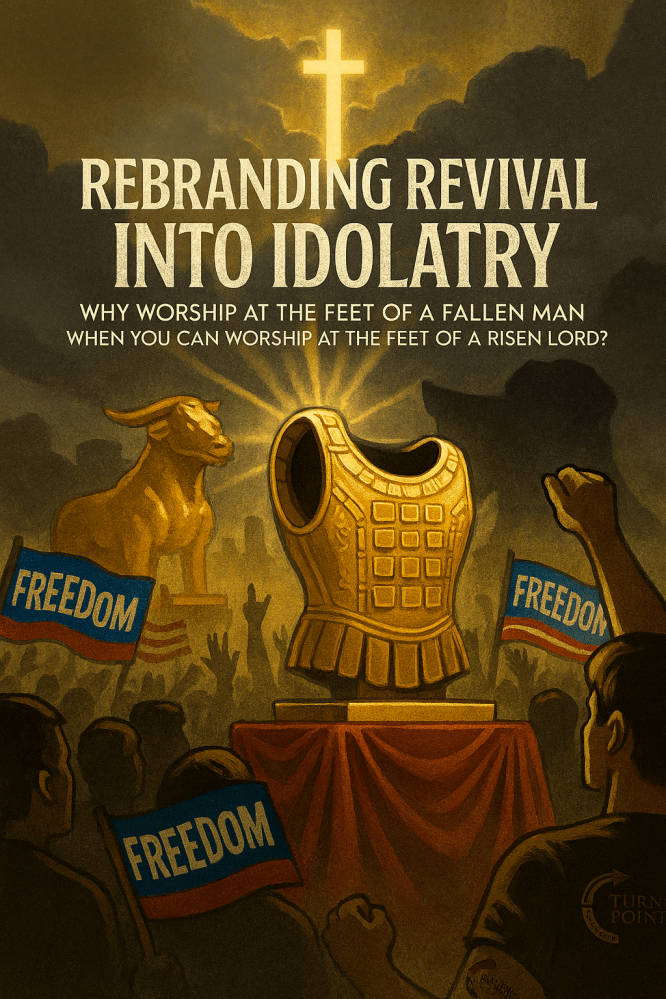
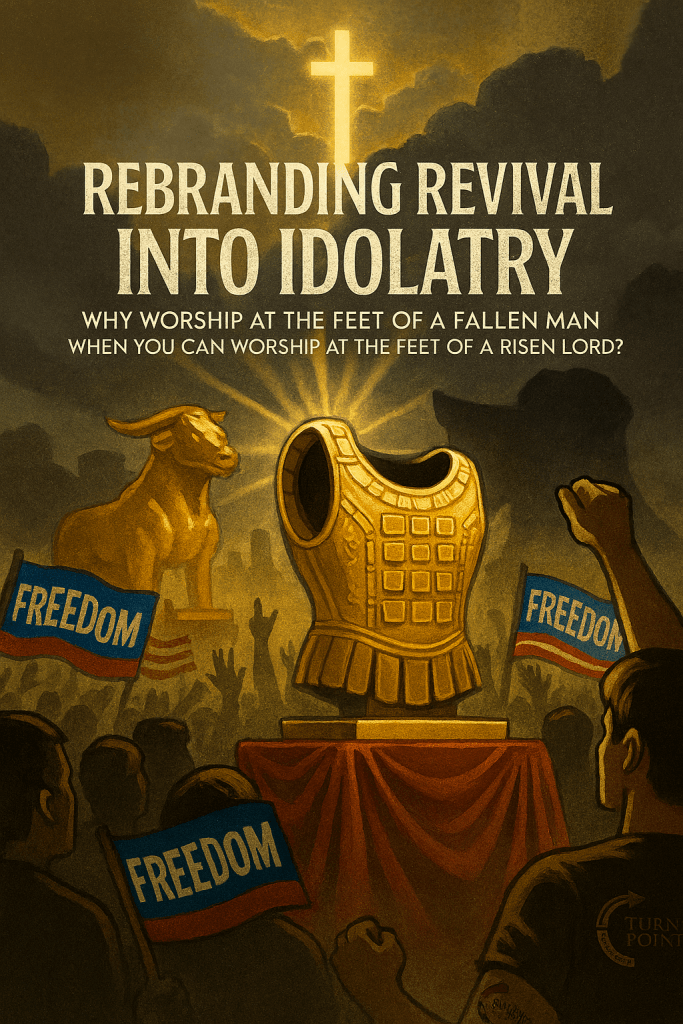
Why Worship at the Feet of a Fallen Man When We Can Worship at the Feet of a Risen Lord?
In the weeks since Charlie Kirk’s assassination, the nation has seen a surge of energy. News reports describe stadiums filled with mourners who have become activists. “FREEDOM” tee-shirts are flying off shelves. Turning Point tattoos are being etched into skin. The movement is swelling with momentum. Some hail it as revival. Others see it as a political awakening.
But momentum is not the same as revival. And history—biblical history—warns us that what begins as a move of God can sour into a monument to man.
Gideon in the Winepress
When we first meet Gideon in Judges 6, he is threshing wheat in a winepress, hiding from Midianite raiders. Hardly a revolutionary. Yet God calls him “mighty warrior” and raises him up to deliver Israel.
But God made it clear: the victory would not belong to Gideon. He whittled Gideon’s army down to 300 men so that no one could boast, “My own hand has saved me” (Judges 7:2). The triumph over Midian was not Gideon’s brilliance, not the zeal of his men, but the power of God alone.
Charlie Kirk, in many ways, became a Gideon figure for this generation. He had unassuming beginnings and a small band of devoted followers. He achieved a victory that seemed impossible against the tide of cultural opposition. His courage inspired many. But just as in Gideon’s day, the danger comes after the battle.
Rebranding Revival into Idolatry
After his victory, Gideon asked for gold from the spoils of war and “made an ephod of it and put it in his city, in Ophrah. And all Israel prostituted themselves by worshiping it there, and it became a snare to Gideon and his family” (Judges 8:27).
Here’s the problem:
The ephod was a sacred priestly garment, commanded by God in Exodus 28 to be worn only by the high priest of Levi.
It bore the names of Israel’s tribes and was used with the Urim and Thummim to discern God’s will (Exodus 28:29–30).
Gideon was not a priest. He was from Manasseh (Judges 6:15). He had no authority to assume priestly garments.
By making an ephod, Gideon stepped outside his calling. And the people, instead of objecting, embraced it. They shifted their devotion from the God who delivered them to the symbol of victory. The ephod became a counterfeit center of worship.
And here is where the prophetic punch lands: Why worship at the feet of a fallen man when you can worship at the feet of a risen Lord?
Gold: Glory Turned to Graven
Gold was used to overlay the Ark of the Covenant, to adorn the tabernacle, and to craft the priestly garments. It symbolized God’s holiness and majesty. But when taken out of context—when melted down and molded by human hands—it became the golden calf (Exodus 32), a grotesque parody of divine worship.
Gideon’s ephod, fashioned from gold taken as spoils, echoes that same drift. What began as a symbol of victory became a snare. The people bowed not to God, but to the glitter of conquest.
Even Judas, in the shadow of the cross, traded the Son of God for thirty pieces of silver—precious metal once again used to betray glory.
Gold, when untethered from reverence, becomes the metal of misdirection.
Our Modern Ephods
Today, the parallels are sobering. Tee‑shirts, tattoos, slogans, and symbols are rising as rallying points. They are not evil in themselves. But they risk becoming ephods—objects of misplaced devotion that subtly shift the focus from the risen Christ to a fallen man, from the Deliverer to the movement.
The drift begins when no one raises the alarm. When the church accepts the symbol without questioning whether it has replaced the Savior. When we rally around the banner instead of the cross.
The Call Back to the Cross
Scripture is clear:
“And I, when I am lifted up from the earth, will draw all people to myself” (John 12:32).
“There is no other name under heaven given among men by which we must be saved” (Acts 4:12).
“He must increase, but I must decrease” (John 3:30).
It wasn’t Gideon. It wasn’t the 300. It wasn’t the ephod. It was God.
And so it must be with us. Organizing for better government is not wrong. Honoring courage is not wrong. But rallying around a name other than Jesus Christ is always wrong.
Final Word
The ephod warns us: symbols can become snares. The cross reminds us: salvation is not in the symbol but in the Savior.
So let us ditch the ephods of our age and cling to the risen Lord. For it was never Gideon, never Charlie, never Turning Point—it was, and always will be, God.
Why worship at the feet of a fallen man when you can worship at the feet of a risen Lord?






You must be logged in to post a comment.