SPIRITUAL CATARACTS: When Our Vision Gets Cloudy


As a professional driver with over 3 million incident-free miles, I’ve encountered my share of heavy fog—and other driving hazards. There’s something uniquely disorienting about fog: the way it swallows landmarks, blurs headlights, and forces you to slow down and trust your instincts. You grip the wheel tighter, strain to see what’s ahead, and pray for clarity.

In many ways, spiritual fog is just as disorienting. Cataracts form when the lens of the eye becomes clouded, scattering light and distorting clarity. In the natural, it’s a slow fade—vision dims, colors dull, and the world grows hazy. But in the Spirit, cataracts form when our gaze shifts from Christ to self, from Kingdom to culture, from eternal to temporal.

Jesus speaks directly to this in Revelation 3:18:

“I counsel you to buy from Me… salve to anoint your eyes, so that you may see.”

This isn’t earthly ointment—it’s divine clarity. It’s the Spirit’s touch that restores our ability to see rightly: to discern truth, to perceive eternity, to recognize our condition. Without this salve, we walk in spiritual blindness—thinking we see, but missing the Kingdom entirely.

👁 What Causes Spiritual Blindness?

  • Comparison with ourselves Paul warns in 2 Corinthians 10:12: “When they measure themselves by themselves and compare themselves with themselves, they are not wise.” This is the cataract of self-reference. We become our own standard, our own mirror, our own measure. Instead of gazing upon Christ—the Author and Perfecter of our faith—we stare at our own reflection, adjusting our righteousness by how we feel or how we perform. The result? Dimmed discernment. Blurred conviction. Lost awe.

See also Hebrews 12:2: “Fixing our eyes on Jesus, the pioneer and perfecter of faith…”

  • Fixation on worldly metrics Likes, followers, influence, income, applause—these are the fog machines of the soul. They scatter the light of truth and distort our spiritual depth. We begin to see ministry as platform, worship as performance, and prophecy as content. The lens gets cloudy.

See also 1 John 2:16: “For everything in the world—the lust of the flesh, the lust of the eyes, and the pride of life—comes not from the Father but from the world.”

See also Revelation 3:17: “You say, ‘I am rich; I have acquired wealth and do not need a thing.’ But you do not realize that you are wretched, pitiful, poor, blind and naked.”

  • Neglect of intimacy When we stop beholding Christ, we lose clarity. Psalm 36:9 says, “In Your light we see light.” Without His presence, we grope in shadows. Spiritual cataracts form when we trade communion for consumption, devotion for distraction.

See also Isaiah 29:13: “These people come near to me with their mouth and honor me with their lips, but their hearts are far from me…”

🚦 God’s Fog Lights: The Salve of Christ

Jesus offers salve—not just to see others rightly, but to see Him clearly. This salve is like fog lights for the soul—cutting through confusion, piercing the haze, and illuminating the road ahead. Fog lights are designed to shine low and wide, revealing what’s immediately in front of you when everything else is obscured. They don’t eliminate the fog, but they help you move forward safely, confidently, and with purpose.

In the same way, the salve of Christ doesn’t always remove the fog of life—but it gives us clarity to navigate it. It helps us see what matters, avoid spiritual hazards, and stay aligned with the path of righteousness.

  • Revelation: Eyes opened to the beauty, holiness, and supremacy of Christ. Like fog lights revealing the road’s edges, revelation helps us see the boundaries of truth and the brilliance of Jesus. → See also Ephesians 1:18: “I pray that the eyes of your heart may be enlightened in order that you may know the hope to which he has called you…”
  • Conviction: Seeing our true condition—not through shame, but through mercy. Fog lights expose what’s hidden—potholes, debris, or danger. Conviction reveals our spiritual condition so we can respond with repentance. → See also John 16:8: “When He comes, He will convict the world of guilt in regard to sin and righteousness and judgment.”
  • Discernment: Recognizing what is eternal, what is counterfeit, and what is Kingdom. Fog lights help us distinguish between safe paths and risky detours. Discernment helps us choose wisely in a world full of spiritual distractions. → See also Philippians 1:9-10: “And this is my prayer: that your love may abound more and more in knowledge and depth of insight, so that you may be able to discern what is best…”

This salve doesn’t come from effort—it comes from encounter. It’s bought through surrender, applied through repentance, and activated through worship.


Prophetic Exhortation If your vision has dimmed, don’t reach for self-help lenses. Ask for the salve. Let the Spirit anoint your eyes again. Stop comparing yourself with yourself. Fix your gaze on Jesus. Let Him become your lens, your light, your clarity.


So when the fog rolls in, grip the wheel of faith. Turn on the fog lights of revelation, conviction, and discernment. And drive forward—not by sight, but by light.

Nehemiah’s Cry, Stephen’s Fire, Charlie’s Marketplace Witness


A Prophetic Call to Rebuild What Religion Has Buried.

🧱 I. Nehemiah’s Cry: The Watchman Weeps Before He Builds

“When I heard these words, I sat down and wept, and mourned certain days, and fasted, and prayed before the God of heaven.” —Nehemiah 1:4

Nehemiah didn’t begin with blueprints—he began with brokenness. He wept for a city in ruins, a people scattered, and a testimony defiled. He didn’t blame Babylon. He confessed the sins of his fathers and his own house. This is the posture of the true reformer:

Eyes open to ruin

Heart pierced by grief

Hands ready to rebuild

“Let us rise up and build.” —Nehemiah 2:18

But not just walls. We must rebuild worship, witness, and the fear of the Lord.

🔥 II. Stephen’s Fire: The Prophet Rebukes the Temple System

“Ye stiffnecked and uncircumcised in heart and ears, ye do always resist the Holy Ghost…” —Acts 7:51 “The Most High dwelleth not in temples made with hands…” —Acts 7:48

Stephen stood before the Sanhedrin—not with diplomacy, but with divine indictment. He traced Israel’s history not to flatter, but to expose the pattern of rebellion. He named their addiction to temple worship, their rejection of the prophets, and their murder of the Just One.

They stopped their ears. They gnashed their teeth. They stoned him in public view.

But heaven stood.

“Behold, I see the heavens opened, and the Son of man standing on the right hand of God.” —Acts 7:56

Stephen’s death scattered the church. But that scattering became sending. The gospel left the building and entered the world.

🌐 III. Charlie’s Marketplace Witness: The Tent That Provokes

Charlie Kirk didn’t preach behind stained glass. He preached in tents, on campuses, in hostile forums. He invited confrontation—not for ego, but for truth.

And like Stephen, he was silenced. Not just by pagans, but by those who had grown comfortable in their own temples. Those who had traded fire for form. Those who had stopped their ears to conviction.

Stephen confronted the religious elite who resisted the Holy Spirit, clung to temple tradition, and rejected the living presence of God. Charlie confronted the cultural elite who replaced public worship with institutional idolatry, fortified temples to Baal, and silenced truth in the name of tolerance. Both exposed the error of their generation. Both provoked the gatekeepers of power. Both bore witness to a gospel that cannot be confined.

And both shared the same Lord—the Just One whom religion crucified and whom heaven vindicated.

But his death stirred millions. Not to vengeance, but to clarity. Not to politics, but to purpose.

“Go ye into all the world, and preach the gospel to every creature.” —Mark 16:15

The marketplace is the new Mars Hill. The tent is the new temple. The witness is the new worship.

🗣️ IV. Mars Hill and the Mandate to Go

Saul stood by as Stephen was stoned—arms crossed, heart hardened, breathing threats. He was the enforcer of temple purity, the silencer of Spirit-led fire. But heaven had other plans.

On the road to Damascus, the stone-caster was struck blind by glory. The persecutor became the preacher. The man who stopped ears became the voice that pierced nations.

“How shall they hear without a preacher? And how shall they preach, except they be sent?” —Romans 10:14–15

Paul was sent. Not to temples made with hands, but to Mars Hill. To the altar of the unknown god. To the philosophers, the skeptics, the seekers.

“Whom therefore ye ignorantly worship, him declare I unto you.” —Acts 17:23

He didn’t flinch. He didn’t soften. He declared the resurrected Christ in the heart of pagan Athens.

Paul went from defending stone walls to building living temples—churches planted in hostile soil, letters written in prison, disciples forged in fire.

“Know ye not that ye are the temple of God, and that the Spirit of God dwelleth in you?” —1 Corinthians 3:16

🧭 V. How Then Shall We Live?

“And they that were scattered abroad went every where preaching the word.” —Acts 8:4 “Not forsaking the assembling of ourselves together… but exhorting one another: and so much the more, as ye see the day approaching.” —Hebrews 10:25

We must gather—yes. But not to fulfill obligation. Not to rehearse tradition. Not to preserve religion.

We must gather to provoke, to equip, to send forth.

Organized religion has failed. It clings to form while rejecting fire. It resists the Holy Spirit and the living presence of God. It gathers in cathedrals to check a box, not to fulfill the Great Commission. And as cities and towns drift further from God, the message of the Cross remains locked inside these whited sepulchers—beautiful on the outside, but void of life within.

We must scatter again. Not in fear, but in fire. Not in rebellion, but in obedience.

We must rebuild—not monuments, but movements. Not padded pews, but prophetic pulpits. Not mini temples, but mobile tents of truth.

🧱 VII. Why Were the Walls Broken?

“Because ye have forsaken the Lord, he hath also forsaken you.” —2 Chronicles 24:20

The walls of Jerusalem didn’t fall by accident. They were breached because covenant was broken. God’s people abandoned His ways, worshiped idols, and silenced His prophets.

They fell into spiritual seduction—chasing Baal, blending with pagan cultures, trusting in alliances and rituals instead of repentance and righteousness. They honored God with lips but not with hearts. They kept temple routines but rejected the living God.

So judgment came. Babylon invaded. The temple was burned. The city was emptied. The people were exiled.

“This whole land shall be a desolation… and these nations shall serve the king of Babylon seventy years.” —Jeremiah 25:11

Seventy years of captivity. Not just political punishment—but spiritual discipline. God used Babylon to purge idolatry, provoke repentance, and prepare a remnant.

Jerusalem lay in ruins. No active testimony of God remained in the land. The stones of the walls they thought would protect them became a testimony against them. Why? Because seventy years prior, they stopped their ears to the Lord’s ways.

And when we trace back seventy years in our own nation’s history, we arrive at a moment when the worship of God was outlawed in the public square and replaced with the worship of Baal. Temples to Baal were fortified in every city and state—taking the form of institutes of education, filled not with truth but with false prophets of Baal. The testimony of God was buried beneath policy, philosophy, and pride.

Nehemiah’s cry came after the sentence was served. His burden was born from history’s warning: If we bury the Word, we will be buried by the world.

🩸 VIII. Final Charge: Rebuild the Wall, Restore the Witness

Nehemiah wept. Stephen burned. Charlie provoked. Paul preached.

Now it’s our turn.

Let the watchmen rise. Let Mars Hill be filled. Let the hardest hearts melt before an awesome God.

Because when one falls, thousands must arise. And when one is sent, the silence is broken.

🙏 Prayer

Lord of the broken wall and the burning heart, we come not with polished plans but with pierced spirits. We confess our comfort, our compromise, our silence. We ask for the fire of Stephen, the clarity of Charlie, the boldness of Paul, and the tears of Nehemiah. Send us into the marketplace, the campus, the tent, the prison, the pulpit. Let our witness provoke, our worship restore, and our walk reflect Your glory. Rebuild what religion has buried. Revive what tradition has tamed. And reign where man-made temples have failed. In Jesus’ name, amen.

📸 Benediction

May the God who scattered the church to save the world scatter you with purpose. May the Spirit who stood with Stephen stand with you in every confrontation. May the fire that fell on the apostles fall again on your tent, your table, your testimony. Go now—not to perform, but to provoke. Not to consume, but to commission. Not to build walls, but to raise altars.

In the name of the Father who sends, the Son who saves, and the Spirit who speaks— Amen.

Sitting on the Premises: Hymns, Hypocrisy, and an Unholy Sanctuary


By Allen Frederick

Before we dive into the satire, let’s address the elephant in the sanctuary: the modern worship wars. You know the drill—“Don’t sing Bethel,” “Avoid Elevation,” “Hillsong is off-limits.” We’ve built entire liturgical purity tests around who wrote the song, not whether we mean it. We strain out the gnat of affiliation while swallowing the camel of lifeless worship.

And what do we sing instead? Approved hymns and vetted choruses—performed with all the passion of a DMV clerk. We sing “Great Is Thy Faithfulness” while checking our watches. We belt “How Great Thou Art” with hearts that haven’t trembled in years. The problem isn’t the playlist—it’s the posture. We’ve traded consecration for critique, presence for performance, and Spirit-led worship for sanitized approval.

So let’s talk about it. Let’s laugh, weep, and repent. Because the real scandal isn’t the song—it’s the sanctuary that sings without surrender.

We love to sing. We love to sway. We love to raise our hands—so long as the air conditioning is working and the service ends before kickoff. Our hymnals are full of promises, but our pews are full of abiding on the premises.

Blessed Assurance”—but the only assurance we seem to have is that we’ll be out of the parking lot in time for lunch.

“Standing on the Promises”—while firmly sitting on the premises, scrolling our phones and checking the clock.

“Just As I Am”—we come just as we are, and we leave just as we were. The only thing that changes is the bulletin in our hand.

“Joyful, Joyful, We Adore Thee”—our mouths move, but our faces look like mugshots. Joy is in the lyrics, not in the room.

“Just a Closer Walk With Thee”—but only on Sunday between 10 and 12. After that, it’s “We’ll meet again next Sunday”

We call our gathering place a sanctuary. But let’s be honest: the word now conjures images of “sanctuary cities”—places where law is suspended, compromise is protected, and accountability is optional. Have our houses of worship become sanctuaries for sin‑steeped Pharisees, or a place to actually commune with the living God? Judging by the evidence, the former seems more fitting.

Isaiah saw it in his day: “These people draw near with their mouths and honor Me with their lips, but their hearts are far from Me” (Isaiah 29:13). Jesus saw it in His: Pharisees straining gnats while swallowing camels. And we see it in ours: churches that sing about fire but never feel the heat.

Here’s the tragedy: we’ve mistaken noise for anointing, ritual for revival, and performance for presence. We’ve built sanctuaries that shelter our apathy instead of altars that demand our repentance.

But here’s the hope: Christ still knocks. “Behold, I stand at the door and knock” (Revelation 3:20). He’s not asking for another verse of “Just As I Am.” He’s asking for hearts that will actually change.

So let’s stop sprinkling ourselves with hymns and start drowning in holiness. Let’s stop sitting on the premises and start standing on the promises. Because the world doesn’t need another choir—it needs a consecrated people whose lives are the hymn.

It’s time to wake the sleeping saints. Half-hearted devotions won’t survive the fire that’s coming. God isn’t calling for Sunday singers—He’s calling for living sacrifices. The altar is open. The knock is loud. And the time for total consecration is now.

This has been “A View From the Nest.” And that’s the way I see it! What say you?

“The Battle Belongs to the Lord: When Disciples Stand, Thrones Tremble”


They mocked David. He was young, untrained, and unarmored. No sword. No shield. Just a sling, five stones, and a covenant confidence. Goliath stood tall, armored in arrogance, spewing threats like thunder. But David didn’t flinch. He didn’t match the enemy’s size—he matched the enemy’s defiance with heaven’s authority. He showed up. And when he did, the battle shifted. Because the victory was never in the weapon—it was in the Word. “You come to me with sword, spear, and javelin, but I come to you in the name of the Lord of Heaven’s Armies…” (1 Samuel 17:45)

We are living in a time when the strongholds of humanistic ideologies are beginning to crack. Not because we’ve stormed the gates with violence, but because the remnant has taken its place in prayer. The palaces built on pride, rebellion, and echo-chamber talking points are trembling under the weight of truth. “For the weapons of our warfare are not carnal, but mighty through God to the pulling down of strongholds.” (2 Corinthians 10:4) The Word of God is not passive—it is active, alive, sharper than any two-edged sword. “Piercing even to the dividing asunder of soul and spirit…” (Hebrews 4:12)

Daniel knew this. When the decree came down to silence prayer, he didn’t negotiate. He didn’t hide. He opened his windows and prayed anyway. And when the lions roared, he didn’t beg for mercy—he trusted the One who shut their mouths. “My God sent His angel and shut the lions’ mouths, so that they have not hurt me…” (Daniel 6:22) That’s the kind of resolve the Spirit births in those who refuse to bow to fear. Daniel didn’t escape the den—he endured it. And the only casualties were the ones who tried to silence the devoted. “No weapon formed against you shall prosper…” (Isaiah 54:17)

The same fire that was meant to consume the three Hebrew boys became the stage for God’s glory. They didn’t plead for deliverance—they declared their allegiance: “But if not, be it known unto thee, O king, that we will not serve thy gods…” (Daniel 3:18) That’s peace. That’s power. That’s prophetic defiance. And when they were tossed into the furnace, they didn’t burn. They didn’t panic. They didn’t even smell like smoke. “And the fire had no power, nor was a hair of their head singed…” (Daniel 3:27) The only ones who died were the soldiers who tried to enforce compromise. God doesn’t just rescue—He reverses.

And then there’s Haman. The schemer. The manipulator. The one who built gallows to silence Mordecai and erase a people. But God had a counterplot. “So they hanged Haman on the gallows that he had prepared for Mordecai.” (Esther 7:10) That’s what happens when you mess with covenant people. The gallows of accusation, misinformation, and intimidation will not stand. They will collapse under the weight of divine justice. “The Lord is known by the judgment He executes; the wicked is snared in the work of his own hands.” (Psalm 9:16)

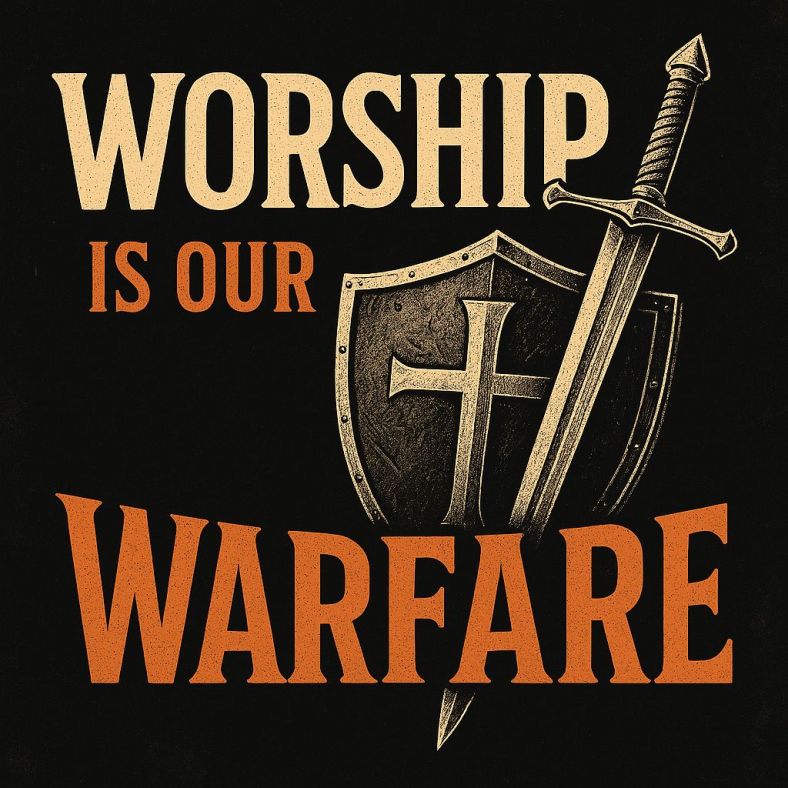
The weapons of our warfare are not carnal. We don’t fight with clever comebacks or viral trends. We fight with intercession, with worship, with the sword of the Spirit. “Take…the sword of the Spirit, which is the Word of God.” (Ephesians 6:17) We fight by standing. Armored up. Eyes fixed. Refusing to back down. Because the battle belongs to the Lord. “The Lord shall fight for you, and ye shall hold your peace.” (Exodus 14:14)

So let the lions roar. Let the furnaces blaze. Let the gallows rise. Let Goliath shout. We will not be moved. We will not be silenced. We will not bow. We are the ones who show up. Not with bravado, but with boldness. Not with performance, but with presence. Not with fear, but with fire. “Be strong and courageous. Do not be afraid…for the Lord your God goes with you.” (Deuteronomy 31:6) Because the Word of God is our weapon, and the Spirit of God is our strength.

And when the dust settles, it won’t be the devoted who fall—it’ll be the deceivers. The throne rooms of pride will tremble. The palaces of propaganda will collapse. And the remnant will rise—not because we were loud, but because we were loyal. Not because we were strong, but because we were surrendered. “Thanks be to God, who gives us the victory through our Lord Jesus Christ.” (1 Corinthians 15:57) The battle belongs to the Lord. We just need to show up.

Modern Witnesses: The Battle Still Belongs to the Lord

We’re not just looking back to ancient heroes—we’re witnessing modern-day warriors rise. Erika Kirk stood before a crowd and forgave the man who murdered her husband. That wasn’t weakness. That was warfare. “Father, forgive them…” wasn’t just spoken on a cross—it was echoed in a courtroom. Her courage didn’t come from emotion—it came from the Comforter. And Charlie Kirk’s boldness in confronting cultural strongholds with biblical clarity reminds us that the sling still works, the lions still roar, and the gallows still fall.

These aren’t just viral moments—they’re prophetic markers. God is raising up voices who won’t bow to fear, won’t bend to compromise, and won’t back down from truth.

“And they overcame him by the blood of the Lamb, and by the word of their testimony…” (Revelation 12:11)

CHRIST: OUR ANCHOR IN THE STORM


“We have this hope as an anchor for the soul, firm and secure.”

Hebrews 6:19 isn’t poetic fluff—it’s a lifeline. Jesus is not just our Savior; He is our stabilizer, our security blanket, our unshakable anchor when the winds of grief, injustice, and spiritual warfare howl around us.

In a world unraveling at the seams, where chaos seems to accelerate and darkness presses in, we cling to the hope that does not disappoint.

I was deeply moved by Erika Kirk’s public act of forgiveness toward the man who took her husband’s life. That kind of mercy doesn’t come from human strength—it’s the evidence of the Comforter, the power of the Cross, and the reality of resurrection hope. Her courage reminds us that anchored souls don’t drift—they stand. Even in the face of loss, they testify. Even in the face of evil, they forgive. May we be found tethered to Christ in this hour, not tossed by fear or bitterness, but held fast by the One who conquered death and calms every storm.

Consider the disciples in the boat, battered by waves and overwhelmed by fear, while Jesus slept peacefully in the aft. He had already told them, “Let us go over to the other side”—not “Let us go halfway and drown.” His word was a promise, yet their panic revealed a lack of trust. When they woke Him, He rebuked the wind and the waves, but He also rebuked them: “Why are you so afraid? Do you still have no faith?” (Mark 4:40). Jesus was present the entire time, resting securely because He knew the outcome. The storm was never stronger than His word.

So how do we react when faced with our own storms? Not everyone will endure a tempest as fierce as Erika Kirk’s, yet in the midst of a storm that would render many hopeless, she had the strength to say, “I forgive.” That is faith anchored in Christ. That is the kind of hope that holds fast when everything else breaks loose. Let us not measure the size of our storm, but the strength of our anchor. Let us trust the One who commands the waves and has already spoken our destination into being.

And what of the storms that come not from tragedy, but from vocal opposition—just for being who God called you to be? Remember Goliath, the uncircumcised Philistine who stood day and night belittling Israel, hurling insults and intimidation. The people of God cowered in fear, silenced by the size of the enemy. Today, many voices ridicule those who stand with truth, who support righteousness, who refuse to bow to cultural idols. Verbal grenades are lobbed to shame and silence—but David did not flinch.

David had faced his bears and lions. He had seen God’s deliverance firsthand. So when he heard Goliath’s taunts, he didn’t tremble—he ran toward the battle. His sling and stone were backed by a history of faithfulness. Likewise, those who have suffered and prevailed are uniquely equipped to help others who struggle. Scripture affirms this:

“[God] comforts us in all our troubles so that we can comfort others. When they are troubled, we will be able to give them the same comfort God has given us.” (2 Corinthians 1:4)

Let us not be intimidated by the giants of our day. Let us remember that the same God who anchored us in the storm also empowers us in the battle. The same Spirit who calms the sea also silences the accuser. May we stand like David—with history in our hands and hope in our hearts—ready to declare, “The battle is the Lord’s.”

BE A CHARLIE — SOMEONE NEEDS YOUR VOICE

In a generation silenced by fear and fatigue, we need voices that refuse to bow. Charlie stood for truth, for righteousness, for the Kingdom—and paid a price. But his legacy lives on in those who will not be intimidated, who will not retreat, who will not compromise. Be a Charlie. Speak when others shrink. Stand when others scatter. Someone needs your voice. Someone is waiting for your courage to unlock theirs.

Closing Prayer

Lord, anchor us in Your truth. When storms rage and giants roar, remind us that You are with us in the boat and on the battlefield. Give us the boldness of David, the endurance of Erika, and the conviction of Charlie. May we not be silenced by fear or shame, but rise with holy defiance and Spirit-led compassion. Use our scars to heal others. Use our voice to awaken the sleeping. Use our lives to glorify Your name. In Jesus’ name, Amen.