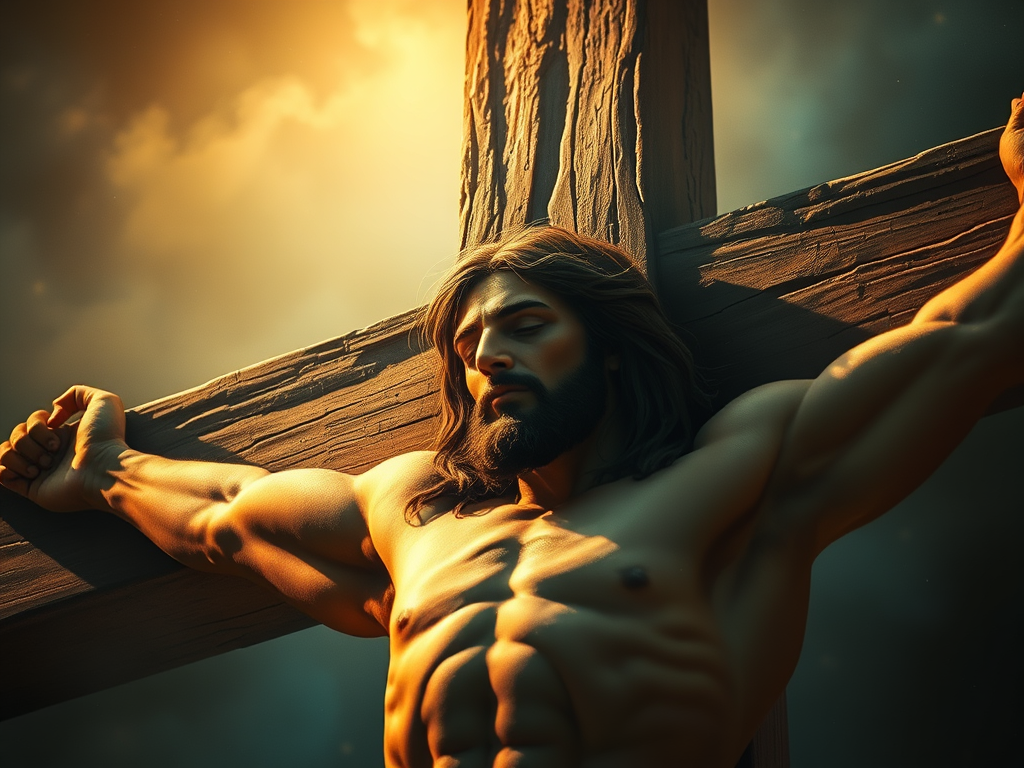
Some hymns lift our eyes to heaven, and some draw our hearts back to the place where everything changed. Jesus, Keep Me Near the Cross does both. This hymn was written by Fanny Crosby. Her physical blindness sharpened her spiritual sight. It is a quiet plea for nearness, intimacy, and anchoring grace.
Crosby never treated the cross as a distant historical event. For her, it was a living place of refuge, a wellspring of mercy, and the center of Christian hope. Her words are simple, but they are not shallow. They carry the weight of a life shaped by prayer, dependence, and a deep awareness of Christ’s sustaining presence.
Cowper’s hymn cries out for cleansing. In contrast, Crosby’s hymn leans into abiding. It offers a daily, moment-by-moment nearness that keeps the believer grounded in grace. This is not a hymn of crisis; it is a hymn of posture. It teaches us to stay close to the place where love was poured out. It also urges us to stay where redemption was secured. And finally, where hope was born.
The anchor comes from Jesus’ own words in John 12:32:
“And I, when I am lifted up from the earth, will draw all people to myself.”
Crosby hears that promise and responds with a simple, lifelong prayer: Draw me. Keep me. Hold me near.
As you listen to the piano meditation, let this hymn settle your spirit. Let it remind you that the cross is not merely the beginning of your faith — it is the place you return to again and again for strength, clarity, and peace.
Hymn Lyrics: Jesus, Keep Me Near the Cross
(Public Domain)
1 Jesus, keep me near the cross, There a precious fountain; Free to all, a healing stream, Flows from Calvary’s mountain.
Refrain In the cross, in the cross, Be my glory ever; Till my raptured soul shall find Rest beyond the river.
2 Near the cross, a trembling soul, Love and mercy found me; There the Bright and Morning Star Sheds its beams around me.
3 Near the cross! O Lamb of God, Bring its scenes before me; Help me walk from day to day, With its shadow o’er me.
4 Near the cross I’ll watch and wait, Hoping, trusting ever; Till I reach the golden strand, Just beyond the river.
Audio Meditation
COPYRIGHT TEMPLE MUSIC PRODUCTIONS 2025
Let the music draw you into the nearness of Christ — the place where mercy flows, where burdens lift, and where your heart finds rest.
About the Hymnwriter
Fanny J. Crosby (1820–1915) stands as one of the most prolific hymnwriters in Christian history. Though physically blind from infancy, she possessed a spiritual clarity that shaped thousands of hymns still sung today. Her life was marked by humility, prayer, and a deep love for Christ.
Jesus, Keep Me Near the Cross reflects her lifelong theme: staying close to the heart of God. Crosby never wrote from theory — she wrote from communion. Her hymns invite believers not just to believe in Christ, but to walk with Him, lean on Him, and remain near Him.
Benedictional Prayer
May the nearness of Christ steady your heart today. May His presence quiet your anxieties and renew your strength. May His cross remain your refuge, your anchor, and your peace. And may the One who draws all people to Himself draw you ever closer. Amen.
Hebrews 10 invites us to stand before the cross with clear eyes and a quieted heart. It reminds us that the law was never the destination. It was only the shadow of a greater reality yet to be revealed. The sacrifices of the Old Testament expose sin, but they never erase it. They bring people near, but they can not make them clean.
Christ, nevertheless, offered one sacrifice for sins for all time—and then He sat down. His work was finished. His offering was done. His blood accomplished what the law never could. It cleansed the conscience. It perfected those who draw near.
This is the truth that the beloved hymn Jesus Paid It All proclaims with such simplicity and power. Every believer confesses this. They have discovered that their hope does not rest in their own efforts. Instead, it rests in the finished work of Christ.
Scripture Anchor: Hebrews 10:12–14 (ESV)
“But when Christ had offered for all time a single sacrifice for sins, he sat down at the right hand of God… For by a single offering he has perfected for all time those who are being sanctified.”
Devotional
Hebrews 10 opens with a sobering reminder: the law was never meant to be the final answer. It was a shadow—a silhouette cast by something greater that had not yet appeared. The sacrifices of the Old Testament exposed sin, but they never erased it. They brought people near, but did not make them clean.
If the blood of bulls and goats had truly cleansed the conscience, the offerings would have stopped. But they didn’t. Year after year, the priests stood—always standing, always sacrificing—because the work was never finished. The very repetition of the sacrifices was proof of their insufficiency.
Hebrews 10:12 interrupts with the gospel in a single sentence. Christ offered one sacrifice for sins for all time. Then He sat down. The priests stood because their work was never done. Christ sat down because His work was finished.
This is the heart of the chapter: we do nothing because Jesus has done everything.
His sacrifice is not one more offering in a long line of attempts. It is the final offering. It is the perfect offering. It is the once-for-all offering. It actually cleanses the conscience and perfects those who draw near. The blood of Christ does what the law could never do—it makes us clean, whole, forgiven, and welcomed.
And this is where the hymn Jesus Paid It All becomes more than a song. It becomes a confession of faith that rises straight out of Hebrews 10. The hymn writer understood what the writer of Hebrews proclaimed. Our efforts and our striving cannot make us presentable before God. Our spiritual disciplines and attempts to “be better” are insufficient. None of these can make us presentable before God. They are good, but they are not atoning. They are helpful, but they are not saving.
We do not approach God because we have prayed enough. We do not approach God because we have behaved well enough. We do not approach God because we have avoided sin long enough. We approach God because Jesus paid it all.
And that changes everything.
Have you ever hesitated to come to God because you felt unworthy? Have you ever tried to “clean yourself up” before praying again? Have you ever believed the lie that you need a streak of good days before God will welcome you?
Hebrews 10 dismantles that lie. The hymn reinforces it. The cross settles it.
Your confidence before God is not rooted in your performance—it is rooted in Christ’s finished work. His sacrifice is not fragile. His blood is not temporary. His cleansing is not conditional. You are invited to draw near, not because you are worthy, but because He is.
So take a moment and ask yourself: Where am I still trying to offer God my own sacrifices?
My discipline
My consistency
My ministry
My moral effort
My attempts to “make up” for my failures
All of these things matter—but none of them save.
You are a son. You are a daughter. Not by your offerings, but by His.
And that is why generations have sung, and will continue to sing, that simple, liberating truth: Jesus paid it all. Not some. Not most. Not the part you can’t fix. All.
Hymn: Jesus Paid It All
Words: Elvina M. Hall (1865) Music: John T. Grape (1868)
Verse 1 I hear the Savior say, Thy strength indeed is small; Child of weakness, watch and pray, Find in Me thine all in all.
Refrain Jesus paid it all, All to Him I owe; Sin had left a crimson stain, He washed it white as snow.
Verse 2 Lord, now indeed I find Thy power and Thine alone, Can change the leper’s spots And melt the heart of stone.
Refrain Jesus paid it all, All to Him I owe; Sin had left a crimson stain, He washed it white as snow.
Verse 3 For nothing good have I Whereby Thy grace to claim; I’ll wash my garments white In the blood of Calv’ry’s Lamb.
Refrain Jesus paid it all, All to Him I owe; Sin had left a crimson stain, He washed it white as snow.
Verse 4 And when before the throne I stand in Him complete, “Jesus died my soul to save,” My lips shall still repeat.
Refrain Jesus paid it all, All to Him I owe; Sin had left a crimson stain, He washed it white as snow.
Jesus Paid It All: take time to meditate upon this great hymn as you are reminded as to how great a love the Lord has bestowed upon us, sinners as we are.
About the Hymnwriter
Elvina M. Hall wrote the words to Jesus Paid It All. She was sitting in the choir loft of Monument Street Methodist Church in Baltimore. As she listened to the sermon, the lines began forming in her heart—a simple, profound declaration of Christ’s sufficiency. John T. Grape, the church organist, later composed the tune that carried her words into the worship of generations.
The hymn endures because its message is timeless: Christ has done what we could never do. His sacrifice is enough.
Closing Prayer
Lord Jesus, thank You for Your once-for-all sacrifice. Thank You that You have done what the law could never do. Thank You that we can draw near with confidence, not because of our worthiness, but because of Your finished work. Teach us to rest in the truth that You paid it all. Amen.
Benediction
May the God who perfected you through the sacrifice of His Son fill you with confidence. May He also fill you with peace and joy as you draw near to Him. Walk in the freedom of the cross. Know that Jesus paid it all. Nothing can be added to His finished work.


You must be logged in to post a comment.