
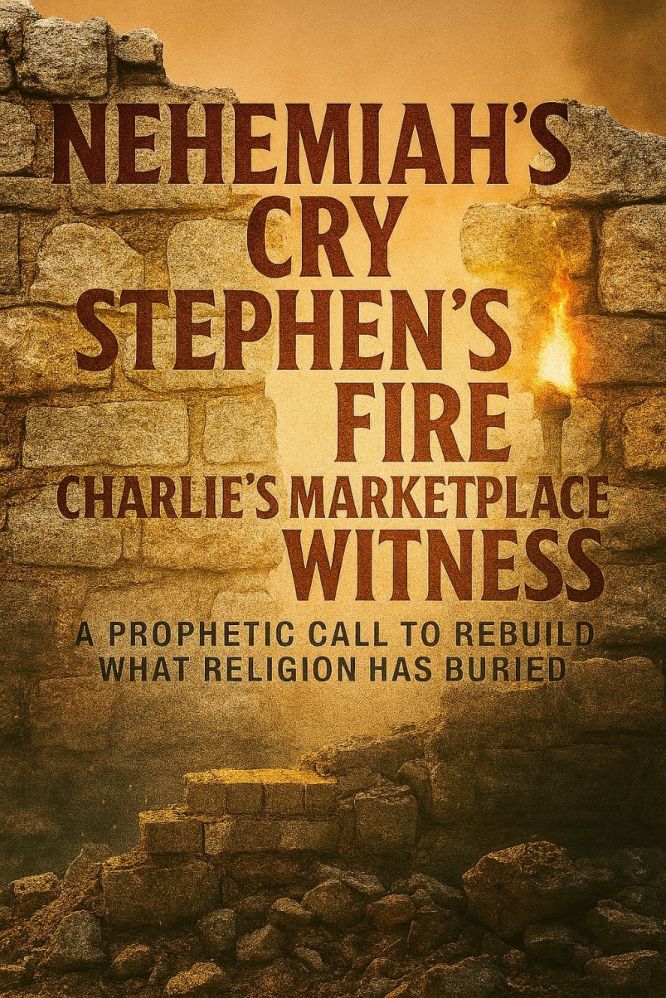
Nehemiah’s Cry, Stephen’s Fire, Charlie’s Marketplace Witness


A Prophetic Call to Rebuild What Religion Has Buried.
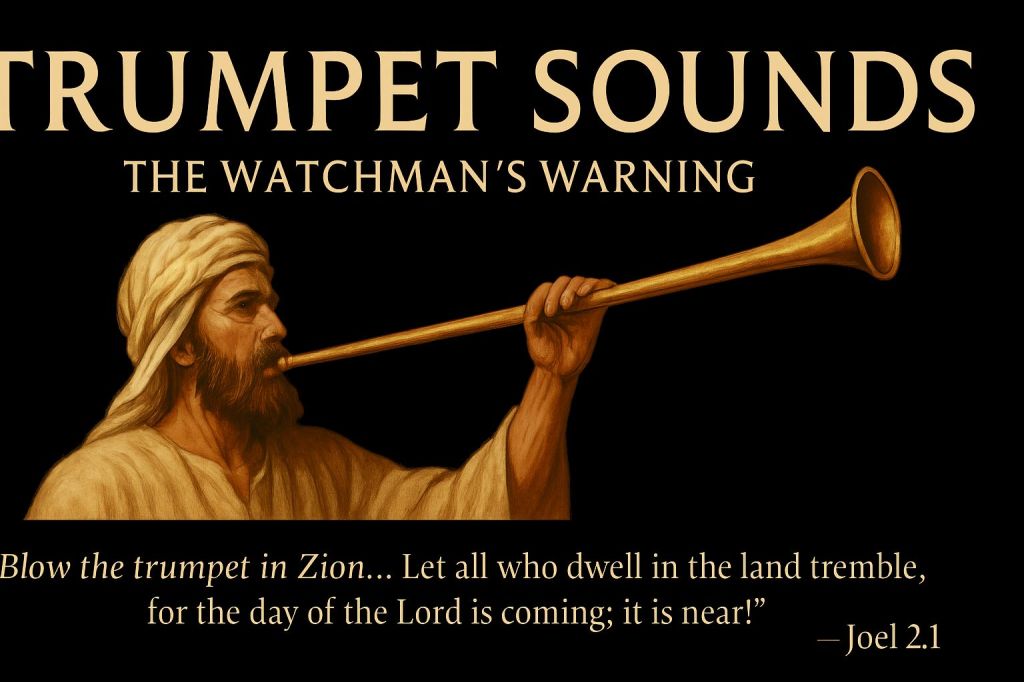
🧱 I. Nehemiah’s Cry: The Watchman Weeps Before He Builds

“When I heard these words, I sat down and wept, and mourned certain days, and fasted, and prayed before the God of heaven.” —Nehemiah 1:4

Nehemiah didn’t begin with blueprints—he began with brokenness. He wept for a city in ruins, a people scattered, and a testimony defiled. He didn’t blame Babylon. He confessed the sins of his fathers and his own house. This is the posture of the true reformer:

Eyes open to ruin

Heart pierced by grief

Hands ready to rebuild

“Let us rise up and build.” —Nehemiah 2:18

But not just walls. We must rebuild worship, witness, and the fear of the Lord.

🔥 II. Stephen’s Fire: The Prophet Rebukes the Temple System

“Ye stiffnecked and uncircumcised in heart and ears, ye do always resist the Holy Ghost…” —Acts 7:51 “The Most High dwelleth not in temples made with hands…” —Acts 7:48

Stephen stood before the Sanhedrin—not with diplomacy, but with divine indictment. He traced Israel’s history not to flatter, but to expose the pattern of rebellion. He named their addiction to temple worship, their rejection of the prophets, and their murder of the Just One.

They stopped their ears. They gnashed their teeth. They stoned him in public view.

But heaven stood.

“Behold, I see the heavens opened, and the Son of man standing on the right hand of God.” —Acts 7:56

Stephen’s death scattered the church. But that scattering became sending. The gospel left the building and entered the world.

🌐 III. Charlie’s Marketplace Witness: The Tent That Provokes

Charlie Kirk didn’t preach behind stained glass. He preached in tents, on campuses, in hostile forums. He invited confrontation—not for ego, but for truth.

And like Stephen, he was silenced. Not just by pagans, but by those who had grown comfortable in their own temples. Those who had traded fire for form. Those who had stopped their ears to conviction.

Stephen confronted the religious elite who resisted the Holy Spirit, clung to temple tradition, and rejected the living presence of God. Charlie confronted the cultural elite who replaced public worship with institutional idolatry, fortified temples to Baal, and silenced truth in the name of tolerance. Both exposed the error of their generation. Both provoked the gatekeepers of power. Both bore witness to a gospel that cannot be confined.

And both shared the same Lord—the Just One whom religion crucified and whom heaven vindicated.

But his death stirred millions. Not to vengeance, but to clarity. Not to politics, but to purpose.

“Go ye into all the world, and preach the gospel to every creature.” —Mark 16:15

The marketplace is the new Mars Hill. The tent is the new temple. The witness is the new worship.

🗣️ IV. Mars Hill and the Mandate to Go

Saul stood by as Stephen was stoned—arms crossed, heart hardened, breathing threats. He was the enforcer of temple purity, the silencer of Spirit-led fire. But heaven had other plans.

On the road to Damascus, the stone-caster was struck blind by glory. The persecutor became the preacher. The man who stopped ears became the voice that pierced nations.

“How shall they hear without a preacher? And how shall they preach, except they be sent?” —Romans 10:14–15

Paul was sent. Not to temples made with hands, but to Mars Hill. To the altar of the unknown god. To the philosophers, the skeptics, the seekers.

“Whom therefore ye ignorantly worship, him declare I unto you.” —Acts 17:23

He didn’t flinch. He didn’t soften. He declared the resurrected Christ in the heart of pagan Athens.

Paul went from defending stone walls to building living temples—churches planted in hostile soil, letters written in prison, disciples forged in fire.

“Know ye not that ye are the temple of God, and that the Spirit of God dwelleth in you?” —1 Corinthians 3:16

🧭 V. How Then Shall We Live?

“And they that were scattered abroad went every where preaching the word.” —Acts 8:4 “Not forsaking the assembling of ourselves together… but exhorting one another: and so much the more, as ye see the day approaching.” —Hebrews 10:25

We must gather—yes. But not to fulfill obligation. Not to rehearse tradition. Not to preserve religion.

We must gather to provoke, to equip, to send forth.

Organized religion has failed. It clings to form while rejecting fire. It resists the Holy Spirit and the living presence of God. It gathers in cathedrals to check a box, not to fulfill the Great Commission. And as cities and towns drift further from God, the message of the Cross remains locked inside these whited sepulchers—beautiful on the outside, but void of life within.

We must scatter again. Not in fear, but in fire. Not in rebellion, but in obedience.

We must rebuild—not monuments, but movements. Not padded pews, but prophetic pulpits. Not mini temples, but mobile tents of truth.

🧱 VII. Why Were the Walls Broken?

“Because ye have forsaken the Lord, he hath also forsaken you.” —2 Chronicles 24:20

The walls of Jerusalem didn’t fall by accident. They were breached because covenant was broken. God’s people abandoned His ways, worshiped idols, and silenced His prophets.

They fell into spiritual seduction—chasing Baal, blending with pagan cultures, trusting in alliances and rituals instead of repentance and righteousness. They honored God with lips but not with hearts. They kept temple routines but rejected the living God.

So judgment came. Babylon invaded. The temple was burned. The city was emptied. The people were exiled.

“This whole land shall be a desolation… and these nations shall serve the king of Babylon seventy years.” —Jeremiah 25:11

Seventy years of captivity. Not just political punishment—but spiritual discipline. God used Babylon to purge idolatry, provoke repentance, and prepare a remnant.

Jerusalem lay in ruins. No active testimony of God remained in the land. The stones of the walls they thought would protect them became a testimony against them. Why? Because seventy years prior, they stopped their ears to the Lord’s ways.

And when we trace back seventy years in our own nation’s history, we arrive at a moment when the worship of God was outlawed in the public square and replaced with the worship of Baal. Temples to Baal were fortified in every city and state—taking the form of institutes of education, filled not with truth but with false prophets of Baal. The testimony of God was buried beneath policy, philosophy, and pride.

Nehemiah’s cry came after the sentence was served. His burden was born from history’s warning: If we bury the Word, we will be buried by the world.

🩸 VIII. Final Charge: Rebuild the Wall, Restore the Witness

Nehemiah wept. Stephen burned. Charlie provoked. Paul preached.

Now it’s our turn.

Let the watchmen rise. Let Mars Hill be filled. Let the hardest hearts melt before an awesome God.

Because when one falls, thousands must arise. And when one is sent, the silence is broken.

🙏 Prayer

Lord of the broken wall and the burning heart, we come not with polished plans but with pierced spirits. We confess our comfort, our compromise, our silence. We ask for the fire of Stephen, the clarity of Charlie, the boldness of Paul, and the tears of Nehemiah. Send us into the marketplace, the campus, the tent, the prison, the pulpit. Let our witness provoke, our worship restore, and our walk reflect Your glory. Rebuild what religion has buried. Revive what tradition has tamed. And reign where man-made temples have failed. In Jesus’ name, amen.

📸 Benediction

May the God who scattered the church to save the world scatter you with purpose. May the Spirit who stood with Stephen stand with you in every confrontation. May the fire that fell on the apostles fall again on your tent, your table, your testimony. Go now—not to perform, but to provoke. Not to consume, but to commission. Not to build walls, but to raise altars.

In the name of the Father who sends, the Son who saves, and the Spirit who speaks— Amen.

Celebratory Occasions or Obligations?


But the former governors lived at the expense of the people and took from them food and wine, besides forty shekels of silver [a large monthly official salary]; yes, even their servants assumed authority over the people. But I did not so because of my [reverent] fear of God. Nehemiah 5:15 (AMP)

English: Queen Elizabeth II at Queen's Park

English: Queen Elizabeth II at Queen’s Park (Photo credit: Wikipedia)

Last week, Queen Elizabeth II celebrated her Diamond Jubilee in observance of her 60 years as constitutional monarch of the Commonwealth realms. The four-day celebration included public holidays throughout Britain, a 1,000-vessel flotilla on the Thames River, and a public concert outside Buckingham Palace (the queen’s residence). Impossible to miss was the day of pageantry during which crowds thronged the streets around the palace and World War II aircraft flew over. The queen remarked publicly about being humbled by the outpouring of support her subjects had given her.

Notice she used the term subjects as meaning subordinate to her. I am not well versed on Kings and Queens of England but to think that one person would be subject to another is slavery. Those in positions of authority rule over their SUBJECTS without regard to the needs and well-being of those subjects.

This is what Nehemiah found to be happening to his kinsmen and brethren in his homeland.

NOW THERE arose a great cry of the [poor] people and of their wives [driven to borrowing] against their Jewish brethren [the few who could afford to lend]. For some said, We, our sons and daughters, are many; therefore allow us to take grain, that we may eat and live! If we are not given grain, let us take it! Also some said, We are mortgaging our lands, vineyards, and houses to buy grain because of the scarcity. Others said, We have borrowed money on our fields and vineyards to pay the [Persian] king’s heavy tax. Although our flesh is the same as that of our brethren and our children are as theirs, yet we are forced to sell our children as slaves; some of our daughters have already been thus sold, and we are powerless to redeem them, for others have our lands and vineyards.

I [Nehemiah] was very angry when I heard their cry and these words. I thought it over and then rebuked the nobles and officials. I told them, You are exacting interest from your own kinsmen. And I held a great assembly against them. I said to them, We, according to our ability, have bought back our Jewish brethren who were sold to the nations; but will you even sell your brethren, that they may be sold to us? Then they were silent and found not a word to say.

Also I said, What you are doing is not good. Should you not walk in the fear of our God to prevent the taunts and reproach of the nations, our enemies? I, my brethren, and my servants are lending them money and grain. Let us stop this forbidden interest! Return this very day to them their fields, vineyards, olive groves, and houses, and also a hundredth of all the money, grain, new wine, and oil that you have exacted from them. Then they said, We will restore these and require nothing from them. We will do as you say. Then I called the priests and took an oath of the lenders that they would do according to this promise. Nehemiah 5:1-12 (AMP)

What a contrast between the Diamond Jubilee Celebration of Queen Elizabeth II and the jubilee declared by the then Governor Nehemiah. He noticed that his fellow citizens where being bought and sold like slaves because the nobles and officials thought it proper to exact a heavy tax upon them. These were all the same flesh, yet those in positions of authority were able to relegate those less fortunate than themselves to a lower class. They became SUBJECTED to these rulers who were using the economic downturn to enrich themselves at the cost of their fellow citizens.

Nehemiah was right in rebuking these wicked overlords for doing to their own people what they complained about while being subjected to Egyptian bondage and servitude. Nehemiah reminded them that they too were servants and subject to a higher authority, God, and if they wish to be treated mercifully by God then they ought to treat their fellow-man just as mercifully.

And make us free of our debts, as we have made those free who are in debt to us. Matthew 6:12 (BBE)

Jesus taught his disciples to pray to be released from the burden of indebtedness just as they should release others from that same burden. God takes no delight in exacting heavy taxation upon a free people. In fact it was because of the inhumane treatment Pharoah placed upon the Israelites held in Egyptian bondage that brought about the wrath of God upon that land.

Isn’t it funny how those who live off the livelihoods of others consider themselves worthy of such high praise and adulation? Jesus on the other hand came to GIVE to others and not take anything in return and for that he was vilified, mocked, scorned and ultimately crucified.

Should the crowds throng the streets to honor and praise Queen Elizabeth II? Was this celebration in honor of her majesty the Queen or was it an occasion to honor and thank the people for making her life possible by their sacrifices? A good and righteous ruler would take no more than that which was needed to allow the people as much freedom and wealth as possible.

I fed 150 Jewish leaders and their people who came to us from the surrounding nations. Preparing one ox and six choice sheep was necessary every day. Poultry was prepared for me. Once every ten days a supply of wine was ordered. Yet, in spite of all this, I never demanded anything from the governor’s food allowance, because these people were already carrying a heavy load. Nehemiah 5:17-18 (GW)

Can this same be said of today’s political leaders? Is there anything that can be learned from this? Whom do you suppose God would look favorably upon? The ruler who has mercy upon his fellow-man or the one who only thinks about enriching himself by the sweat of the brow of his fellow-man?

I do not know about you but I do not plan on dancing in the streets to honor another year of the service of our present leadership class? I will however be dancing in the street when all of them have been removed from their ivory towers and reduced to common man status. I will be rejoicing when my neighbor is released from the burden placed upon him by the government taxation and regulation. I will rejoice and celebrate when America is once again the land of the free and the hope of the nations. I will celebrate when the burden of government debt has been removed from the backs of our children and our children’s children. I shall not rejoice in the servitude of a tyrant.

And that is the way I see it. What say you?

Enhanced by Zemanta

Thanksgiving and Leftovers


A Turkey.

Image via Wikipedia

Ah those wonderful Thanksgiving dinner leftovers!  They are just as good the day after as the day of, at least in my opinion.  I can eat turkey sandwiches for a week after Thanksgiving and not tire of them.  It is the week after Thanksgiving.  Many have left the warm confines of their homes and ventured out into the wild world of Black Friday.  Some were out at midnight for those specially advertised sales.  Others have been waiting in line since way before daylight.

But not me; nope  I have made it a rule for myself to do everything possible to never even leave home on the day after Thanksgiving.  If at all possible I’m staying in, watching movies and yes, eating on those delectable Thanksgiving leftovers.  I might even watch the news to see how shoppers have fared on their day-after excursions.  Some of the stories are tragic and others just plain old funny.  On either end of the stick I’m glad that I’m not one of the stories.

Now don’t get me wrong.  I don’t have anything against those who enjoy the Black Friday experience – To each his own.  I really hope they find what they are looking for and have a wonderful time in the process.  Folks it just isn’t my cup of tea and I don’t think you’ll ever find me out in the crowd.  If you need me, I’ll probably be right here at home.

The word “leftovers” often doesn’t get the right rating.  A lot of people snarl their nose at leftovers.  In the Bible there were two times when a miracle of Jesus produced leftovers.  Once He had fed five thousand people with a few fish and a few loaves of bread and on another occasion the number was three thousand with the same menu.  Each time there was more leftovers than what He originally started with.  You know what; I think I might have liked to have tried those Heavenly leftovers.

In Nehemiah 12:46 we read, “For in the days of David and Asaph of old there were chiefs of the singers, and songs of praise and thanksgiving to God.”  The people were remembering how it had been during the days of David and Asaph.  The offices of the singers were very important to these men in the worship of God.  After their thanksgiving celebration the people of Israel under Nehemiah’s direction were trying to duplicate that so as to re-establish the wonderful worship of days gone by.  In a sense they were making trying to stretch the leftovers of their own worship for the coming days.  I believe that was a good thing.

When we have an unusually good time of worship with our Lord we want to bask in the leftovers of that experience, and we should.  That wonderful feeling of worship and closeness to God is something we want to last on and on.  It makes us to want to stretch that experience until the next one.  It’s a Heavenly leftover that we can always look forward to.

I pray that you had a wonderful Thanksgiving Day.  I sincerely hope that things went well for you and you made memories that will serve as pleasant leftovers for a long time to come.  We should want those kinds of leftovers.  We need to cherish those times and remember them in our hearts.  We never know when tragedy may strike and take away some of those family members we love.  But we can always relive those good times in our minds.

It’s the same with our spiritual thanksgiving.  Those times well spent with our Lord serve as pleasant memories that can encourage us in days to come.  Hold fast to them.  Never forget them.  Keep them close to your heart.  Then draw from them as the need arises.  Of course there will be new experiences in the Lord.  We’ll have more good times to come.  But never forget them and always give thanks.

Jerry D. Ousley is the Author of five books, “Soul Challenge”, “Soul Journey” “Ordeal” “The Spirit Bread Daily Devotional” and his first novel “The Shoe Tree.”  Listen to the daily broadcast Spirit Bread.  Find out more by visiting www.spiritbread.com

Article Source: http://www.faithwriters.com

Enhanced by Zemanta