The Road Already Traveled


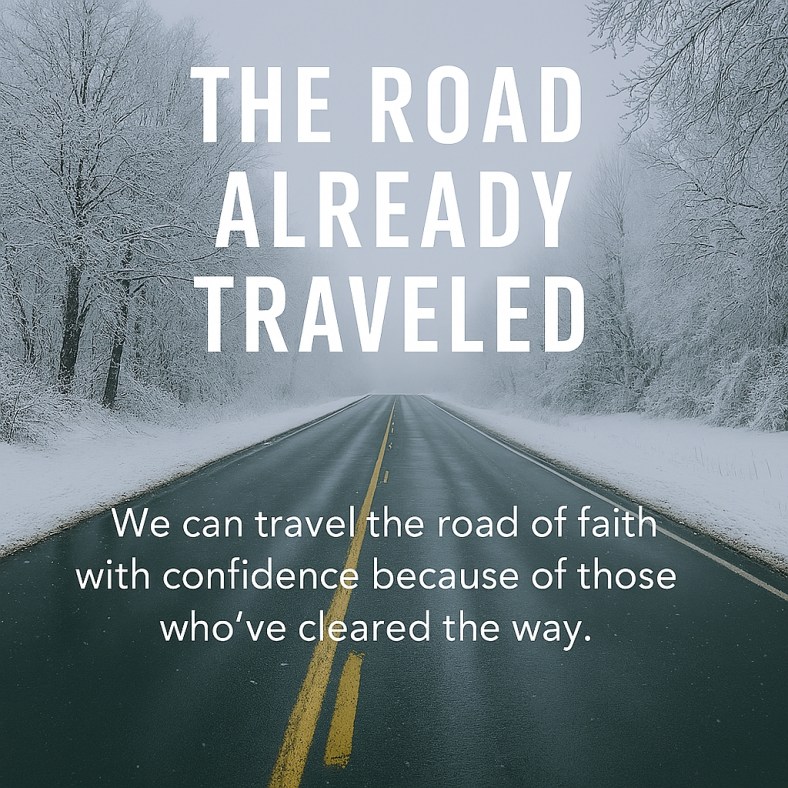
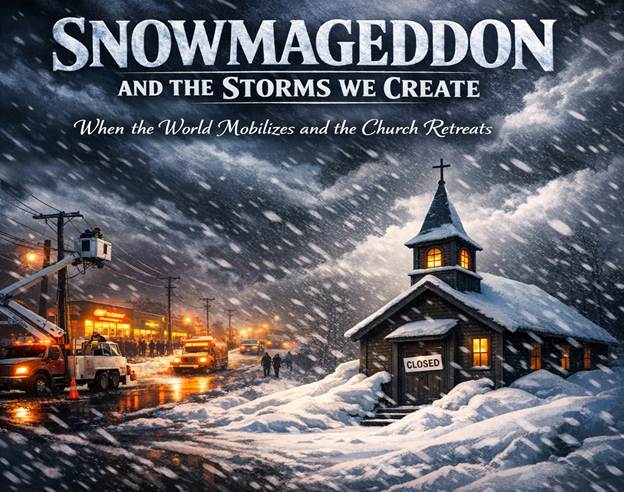
The snow had fallen heavy across the fields, a white blanket covering everything in sight. Yet as I drove my route, the roads beneath my tires were clear. Someone had gone before me. Road crews had braved the cold, plowed the snow, and laid down salt so I could travel safely. I didn’t see their labor, but I reaped its benefit.

That picture stayed with me: the unseen work of those who prepare the way. And I realized—it’s not just true of winter roads. It’s true of the life of faith.

Scripture tells us we are “surrounded by so great a cloud of witnesses” (Hebrews 12:1). Men and women of faith who endured hardship, persecution, and trials have gone before us. They cleared the path, leaving behind testimonies of endurance and courage. Their footprints mark the way, showing us it can be done.

Paul could say at the end of his journey, “I have fought the good fight, I have finished the race, I have kept the faith” (2 Timothy 4:7). His words are like mile markers on the road, encouraging us to press on. The prophets, apostles, martyrs, reformers, and even faithful family members who walked with Christ—they all labored so we could travel confidently along the pathway they laid.

And here’s where the “comfort angel” comes in. Paul also writes that God comforts us in our affliction “so that we may be able to comfort those who are in any affliction, with the comfort with which we ourselves are comforted by God” (2 Corinthians 1:3–4). That’s the ministry of comfort: what once was frightening becomes manageable because someone else has already walked it, received God’s mercy, and left behind encouragement. Their testimony is like salt on icy roads, turning danger into safe passage.

Just as I thanked the road crews for their unseen work, I thank God for those who prepared the way of faith before me. Their endurance clears my doubts. Their testimony salts the icy patches of fear. Their example plows through the drifts of discouragement.

And now, the responsibility is ours. We are not only travelers—we are road crews for those who will come after. Our faithfulness today prepares tomorrow’s pathway. Our endurance becomes encouragement for the next generation.

So drive forward with confidence. The road is not uncharted. It has been traveled, tested, and proven. And as we follow Christ, we prepare the way for others to follow Him too—comforting them with the same comfort we ourselves have received.

We can travel the road of faith with confidence because of those who’ve cleared the way.

Reservoirs, Civilizations, and the Church’s Mission


Long before our highways and reservoirs, there was the Indus Valley Civilization — one of the world’s earliest advanced societies. They thrived between 5,000 and 3,500 years ago in what is now Pakistan and northwest India. Their cities were marvels of planning: paved streets, sewage systems, irrigation channels, and cisterns that stored precious water. For centuries they flourished, but when the rains ceased and the inflow slowed, their reservoirs and rivers could no longer sustain them. Over time, the people dispersed, their great cities abandoned, undone not by war but by drought.


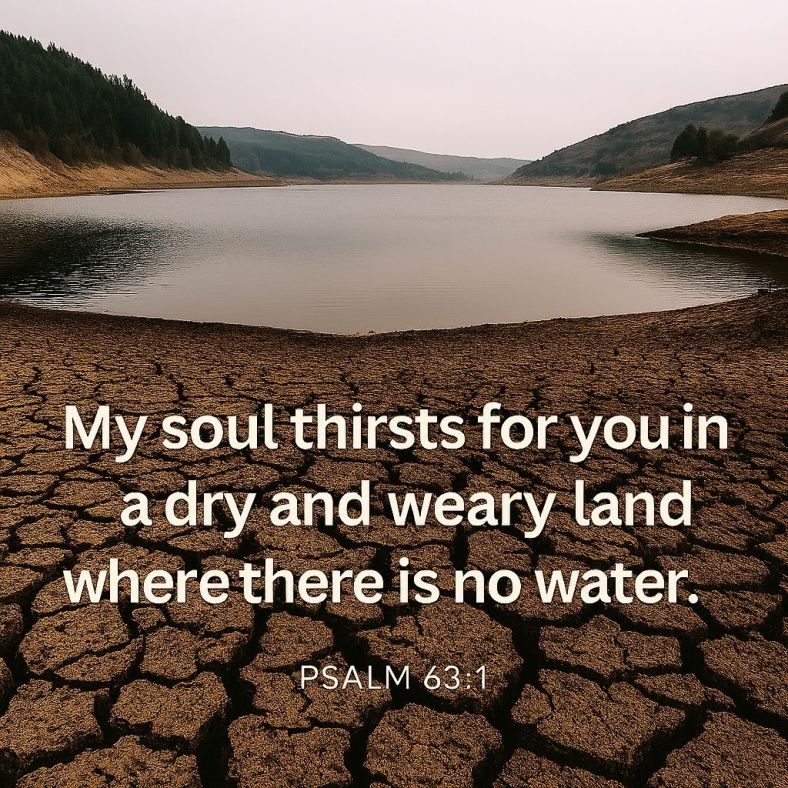
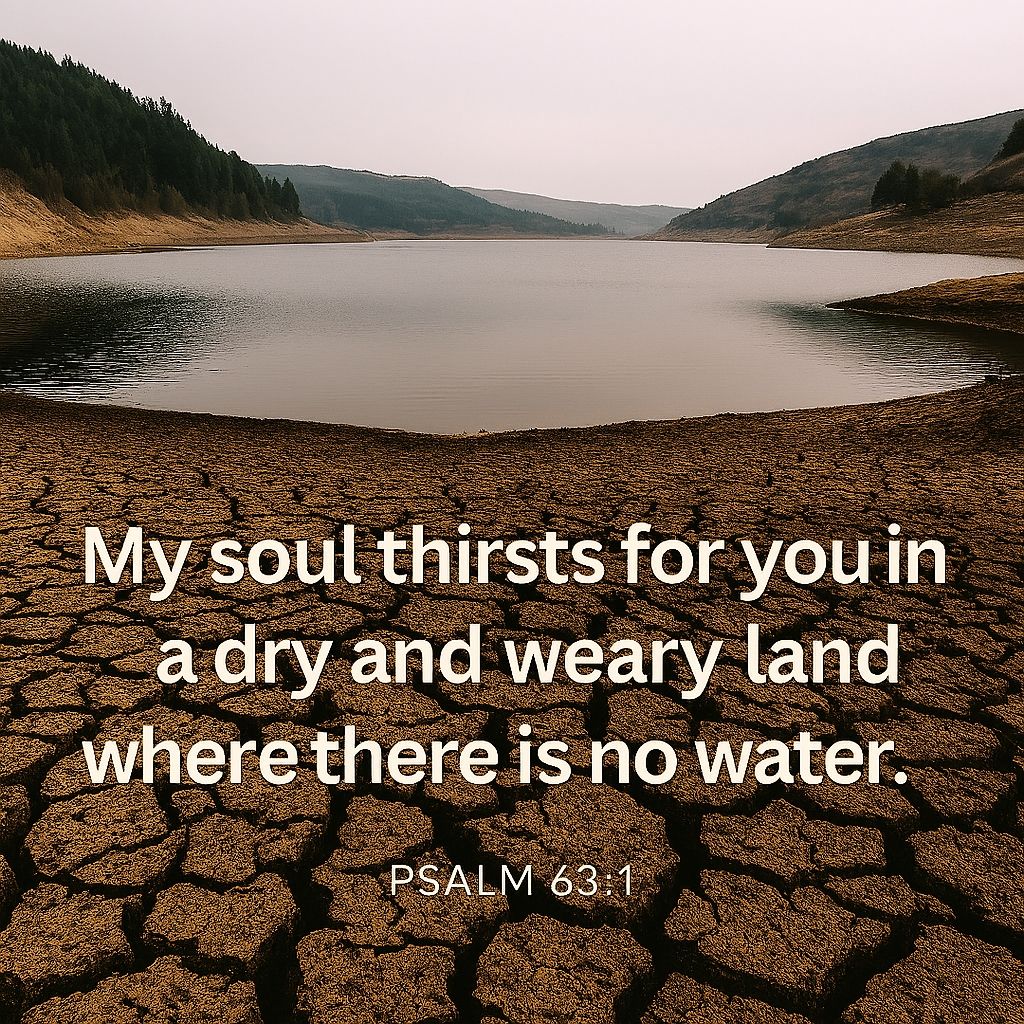
That history came to mind as I drove past the Oneida Valley Reservoir this week. Through the windshield I saw the shallow waterline, the exposed banks, the tired look of a system running on yesterday’s supply. And I thought of the church in our time.

The people gather as the season of Hope, Joy, Love, and Light approaches. They light candles, sing carols, and preach sermons. Yet many hearts are heavy, struggling to believe tomorrow will be brighter. Joy is thin, divisions are common, and Love is misplaced — poured into the institution or the season rather than the Lord Himself. The Light flickers, but shadows linger.

The watchman cries out with the words of Jeremiah:“My people have committed two evils: they have forsaken me, the fountain of living waters, and hewed out cisterns for themselves, broken cisterns that can hold no water” (Jeremiah 2:13).Do you not see? Our reservoir cannot survive on yesterday’s water. Hope cannot be sustained by slogans, Joy cannot be manufactured by programs, Love cannot be replaced by sentiment, and Light cannot shine without Christ Himself. We need fresh inflow — daily bread, living water, the Spirit poured anew — or our reservoir will run dry.

Even now, homes affected by low water levels are advised to reduce usage. Conservation helps, but it cannot restore the reservoir. The only way the water rises again is for the heavens to open and pour down refreshing rain. We can preserve all we want, but without a fresh inflow, the supply will eventually dry up.

Barna’s research confirms the warning. The number of religious “nones” — those with no faith affiliation — has climbed steadily, now representing nearly a quarter of U.S. adults. It is the sign of an organization failing its primary mission: to bring living water to a thirsty world. And when our own supply is uncertain, when we are in survival mode, our ability to offer even a drink of cold water to “the least of these” (Matthew 10:42) is greatly affected. A reservoir that has been dammed up for years cannot refresh others; its shallow waters leave both the church and the world parched.

Yet the promise remains: “If anyone thirsts, let him come to me and drink. Whoever believes in me… out of his heart will flow rivers of living water” (John 7:37–38). Christ is the Living Water. His Spirit is the inflow that renews Hope, restores Joy, rekindles Love, and shines Light into the darkness. And the truth is simple enough to remember as you drive past shallow waters or flickering lights:

Know Jesus, know peace. No Jesus, no peace.

A Brand New Day!


erase_mistake

Psalm 103:12 (BBE)
12  As far as the east is from the west, so far has he put our sins from us.

Philippians 3:13-14 (AMP)
13  I do not consider, brethren, that I have captured and made it my own [yet]; but one thing I do [it is my one aspiration]: forgetting what lies behind and straining forward to what lies ahead,
14  I press on toward the goal to win the [supreme and heavenly] prize to which God in Christ Jesus is calling us upward.

Tradition has it that many on New Year’s day make resolutions, plans and goals that they have for the upcoming year. By making resolutions we admit that in the past we have not lived up to our expectations and desire to make a change for the upcoming year. We reflect on what we wanted to do the past year, and make a promise to ourselves and others that we will attempt to do better this coming year. Many make a resolution to diet or exercise, some may plan on being a better parent or spouse, some may plan to make a career change or seek higher education, some may wish to make major lifestyle changes or relocate to another place, whatever the goal, resolutions by nature, indicate that we are not 100% satisfied with were we are in life.

Paul made this sentiment clear when writing to the Philippians in chapter three. He was resolved to learn more about Christ and to become more like him even to the point of sharing in the sufferings of Christ being conformed to Christ even in death. Paul, although he was accomplished in society did not regard his social standing as anything to boast about but rather tossed that aside as garbage when he came to Christ. He valued a relationship with Christ to be of more value then any earthly gain or status. Paul wanted to be associated with Christ to such a degree that he would actually suffer and die like Christ because of his faith in Christ.

Paul’s resolution stands in stark contrast to today’s resolutions because the focus of Paul was on the here-after and not the here-and-now. Paul chose to aim for and attempt to imitate one who was greater than he. He wanted to be like Christ. Paul admitted that he had fallen far short of his lofty goals repeatedly, and yet he held onto the hope that there was going to be a new day, another opportunity to try again to reach his goal. He had set his heart on which way he wanted to go, and although he had been knocked off course numerous times, he brushed off the failures and continued onward and upward.

One of the greatest gifts of Christ is the gift of forgiveness, Jesus came to erase our pasts and give us a new future, a new hope, another chance to do better. Although many observe a new beginning once a year, Christ gives us a brand new start every morning. His faithfulness is renewed each day, his forgiveness wipes out our failures of the past and we are given a clean slate to try yet again. He erases our mistakes and casts them into the sea of forgetfulness and does not hold them up to us as a constant reminder nor torment us with all our weaknesses and shortcomings. Jesus loves us enough to wipe away all our failures giving us a new start each and every day.

So then why not take today and thank God for giving you another opportunity to get it right and then, like Paul, take aim at the higher calling and press toward the goal of being more like Christ today. Take it one day at a time and do not fret if you come up short because the Lord has a new day in store for you as the morning sun rises.

Psalm 118:24 (GW)
24  This is the day the LORD has made. Let’s rejoice and be glad today!

Happy new day!

A Place Where You Can Always Find Help


Christian wallpaper Psalm 9:9
There is a place where the oppressed and downtrodden can go. Do not look to the government or the institutions of man for real help. Look up and seek the Lord for He is the only real help in time of need. Cry out to the Lord and He will be a refuge in your time of trouble.

Powered by ScribeFire.

The Greater and the Lessor Light


Christian wallpaper Genesis 1:16
Both lights are needful. Light and dark must exist to distinguish between day and night. Many like to follow after the lessor, let us however strive to follower after the greater. 

This is why people are condemned: The light came into the world. Yet, people loved the dark rather than the light because their actions were evil. People who do what is wrong hate the light and don’t come to the light. They don’t want their actions to be exposed. But people who do what is true come to the light so that the things they do for God may be clearly seen. John 3:19-21 (GW)