
PLAYOFF FAITH — RUN TO WIN


1 Corinthians 9:24-26


Imagine a sharp, high-definition shot from a night playoff game. Stadium lights cut through the cold air. Breath is visible from the linemen at the line of scrimmage. Grass is torn up under cleats. A roaring crowd is pressed in on all sides. On the field, helmets collide, jerseys stretch, and every yard is fought for. In the stands, thousands of hands are raised. Voices are lifted. Hearts are fully engaged. Yet only twenty-two people are actually in the game.

That’s the picture Paul presses into when he writes:“Do you not know that in a race all the runners run, but only one receives the prize? So run that you may obtain it.”1 Corinthians 9:24

Every athlete starts the season with the same uniform. They have the same schedule. Everyone faces the same long list of practices and meetings. Film sessions are also part of the routine. In the same way, many believers step into the life of faith. They put on the “uniform.” They attend services. They lift their hands in worship. They learn the language of the kingdom. But Paul’s words cut through a dangerous assumption: simply being on the team does not guarantee the trophy. Not everyone who runs wins. Not everyone who shows up finishes with a crown.

There is a subtle mindset that creeps into the church. It is much like the attitude of some fans in the stands. They think, “I’m here, I’m cheering, I’m emotionally invested — so I’m part of the action.” The stadium needs spectators, but the scoreboard only tracks what happens on the field. In the same way, Christianity was never meant to be a spectator sport. It is not just about watching, reacting, and commenting from a distance. It is a participation calling — a summons onto the field, into the contact, into the cost.

Paul won’t let us hide in the bleachers. He pulls us down to field level and says, in essence: Look around. Everyone is running. Everyone is moving. Everyone appears busy. But only those who run with intention, discipline, and focus actually obtain the prize. That is the difference between regular-season faith and what we call Playoff Faith.

Regular-season faith is content to be present. Playoff Faith is determined to prevail.

Paul continues:“Every athlete exercises self-control in all things. They do it to receive a perishable crown, but we an imperishable.”— 1 Corinthians 9:25

Players on the field will push their bodies to the edge of exhaustion. They will study film deep into the night. They will live with relentless focus. All of this effort is for a trophy that will gather dust and a ring that will one day be buried. They do all of that for a glory that fades as soon as the next season starts. Meanwhile, believers are called to train for a crown that will never tarnish. It will never crack, never be outdated, and never be replaced.

Yet if we are honest, many of us have given more discipline to our hobbies, our careers, our favorite teams, and our entertainment than we have to the race of faith.

Paul refuses to preach from a safe distance. He does not see himself as a commentator in the booth, narrating the game while others take the hits. Listen to his language:“So I do not run aimlessly; I do not box as one beating the air. But I discipline my body and keep it under control, lest after preaching to others I myself should be disqualified.”— 1 Corinthians 9:26–27

This is not fear talking; it is focus. This man understands that calling is not the same as finishing. He knows gifting is not the same as winning. He knows that the uniform gives you access, but discipline brings advancement. He refuses to assume that being on the roster of preachers automatically places him on the podium of finishers.

This is where Playoff Faith is born. It doesn’t emerge in the spotlight. It grows in the quiet, unseen choices that separate contenders from the crowd. The ones who advance in the kingdom are not always the most talented. They are not always the most visible or the most loudly cheered. They are the ones who refuse to coast. The ones who refuse to confuse attendance with endurance. The ones who refuse to settle for a spiritual participation trophy when God has placed a real crown within reach.

Playoff Faith is the faith that steps out of the stands and onto the field. It’s the believer who decides, I will not only sing about surrender; I will actually surrender. I will not only clap for obedience; I will actually obey. I will not only cheer for others who run; I will run my own race to win. Christianity is not something we watch; it’s something we walk. It is not something we consume; it’s something we carry.

Playoff Faith wakes with purpose. It trains when no one is watching. It guards the heart when compromise whispers, “Just ease up. You’re doing more than most.” It keeps running when the season gets long and the hits get heavy. It remembers there is a finish line ahead. There is a real reward beyond it. It takes Paul’s words seriously: not everyone who enters the race wins the crown. Everyone who runs to obtain it has a real chance to finish with that crown in hand.

This is the invitation God puts before us. It is not to run casually. It is not to drift. It is not to live as if the outcome is automatic. The invitation is to run with fierce determination, to run with focused determination. That includes seeking the pleasure of God. It involves experiencing the joy of obedience. It testifies to a life that did more than watch from the stands.

You might feel small as a single player in a massive stadium. However, heaven is not judging you based on your seat. It is watching your race.

Playoff Faith does not settle for being on the team. Playoff Faith refuses the comfort of the bleachers. Playoff Faith runs, and trains, and presses, and finishes —to win.

🏈 BENEDICTION — FOR THOSE WHO RUN TO WIN

May the Lord strengthen your stride, discipline your heart, and focus your eyes on the imperishable crown.

May you refuse the comfort of the bleachers, the drift of casual faith, and the illusion that presence equals victory.
May you run with purpose, train with fire, and finish with joy.
And when the hits come, when the season stretches, when the crowd thins —may you remember that heaven does not reward the loudest cheer, but the deepest endurance.
You were not made to spectate. You were called to participate. You were chosen to run.
So run to win.
In Jesus’ name —
Amen.


The Road Already Traveled


The snow had fallen heavy across the fields, a white blanket covering everything in sight. Yet as I drove my route, the roads beneath my tires were clear. Someone had gone before me. Road crews had braved the cold, plowed the snow, and laid down salt so I could travel safely. I didn’t see their labor, but I reaped its benefit.

That picture stayed with me: the unseen work of those who prepare the way. And I realized—it’s not just true of winter roads. It’s true of the life of faith.

Scripture tells us we are “surrounded by so great a cloud of witnesses” (Hebrews 12:1). Men and women of faith who endured hardship, persecution, and trials have gone before us. They cleared the path, leaving behind testimonies of endurance and courage. Their footprints mark the way, showing us it can be done.

Paul could say at the end of his journey, “I have fought the good fight, I have finished the race, I have kept the faith” (2 Timothy 4:7). His words are like mile markers on the road, encouraging us to press on. The prophets, apostles, martyrs, reformers, and even faithful family members who walked with Christ—they all labored so we could travel confidently along the pathway they laid.

And here’s where the “comfort angel” comes in. Paul also writes that God comforts us in our affliction “so that we may be able to comfort those who are in any affliction, with the comfort with which we ourselves are comforted by God” (2 Corinthians 1:3–4). That’s the ministry of comfort: what once was frightening becomes manageable because someone else has already walked it, received God’s mercy, and left behind encouragement. Their testimony is like salt on icy roads, turning danger into safe passage.

Just as I thanked the road crews for their unseen work, I thank God for those who prepared the way of faith before me. Their endurance clears my doubts. Their testimony salts the icy patches of fear. Their example plows through the drifts of discouragement.

And now, the responsibility is ours. We are not only travelers—we are road crews for those who will come after. Our faithfulness today prepares tomorrow’s pathway. Our endurance becomes encouragement for the next generation.

So drive forward with confidence. The road is not uncharted. It has been traveled, tested, and proven. And as we follow Christ, we prepare the way for others to follow Him too—comforting them with the same comfort we ourselves have received.

We can travel the road of faith with confidence because of those who’ve cleared the way.

Reservoirs, Civilizations, and the Church’s Mission


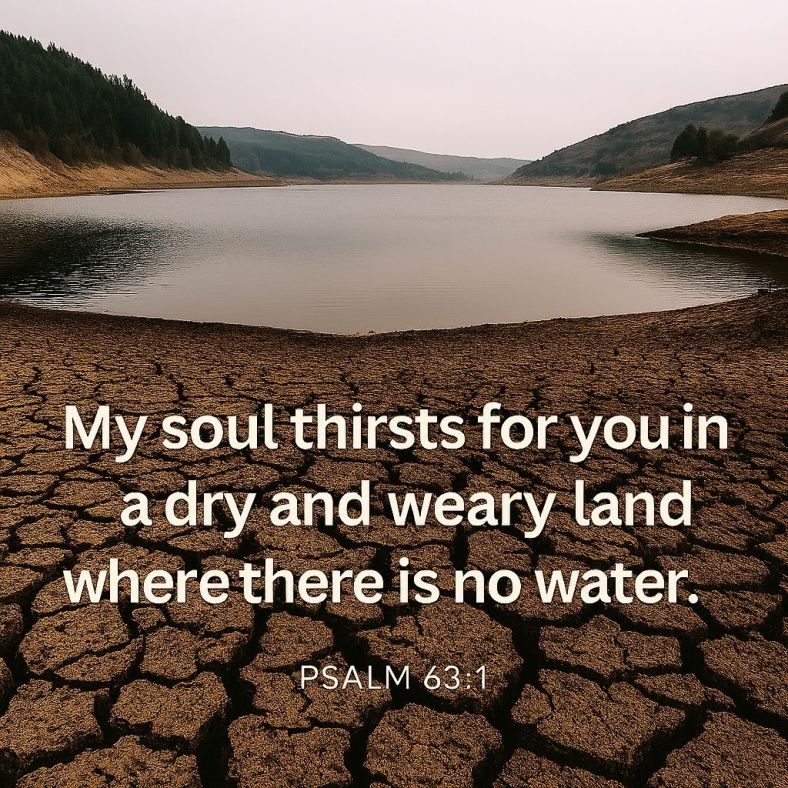
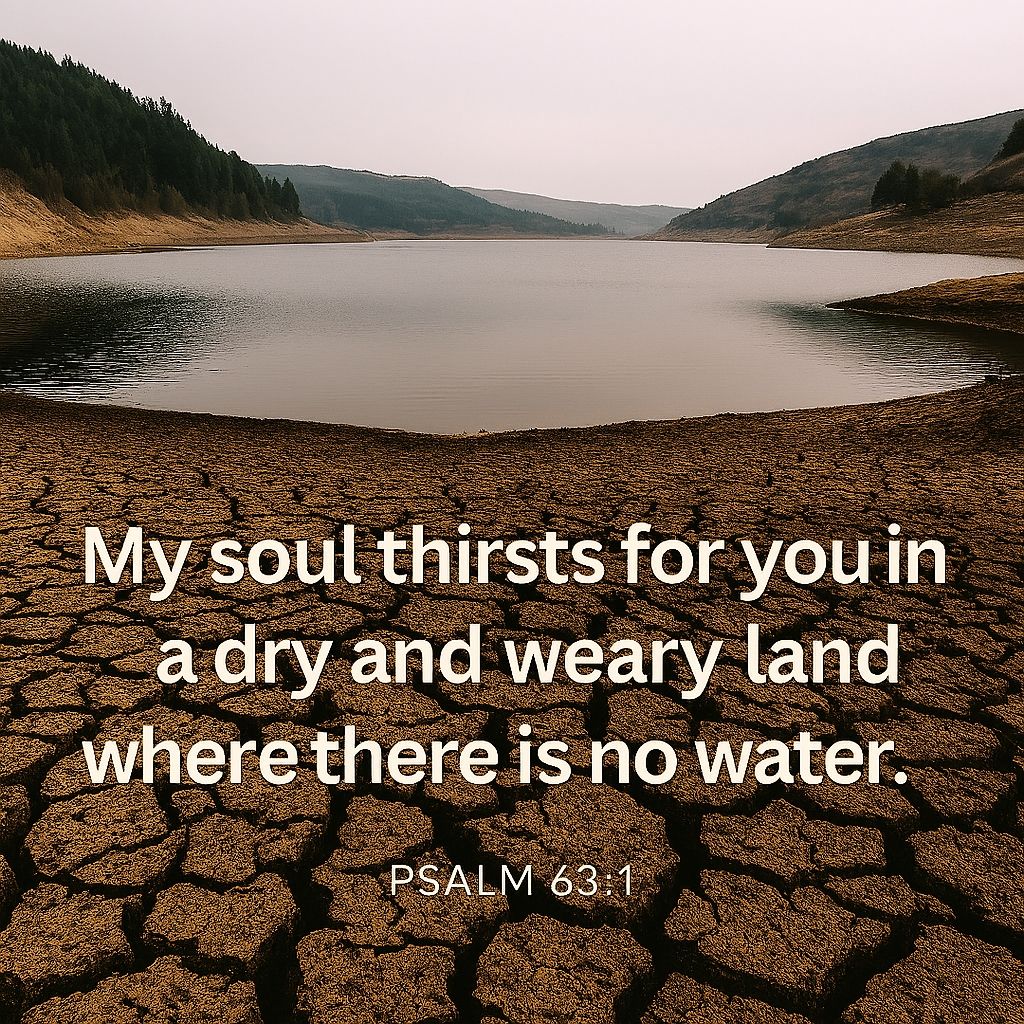
Long before our highways and reservoirs, there was the Indus Valley Civilization — one of the world’s earliest advanced societies. They thrived between 5,000 and 3,500 years ago in what is now Pakistan and northwest India. Their cities were marvels of planning: paved streets, sewage systems, irrigation channels, and cisterns that stored precious water. For centuries they flourished, but when the rains ceased and the inflow slowed, their reservoirs and rivers could no longer sustain them. Over time, the people dispersed, their great cities abandoned, undone not by war but by drought.


That history came to mind as I drove past the Oneida Valley Reservoir this week. Through the windshield I saw the shallow waterline, the exposed banks, the tired look of a system running on yesterday’s supply. And I thought of the church in our time.

The people gather as the season of Hope, Joy, Love, and Light approaches. They light candles, sing carols, and preach sermons. Yet many hearts are heavy, struggling to believe tomorrow will be brighter. Joy is thin, divisions are common, and Love is misplaced — poured into the institution or the season rather than the Lord Himself. The Light flickers, but shadows linger.

The watchman cries out with the words of Jeremiah:“My people have committed two evils: they have forsaken me, the fountain of living waters, and hewed out cisterns for themselves, broken cisterns that can hold no water” (Jeremiah 2:13).Do you not see? Our reservoir cannot survive on yesterday’s water. Hope cannot be sustained by slogans, Joy cannot be manufactured by programs, Love cannot be replaced by sentiment, and Light cannot shine without Christ Himself. We need fresh inflow — daily bread, living water, the Spirit poured anew — or our reservoir will run dry.

Even now, homes affected by low water levels are advised to reduce usage. Conservation helps, but it cannot restore the reservoir. The only way the water rises again is for the heavens to open and pour down refreshing rain. We can preserve all we want, but without a fresh inflow, the supply will eventually dry up.

Barna’s research confirms the warning. The number of religious “nones” — those with no faith affiliation — has climbed steadily, now representing nearly a quarter of U.S. adults. It is the sign of an organization failing its primary mission: to bring living water to a thirsty world. And when our own supply is uncertain, when we are in survival mode, our ability to offer even a drink of cold water to “the least of these” (Matthew 10:42) is greatly affected. A reservoir that has been dammed up for years cannot refresh others; its shallow waters leave both the church and the world parched.

Yet the promise remains: “If anyone thirsts, let him come to me and drink. Whoever believes in me… out of his heart will flow rivers of living water” (John 7:37–38). Christ is the Living Water. His Spirit is the inflow that renews Hope, restores Joy, rekindles Love, and shines Light into the darkness. And the truth is simple enough to remember as you drive past shallow waters or flickering lights:

Know Jesus, know peace. No Jesus, no peace.

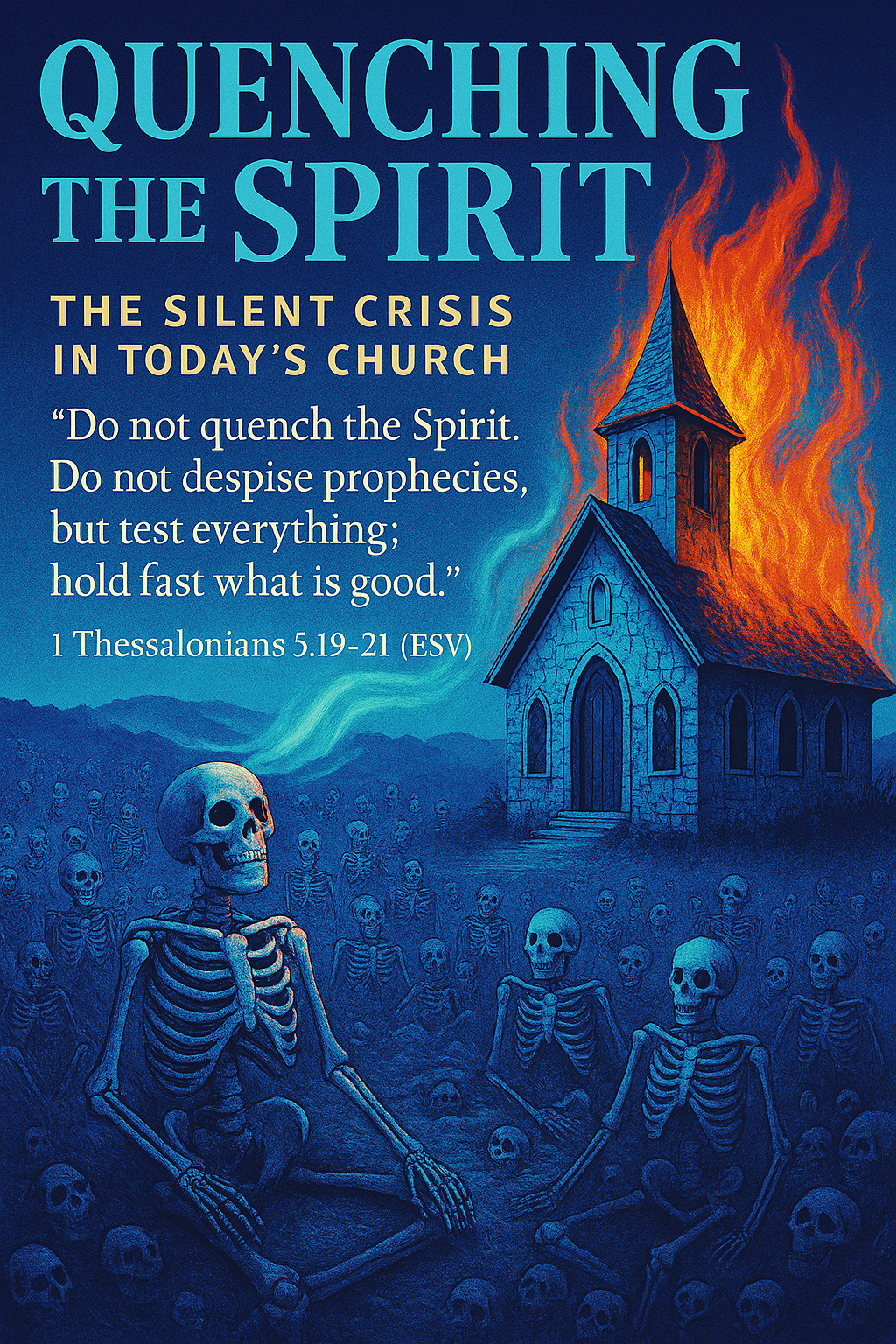
Quenching the Spirit: The Silent Crisis in Today’s Church


Random Ramblings from the Resident Raptor

“Do not quench the Spirit. Do not despise prophecies, but test everything; hold fast what is good.”
1 Thessalonians 5:19-21 (ESV)

The Apostle Paul’s warning is a cry to the modern church: Do not quench the Spirit! Yet, countless churches have unknowingly become fire suppressants, designing services that leave no room for the movement of God. The Spirit is choked, the prophetic voice silenced, the wind of revival stilled. What remains is an empty structure—a skeletal framework of religion that remembers the past but does not live it (2 Timothy 3:5).

But the crisis we face today is not new—it has been woven through biblical history. If we would just listen, if we would look, Scripture already shows us the cost of silencing the breath of God.


The Valley of Dry Bones: The Calling and the Resistance

“The hand of the Lord was on me, and he brought me out by the Spirit of the Lord and set me in the middle of a valley; it was full of bones.”
Ezekiel 37:1

Revival always begins with the hand of God upon someone—a chosen vessel, set apart for a divine task. Ezekiel was not placed in the valley by accident; God positioned him intentionally in the midst of death, decay, and desolation. He was sent not just to observe, but to speak, to call forth breath, and to declare life where death reigned.

Yet in the physical vision, the bones were completely lifeless, all flesh had been removed—they had no resistance, no voice, no ability to reject the call of God. When Ezekiel prophesied, they responded immediately; they could not fight back because they were truly dead (Ezekiel 37:7-10).

But in spiritual reality, the modern church is not fully dead—it still has some life on its bones, it still walks in the flesh enough to resist the call of God. Instead of surrendering to revival, instead of rising to the prophetic word, many churches fight against the placement of God’s chosen, resist the voices He has sent, and silence the Word instead of receiving it.

The spirit may be willing but the flesh is weak. (Matthew 26:41)

The Thessalonians were warned against this very act:
“Do not quench the Spirit. Do not despise prophecies, but test everything; hold fast what is good.”
1 Thessalonians 5:19-21

Paul foresaw what would happen if the church turned against its own awakening. A church that rejects prophecy, silences the Spirit, and fights against divine placement is suffocating itself. It is not fully dead—but it is dying.

This is precisely what Jesus rebuked in the Pharisees:
“Woe to you, teachers of the law and Pharisees, you hypocrites! You are like whitewashed tombs, which look beautiful on the outside but on the inside are full of the bones of the dead and everything unclean.”
Matthew 23:27

Their outward form appeared righteous, yet inside they were lifeless—spiritually dead, spreading corruption instead of revival. And worse, they didn’t just remain in their own deception—they multiplied death, leading others deeper into spiritual ruin:

“Woe to you, scribes and Pharisees, hypocrites! For you travel land and sea to win one convert, and when he becomes one, you make him twice as much a child of hell as yourselves.”
Matthew 23:15

These spiritless leaders were not reviving people—they were burying them. They were not calling forth breath—they were silencing it. The Pharisees were not just dead bones themselves—they were creating a modern valley of dry bones, filled with disciples of death instead of disciples of Christ.


Elijah and the Fire Suppressants: When the Altar Became Empty

“How long will you waver between two opinions? If the Lord is God, follow him; but if Baal is God, follow him.”
1 Kings 18:21

Elijah stood atop Mount Carmel, confronting not just the false prophets, but the people who had accepted the deception. Israel had grown spiritually dull, hosting empty worship services that had no impact, no presence, no awareness of God’s absence. They clapped, they sang, they danced, but they did not realize they were spiritually dead.

The prophets of Baal cried out, danced, and slashed themselves, believing that volume and movement would summon fire. But there was none (1 Kings 18:26-29). Their worship was loud but powerless, dramatic but empty, passionate but void of the Spirit.

The prophets of Baal were not chosen, not sent, not anointed. They set themselves up as spokesmen for God without His presence. And what did they produce? Emptiness. Delusion. False manifestations.

This is the modern deception—the belief that noise equals anointing, that repetition equals revival, that emotion equals encounter, that you can conjure up the Spirit by performance in the flesh.

Elijah did not shout, did not dance, did not perform. He simply arranged things decently and in order (1 Corinthians 14:40), then he stepped back and let God move. He knew he was not the one responsible for bringing about a move of God, all he had to do was make the preparatioins.

He rebuilt the altar, stacked the stones, laid the wood, and drenched the sacrifice in water—making it impossible for human effort to ignite the fire.

Elijah prayed:
“Answer me, Lord, so that these people will know that You are God.”
1 Kings 18:37

And the fire of the Lord fell.
Because it wasn’t performance—it was purity.
Not charisma—consecration.

The lesson is clear: Revival does not come through human effort, emotionalism, or performance, it comes through surrender, obedience, and divine intervention. For the Word teaches us that flesh and blood cannot inherit  the Kingdom of God. (1 Corinthians 15:50)

But one final warning must not be ignored—when God’s fire falls, it does not just bring revival, it brings judgment. Those who stand in deception, who embrace false worship, who reject the Spirit’s movement will not be refined, they will be consumed.

“For our God is a consuming fire.”
Hebrews 12:29

“Examine yourselves to see whether you are in the faith; test yourselves.”
2 Corinthians 13:5

When God shows up, will you be revived or destroyed? Will His fire purify you or consume you?


The Call: Will We Let the Bones Remain Dry?

Can these bones live?
Can the altar be rebuilt?
Can the fire fall once more?

YES. But only if we remove the fire suppressants. Only if we refuse to quench the Spirit. Only if we call for the breath of God.

“Prophesy to the breath; prophesy, son of man, and say to it, ‘This is what the Sovereign Lord says: Come, breath, from the four winds and breathe into these slain, that they may live.’”
Ezekiel 37:9

The church must no longer resist. The wind is waiting. The fire is ready. The bones must rise.

This final warning must not be overlooked—when God’s fire falls, it does not just bring revival, it brings judgment. Those who stand in deception, who embrace false worship, who reject the Spirit’s movement will not be refined—they will be consumed.

This truth is woven throughout Scripture:

  • Leviticus 10:1-2 – Nadab and Abihu, sons of Aaron, offered unauthorized fire before the Lord, and fire came out from the presence of the Lord and consumed them.
  • 1 Kings 18:38-40 – When God’s fire fell on Elijah’s altar, it proved His supremacy, and the false prophets of Baal were slaughtered.
  • 2 Chronicles 7:1 – At the dedication of Solomon’s temple, fire came down from heaven, consuming the sacrifices, and the glory of the Lord filled the temple.
  • Hebrews 12:29“For our God is a consuming fire.”

This is the final warning, examine your heart. When God shows up, will you be revived or destroyed? Will His fire purify you or consume you?

The modern church must wake up, it cannot host empty worship, it cannot embrace false teaching, it cannot reject the Spirit and expect to stand when the fire falls.

History Repeats: The Church’s Cycles of Suppression and Revival

Whenever the Spirit was quenched, revival was needed to restore God’s presence:

  • The Dark Ages (500-1500 AD) – A time marked by institutional control over faith and a lack of spiritual power.
  • The Protestant Reformation (16th century) – A return to biblical truth, but often reliant on intellectualism over Spirit-led movement.
  • The Great Awakenings (18th-19th centuries) – Revivals birthed through fervent prayer, preaching, and power encounters.
  • The Pentecostal and Charismatic Movements (20th century) – A rediscovery of spiritual gifts and the fire of God.
  • Modern Protestantism – Many churches today maintain a form of godliness but deny its power (2 Timothy 3:5).

Every time the Spirit was quenched, God raised up a remnant hungry for His presence. That remnant must rise again today.

This has been A View From the Nest: And that is the way I see it! What say you?

The True Meaning of Worship: A Reflection on “Here I Am to Worship”


Random Ramblings from the Resident Raptor

Worship is more than a song, more than an act, more than a ritual—it is the heartbeat of a believer’s relationship with God. In today’s world, where distractions pull us in every direction, understanding true worship is vital.

Inspired by the song Here I Am to Worship, let’s explore worship as an offering, a response, and a sacred encounter with God. What does the Lord expect? How should we approach worship? And most importantly, how do we fix our hearts and minds on the One who deserves all praise?

The Heart of Worship

Worship begins in the heart. It is not confined to church walls or Sunday services; rather, it is a daily posture of surrender and adoration. In Romans 12:1, Paul urges us to “offer your bodies as a living sacrifice, holy and pleasing to God—this is your true and proper worship.”

True worship is not about performance or perfection—it is about offering ourselves, flaws and all, to God in reverence and love. It is about responding to His goodness, His mercy, and His presence in our lives.

What the Lord Expects

In John 4:23-24, Jesus speaks to the Samaritan woman and declares, “Yet a time is coming and has now come when the true worshipers will worship the Father in spirit and in truth.” Worship is not empty words or rehearsed motions—it is an honest and heartfelt connection with God.

God desires sincerity, humility, and authenticity in worship. He does not demand grand gestures but seeks a heart that truly acknowledges Him. When we worship, our focus should be on who He is, rather than what we want.

Approaching Worship

How do we prepare our hearts for worship? Psalm 100:4 gives us a simple yet profound answer: “Enter his gates with thanksgiving and his courts with praise.”

Gratitude and awe pave the way for worship. When we approach God with thanksgiving, we shift our attention from ourselves to Him. Preparing for worship can involve quiet reflection, confessing sins, meditating on Scripture, or simply standing in awe of His greatness.

The Object of Our Worship: God Himself

Worship is not about us—it is about God. He is the Light of the World, the King of Kings, the Righteous Judge. Fixing our gaze on His attributes draws us deeper into worship:

  • His Majesty – “The Lord reigns, he is robed in majesty” (Psalm 93:1). He is sovereign and supreme.
  • His Glory – “The heavens declare the glory of God” (Psalm 19:1). All creation reflects His brilliance.
  • His Love – “God is love” (1 John 4:8). His love is boundless, redeeming, and relentless.
  • His Justice – “He is the Rock, his works are perfect, and all his ways are just” (Deuteronomy 32:4). He is fair, righteous, and true.

When we worship, we declare who God is. We shift from focusing on our circumstances to magnifying Him.

Staying Focused in Worship

In an age of endless distractions, staying centered in worship can be challenging. Here are a few ways to keep our hearts fixed on God:

  • Engage with Scripture – Meditating on His Word deepens our understanding of Him.
  • Pray Before Worship – Ask God to quiet distractions and open your heart.
  • Reflect on His Attributes – Recall His faithfulness, power, and promises.
  • Sing with Meaning – Don’t just sing—worship with intentionality.

Conclusion

Worship is an invitation. An invitation to step into His presence, to bow before His holiness, and to lift high the name of Jesus. As Here I Am to Worship so beautifully expresses:

“Here I am to worship, here I am to bow down,
Here I am to say that You’re my God.
You’re altogether lovely, altogether worthy,
Altogether wonderful to me.”

These words encapsulate the essence of true worship—humbling ourselves before Him, acknowledging His majesty, and declaring His worth. Worship is a response—an offering of love, devotion, and praise.

So, here we stand, humbled before Him. Here we are to worship.

This has been a View From the Nest: And that is the way I see it. What say you?