 In his Friday night prime time media event, the President Obama spread the notion that he might be forced to delay the August Social Security payments.
Jessica Yellin was one of the pre-selected White House reporters to set the President up with a friendly question .
Standing here tonight, Mr. President, can you assure the American people they will get their Social Security checks on August 3rd? And if not, who’s to blame?
With that question, Obama launched into a long discourse inferring that Social Security and more were in fact at risk and the Republican House of Representatives was to blame. You can read the entire transcript courtesy of the Wall Street Journal here
This is an oft-repeated strategy used by government to intimidate opposition to budget cuts. The same mantra is used over and over again. If you cut the federal budget at all senior citizens. the sick and infirm, education of our children, and the middle class will suffer. How many times must we hear ‘the sky is falling’ before we realize all these threats are lies. Yes there is a real threat to future social security benefits and it is simply federal spending. The failure to raise the debt limit should not affect social security in any way since President Reagan signed into law the 1983 social security reform act .
Since the inception of Social Security, the government had administrated it as a pay-as-you-go program, paying benefits out of current receipts rather than building up a capital fund for each contributor. However, in the mid-1970s, expenditures for Social Security benefits began to exceed tax payments coming into the trust funds. This occurred because a serious recession reduced employment and trust-fund revenues while inflation simultaneously created a need to increase benefits. Public concern developed over the possibility that the Social Security system might become bankrupt over time. Since the funds had been accumulating for over 35 years, they had a reserve of more than $40 billion in 1976, so the system was in no immediate danger. Nevertheless, experts warned that in the long-term the reserve would eventually become depleted. In an effort to restore the financial integrity of Social Security , the government began to reform the system of contributions and benefits. source
This was part of a much larger package of program changes designed to address the financial solvency of the program. One might fairly say that cutting benefits and raising revenues was the purpose of the 1983 Amendments, and the adoption of Social Security benefit taxation was simply one provision among many to facilitate these aims. It is also important to note that funds raised under this provision does not go into the General Fund of the Treasury but into the Social Security Trust Funds. This emphasizes again that the purpose of introducing this provision was to raise revenue to help restore Social Security’s financial solvency. (The Committees estimated the six-year savings from this provision at $26.6 billion, and estimated that this provision would supply almost 30% of the total additional long-range funding provided by the Amendments.) source
The reality however is less rosy. Since the federal government sees all revenues coming into the treasury as "government money" the funds that should have been held in reserve in the social security trust fund have long since been raided to spend on other government programs, and as kick-backs to political cronies to garner votes and to gain constituent support. In other words the federal government is the enemy of Social Security. The federal government has long ago spent any ‘social security surplus’ and replaced it with worthless paper IOU’s.
Had the government actually invested the funds it collected from the separate FICA payroll deductions into tradable treasury notes, then the value of the ‘trust fund’ would have gained value, instead they spent all the money and ‘promised’ to repay it with other funds taken from the general fund. These funds of course need to be raised from the private sector through taxation and regulation or out right theft.
In simple terms, the federal government stole the money they forced you to pay into a retirement fund. These funds that should have been held in secure treasury bonds were spent on other government programs and wasted in federal largess. The Social Security trust fund now only contains worthless IOU’s. As the number of retirees continues to grow and the number of workers to support these retirees continues to decline the deficit created by this funding disparity continues to grow year after year.
But since the Supreme Court has declared that Social Security is not a contractual entitlement and that the congress can do with the fund as they see fit, there is no incentive to secure your Social Security by this or any other congress.
Section 1104 of the 1935 Act, entitled "RESERVATION OF POWER," specifically said: "The right to alter, amend, or repeal any provision of this Act is hereby reserved to the Congress." Even so, some have thought that this reservation was in some way unconstitutional. This is the issue finally settled by Flemming v. Nestor .
Therefore it is reasonable to assume that unless you personally take control of your own retirement, congress has no obligation to honor Social Security payments to future generations. There is no law requiring this or any other congress to secure these FICA payments, in fact the law says this or any future congress can change the rules of Social Security or eliminate it altogether without any court remedy.
How secure do you feel now? So regardless of whether Social Security checks get issued on August 3 or not is not the question that should be asked. What should be asked is can we opt out of this gamble and select to use our own money to fund our own retirement accounts which congress can not eliminate with the stroke of a pen, and the funds are not made available to the federal government general fund.
money flowing into the trust funds is invested in U. S. Government securities. Because the government spends this borrowed cash, some people see the trust fund assets as an accumulation of securities that the government will be unable to make good on in the future. Without legislation to restore long-range solvency of the trust funds, redemption of long-term securities prior to maturity would be necessary.source
Private-sector trust funds invest in real assets ranging from stocks and bonds to mortgages and other financial instruments. However, the Social Security trust funds are only "invested" in a special type of Treasury bond that can only be issued to and redeemed by the Social Security Administration. As the Congressional Research Service noted in a report on May 5, 1998:
When the government issues a bond to one of its own accounts, it hasn’t purchased anything or established a claim against another entity or person. It is simply creating a form of IOU from one of its accounts to another.
According to the Office of Management and Budget under the Clinton Administration in 1999:
These [trust fund] balances are available to finance future benefit payments and other trust fund expenditures–but only in a bookkeeping sense. These funds are not set up to be pension funds, like the funds of private pension plans. They do not consist of real economic assets that can be drawn down in the future to fund benefits. Instead, they are claims on the Treasury, that, when redeemed, will have to be financed by raising taxes, borrowing from the public, or reducing benefits or other expenditures. [Emphasis added.]
In short, the Social Security trust fund is really only an accounting mechanism. The trust fund shows how much the government has borrowed from Social Security, but it does not provide any way to finance future benefits. The money to repay the IOUs will have to come from taxes that are being used today to pay for other government programs. For that reason, the most important date for Social Security is 2018, when taxpayers must begin to repay the IOUs, not 2042, when the trust fund is exhausted. Source
The Social Security System is now, forever has been, and forever will be a system where money is taken from people who work and given to people who do not work. It is also one of the most incredible cons ever perpetrated on a citizenry. So the only solutions to the so-called Social Security crisis are these:
Raise Taxes
Raise the Federal Debt
Reduce Benefits
Some combination of these three things will happen. There absolutely is no avoiding it. As it is very unfortunate for a person with a brain tumor to be told he has a headache, and to treat it with aspirin, so, to, would the Social Security situation benefit from an honest appraisal of what it is and what it is not. It is not a retirement program.
How secure do you feel now? So regardless of whether Social Security checks get issued on August 3 or not the question that should be asked is can we opt out of this gamble and select to use our own money to fund our own retirement accounts which congress can not eliminate with the stroke of a pen, and the funds are not made available to the federal government general fund. Only when you take control of your own future can your future be guarenteed. No government run program has your best interest at heart. They simply can not be trusted.

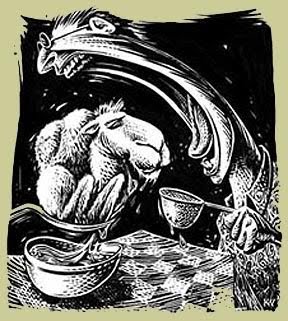 While congress squabbles over nickels and dimes the federal government hemorrhages billions of dollars a day. While we are forced to endure yet another debt-ceiling proposal the majority of the federal government continues to operate on auto-pilot. Federal programs continue to implement new regulations in the order of thousands a year. Thousands of pages of new federal guidelines continue to spew out of the multitude of bureaus and departments in the bowels of the federal government. As we are reduced to swatting at gnats by arguing over nickels and dimes in discretionary spending the federal entitlement programs continue to balloon out of control.