Modern Towers of Babble: Broadcasting Confusion in the Name of Clarity


🌀 Modern Towers of Babble: Broadcasting Confusion in the Name of Clarity

We are living in an age of amplified voices and diminished discernment. Platforms promise clarity, but deliver confusion. Ministries chase relevance while forfeiting reverence. Like the builders of Babel, we construct towers of talk — lofty, impressive, and tragically misaligned. In our quest to be heard, we’ve forgotten how to listen. Modern Towers of Babble isn’t just a critique of culture. It’s a call to return to Spirit-led silence and sacred speech. It’s also about the clarity that only comes from communion, not commentary.

“Remember this, my dear brothers and sisters: Everyone should be quick to listen, slow to speak, and should not get angry easily.”James 1:19 (GW)

I don’t know about you. I’m growing weary of all the talk. It’s the endless chatter that fills our screens, our feeds, and our minds. The 24-hour news cycle has become a relentless echo chamber. Multiple cable channels now exist solely to broadcast commentary, speculation, and opinion around the clock. Each one features its own cadre of talking heads, dissecting the day’s hot topic with surgical precision and emotional fervor.

You’d think with all this talking, something good might come of it. But let’s be honest: most of it is negative, divisive, and draining. If you consume too much of this “news speak,” it doesn’t inform—it infects. It doesn’t enlighten—it exhausts.

“When there are many words, sin is unavoidable, but the one who controls his lips is wise.”Proverbs 10:19 (HCSB)

Scripture doesn’t mince words here. Proverbs warns us that when speech multiplies, error is inevitable. As believers, we’re called to steward our words—not just to speak truth, but to speak it in love. Our speech should build up, not break down. It should heal, not harm.

“Finally, brothers and sisters, keep your thoughts on whatever is right or deserves praise: things that are true, honorable, fair, pure, acceptable, or commendable.”Philippians 4:8 (GW)

This isn’t just a call to positive thinking—it’s a call to spiritual discipline. In a world saturated with noise, we must be intentional about what we dwell on and what we declare. Not every opinion deserves a platform. Not every headline deserves our attention. And not every voice deserves our agreement.

“Let no corrupt communication proceed from your mouth, but that which is good to the use of edifying, that it may minister grace unto the hearers.”Ephesians 4:29 (KJV)

What is corrupt communication? It is not just profanity. It also includes lies, misleading statements, biased commentary, slander, false accusations, and half-truths. Additionally, it involves twisting scripture or reality to suit a narrative.

There’s an old saying: “Let your words be sweet, for you never know how many you may have to eat.” Or even better: “If you don’t have anything good to say, say nothing at all.”

So here’s my challenge: Let’s be slow to speak, quick to listen, and even quicker to discern. Let’s resist the echo chamber and return to the still, small voice of truth. Because in a world addicted to noise, silence—when Spirit-led—can be revolutionary.

And that’s the way I see it. What say you?

This has been a View From the Nest be sure to comment, like and share.

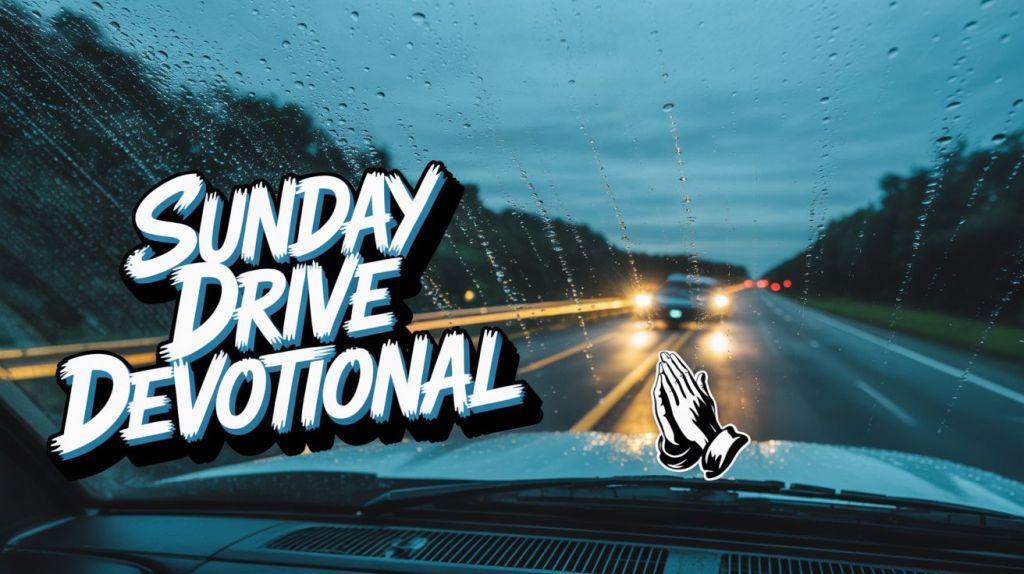
SUNDAY DRIVE: THE PARABLE OF THE FAILED TRAFFIC LIGHT


🚦The Parable of the Failed Traffic Light

Most would agree that traffic lights exist to create order at busy intersections. They don’t think, adapt, or show discernment — they simply function. But what happens when the systems we’ve come to depend on go offline?

That’s exactly what I witnessed one day: two traffic lights out on a heavily traveled stretch of road. According to conventional wisdom — and the traffic engineers who installed them — their absence should have caused chaos. Instead, something extraordinary happened: peaceful order emerged. Drivers slowed, considered others, and moved cautiously through the intersection. No honking, no wrecks, no gridlock. Just mutual respect and personal responsibility.

What a picture of what’s possible when people operate not by rigid control, but by internal conviction.

🔥Spiritual Spark

This moment reminded me of the difference between law and grace. Laws are good — needed even — to teach boundaries and consequences. But they’re passive tools. Grace, however, is active. It empowers. When the light was out, drivers leaned not on a device but on discernment. Similarly, when we operate under grace, we move with humility. We act with caution. We have a shared awareness that we’re not the only ones on the road.

God didn’t create us to be micro-managed. He gave us the Holy Spirit — the ultimate inner guidance system — to navigate life with wisdom.

“I will put my law in their minds and write it on their hearts. I will be their God, and they will be my people.”Jeremiah 31:33

This new covenant re-centers our spiritual flow not around blinking lights and external control, but around responsive hearts. The civil cooperation I witnessed at the failed intersection mirrored a kind of Kingdom living. Each person was yielding, aware, gracious, and sober-minded.

📖Scriptural Infusion

Let’s layer in a few more connections:

  • Romans 8:14“For those who are led by the Spirit of God are the children of God.”
    → Spirit-led believers aren’t reckless; they’re responsive.
  • Galatians 5:22–23“But the fruit of the Spirit is love, joy, peace, forbearance… Against such things there is no law.”
    → When the Spirit governs, the need for excessive regulation diminishes.
  • 1 Corinthians 10:23“‘I have the right to do anything,’ you say—but not everything is beneficial.”
    → Freedom without wisdom is a collision course. But freedom exercised in love builds a civil and spiritual society.

Reflection Question for the Ride:
When “the lights go out” in your life, how do you respond? When systems fail, how do you react? What do you do when you’re left without outside guidance? Do you lean into the Spirit within, or do you panic without?

You were made for more than controlled stops and starts. The traffic of life might be dense, but grace empowers you to move with purpose, empathy, and faith.

This has been “A View From the Nest” please like, share, and subscribe to our newsletter for more Sunday Drive Devotionals.

Worship Is Our Warfare: Reclaiming Praise with Purpose


Worship is more than a song. It is a weapon we wield.


In a world noisy with distraction and heavy with unseen battles, worship remains one of the most powerful weapons God has placed in our hands. Not a soundtrack for Sunday. Not an emotional indulgence. But a deliberate, Spirit-anchored declaration that God is God — and we are His.

📖 More Than a Melody — A Battle Cry

Throughout Scripture, we see worship wielded like a sword:

King Jehoshaphat sent singers ahead of soldiers (2 Chronicles 20:21–22), and God Himself set ambushes.

Paul and Silas sang in chains (Acts 16:25–26), and the foundations of the prison trembled.

The psalmist spoke of praises paired with a double-edged sword (Psalm 149:6–9), symbolic of divine authority.

These weren’t acts of passive praise. They were bold movements of faith that invited divine disruption.

🎺 Jericho Jazz & the Wall-Fall Waltz

Now imagine the folks in Jericho watching this parade of priests and trumpeters circle their city. Day after day, they see the same scene: a mariachi band of misfits marching in silence, save for the occasional trumpet blast.

At first, they might have laughed, pointing and jeering from the safety of their walls. But as the days wore on, perhaps their laughter turned to unease. What kind of army fights with music? What kind of strategy is this?

And then, on the seventh day, the music swelled, the people shouted, and the walls that had stood for generations crumbled like sandcastles under a tidal wave.

This wasn’t just a battle won; it was a divine declaration. Worship wasn’t their weapon — it was their witness.

🌊 Noah and the Ark: A Parallel of Faith

The story of Jericho harkens back to Noah, who built the Ark of safety while his neighbors mocked him, believing he had lost his mind. Just as Noah’s neighbors trusted in their own understanding and dismissed the warnings, the people of Jericho trusted in their man-made fortress, believing their walls were impenetrable.

But when the Shout came, their sense of security crumbled along with their walls. They were unprepared because their trust was misplaced.

Thus is the power of praise. Worship centered on God’s might and not on our own creations is our weapon; it is our warfare.

🙌 Worship with Intent, Not Emotion

Vibrant worship is heartfelt, yes — but it is also directed. It honors God not merely in volume or vibe, but in posture:

A posture of surrender, where we relinquish control.

A posture of dependency, where we declare, “You alone are my shield” (Psalm 3:3).

A posture of remembrance, where we reinforce our identity as conquerors in Christ (Romans 8:37).

Lip service may sound sweet to ears, but it does not shake kingdoms. True worship is not a performance — it’s a positioning.

🕊️ Where Praise Dwells, God Defends

When our praise rises, God defends.

Psalm 22:3 reminds us that God inhabits the praises of His people. This means that when we worship, we invite His presence into our battles.

Consider the walls of Jericho. They didn’t fall because of brute force or military strategy. They fell because God responded to the faith-filled worship of His people.

In the same way, our worship today can dismantle strongholds — not just physical ones, but spiritual ones.

Reflect & Respond

What walls are you facing? Take a moment to identify the barriers in your life that seem insurmountable.

Where is your trust? Are you relying on your own strength, or are you placing your faith in God’s power?

How can you worship intentionally? Consider ways to make your worship more than a melody — a deliberate act of faith.

As you reflect, remember that worship is not just a song; it’s a stance. It’s not just an expression; it’s an invitation for God to move.

So lift your voice, raise your hands, and let your praise rise. The walls won’t stand a chance.

Let’s Hear Your Voice

Testimony of God’s deliverance, shout your praise, sound your trumpet of triumph, and join us in marching together as we worship the King of Kings. Share your thoughts and comments — we’d love to hear from you!

This has been a View From the Nest. Be sure to like and share! Until next time, be blessed!

Promoting the General Welfare


Philippians 2:4 (HCSB)
4 Everyone should look out not only for his own interests, but also for the interests of others.

The Preamble to our Constitution reads: We the People of the United States, in Order to form a more perfect Union, establish Justice, insure domestic Tranquility, provide for the common defence, promote the general Welfare, and secure the Blessings of Liberty to ourselves and our Posterity, do ordain and establish this Constitution for the United States of America. The Constitution therefore was established with an express purpose of securing justice, domestic tranquility, defense, promote the well-being of its citizenry, and secure liberty now and into the future. How are we doing?

“Tocqueville began with a shocker: That the first political institution of American democracy is religion. His thesis went something like this: The premises of secular materialism do not sustain democracy, but undermine it, while the premises of Judaism and Christianity include and by inductive experience lead to democracy, uplift it, carry it over its inherent weaknesses, and sustain it.

[Because of its] own inherent tendencies, democracy tends to lower tastes and passions, to devolve into materialistic preoccupations, and to undercut its own principles by a morally indifferent relativism. Further, democracy left to itself tends to surrender liberty to the passion for security and equality, and thus to end in a new soft despotism, tied down with a thousand silken threads by a benign authority.”

Timeless Comfort: Embracing Psalm 23’s Wisdom


Experience the timeless comfort as we explore the profound words of “Psalm 23”. Allow this “christian meditation” to bring you “comfort” and guide you into a deeper connection with your “faith”. May these scriptures bring peace and renewal to your soul.