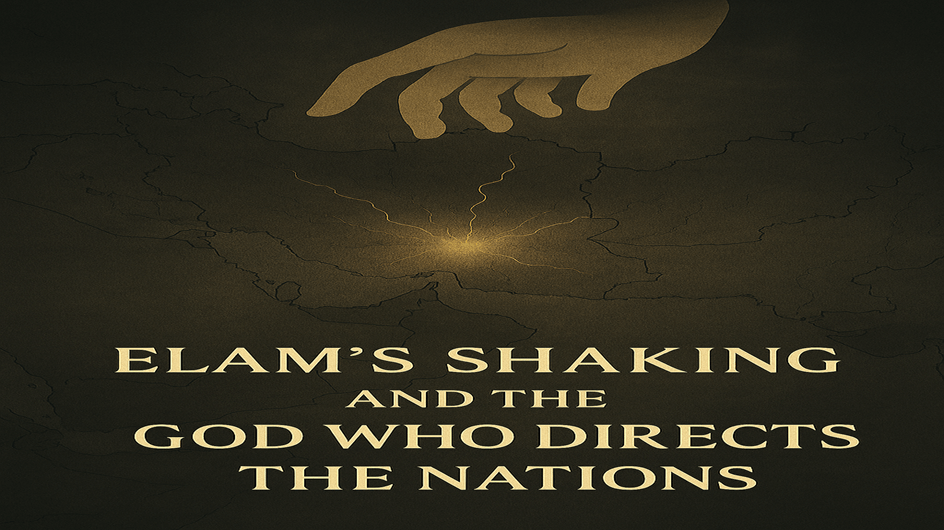
Elam’s Shaking and the God Who Directs the Nations


Opening Statement

The headlines are not random. They are not driven by governments. They are not controlled by human leaders. Scripture shows that God moves nations like pieces on a board. What we are seeing today is not chaos—it is alignment. Elam is shaking as Jeremiah said it would. Nations are realigning as Ezekiel said they would. God is not reacting to history. He is directing it.


The Sovereign Hand Behind the Shaking

When nations tremble, the world rushes to assign blame to leaders, policies, or political miscalculations. Yet Scripture insists that the true cause of national upheaval is not found in the halls of government. It is found in the throne room of God.

Daniel declared, “He changes times and seasons; He removes kings and sets up kings” (Daniel 2:21). Isaiah wrote that God “brings princes to nothing and makes the rulers of the earth as emptiness” (Isaiah 40:23). Proverbs reminds us that “the king’s heart is in the hand of the Lord… He turns it wherever He will” (Proverbs 21:1).

These are not poetic sentiments; they are the spiritual mechanics behind every geopolitical tremor. Nations rise because God lifts them. Nations fall because God humbles them. And when a region shakes, it is not chaos—it is choreography.

The present turmoil in the land the Bible calls Elam is not a modern accident. It is the unfolding of a prophetic pattern spoken long before the nations of today existed.


The Prophecy Spoken Over Elam

Jeremiah 49:34–39 contains a sequence that reads like a spiritual blueprint for the region:

“Thus says the Lord of hosts: Behold, I will break the bow of Elam, the mainstay of their might” (Jeremiah 49:35).

The “bow” symbolized military strength, national pride, and the ability to project power. When God breaks a nation’s bow, He breaks its confidence. Many who lived through the rise of a dark ideology in that region testify that the breaking began decades ago. It did not start with the fall of rulers. It began with the breaking of the people’s will to endure oppression. They fled. They scattered. They carried their grief into the nations.

Jeremiah continues:

“I will bring upon Elam the four winds from the four quarters of heaven, and I will scatter them to all those winds” (Jeremiah 49:36).

This is more than metaphor; it describes diaspora. It is the story of families who fled violence and deception. It is the story of a people who became exiles in every direction. And it is the story of a remnant who never stopped praying for the day when the darkness would crack.


The Diaspora Rejoices Before the Land Does

Jeremiah’s prophecy gives unusual attention to the scattered ones. They are the first to sense the shift. They are the first to rejoice. They are the first to see the collapse of the old order.

This is the biblical pattern. When Babylon fell, the exiles rejoiced before Jerusalem was rebuilt. When persecution scattered the early church, revival began in the diaspora before it returned to Judea.

Jeremiah echoes this pattern:

“I will terrify Elam before their enemies… and I will send the sword after them until I have consumed them” (Jeremiah 49:37).

Fear, instability, and internal collapse strike the land, but the scattered remnant sees hope rising. Today, Iranians across the world—those who fled the cruelty of an oppressive system—are celebrating the weakening of the old structures. Their joy is not political. It is spiritual. It is the relief of a people who have waited in exile for the day when the night would break.


The Collapse of the Old Order

Jeremiah’s prophecy moves next to the downfall of leadership:

“I will set My throne in Elam and destroy from there king and princes, declares the Lord” (Jeremiah 49:38).

This is not about individuals. It is about systems. It is about spiritual strongholds. It is about the collapse of an order built on deception, violence, and pride.

Scripture consistently shows that when rulers exalt themselves, God brings them low. Nebuchadnezzar learned an important lesson. God declared to him, “The Most High rules the kingdom of men and gives it to whom He will” (Daniel 4:32). God spoke to Pharaoh directly. He told him, “For this purpose I have raised you up, to show you My power” (Exodus 9:16). Every proud empire eventually learns it.

The present instability in Elam’s region is not random. It is the shaking of an order God has judged. Nations surrounding the region are no longer intimidated; they are alarmed, unified, and increasingly resistant. This is exactly how Jeremiah described the unraveling: a nation whose aggression provokes opposition on every side.


God Establishes His Throne in Elam

The most astonishing line in Jeremiah’s prophecy is not the judgment—it is the promise:

“I will set My throne in Elam.”

God does not say this about many places. This is not political language. It is spiritual language. It means:

  • A divine visitation
  • A spiritual awakening
  • A remnant rising
  • A new identity forming
  • A region once dark becoming a place of light

Even now, the underground church in that region is growing. Even now, the scattered remnant is awakening. Even now, the spiritual atmosphere is shifting. The throne of God is not a palace. It is a people. And God is establishing His rule in the hearts of those who once fled in sorrow.


The Restoration of Elam

Jeremiah concludes with hope:

“But in the latter days I will restore the fortunes of Elam, declares the Lord” (Jeremiah 49:39).

Restoration does not require a new government. It requires a new spiritual center. Restoration does not begin with borders. It begins with hearts. Restoration does not wait for political stability. It begins when God’s throne is established among a remnant.

This restoration may come sooner than many expect. Not decades. Not generations. But in a season of divine acceleration. The scattered ones are already rejoicing. The old order is already shaking. The spiritual soil is already softening.


The Realignment of Nations

While Elam experiences breaking and restoration, the broader region historically known as Persia moves toward the alignment Ezekiel described. Scripture often speaks of the same land under different names in different prophetic contexts. Thus it is with Elam, which was part of the larger area known as Persia.

Ezekiel 38 names Persia as part of a future coalition:

“Persia, Cush, and Put are with them” (Ezekiel 38:5).

This is not contradiction. It is two layers of prophecy unfolding at once:

  • Elam — breaking, scattering, collapse, restoration
  • Persia — alignment, coalition, confrontation, divine intervention

The present moment is the Elam moment. The future moment will be the Persia moment.

Nations are sorting themselves into patterns Scripture already revealed. Some toward hostility. Some toward blessing. Some toward restoration. God is moving the pieces. The board is His. The timing is His. The outcome is His.


The Watchman’s Charge

A watchman does not interpret events through politics. A watchman interprets events through Scripture. The message is simple:

  • God is shaking Elam.
  • God is restoring a remnant.
  • God is collapsing an old order.
  • God is realigning nations.
  • God is preparing the stage for what Ezekiel saw.
  • God is sovereign over every headline.

The nations are not in control. The governments are not in control. The alliances are not in control.

The headlines will change; alliances will shift. But the Lord reigns. The Lord directs. The Lord restores.
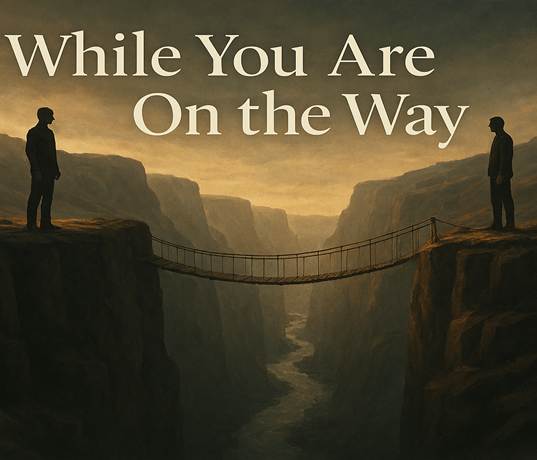
While You Are On the Way


The Window That Closed

War never erupts in a vacuum. It grows in the soil of pride. It grows in the silence after warnings. It grows in the stubbornness that refuses to bend even when the ground begins to shake. The headlines coming out of Iran this week are not merely the record of a conflict. They are the final chapters of a story that began long before the first missile left the ground. They show the outcomes of a spiritual law Jesus expressed with unnerving simplicity. “Agree with your adversary quickly, while you are on the way with him…” (Matthew 5:25).

That phrase, while you are on the way, is the hinge on which this entire moment turns. Jesus was not giving diplomatic advice. He was revealing the way judgment works. There is always a window, a narrow and merciful one, where peace is still possible. A moment where humility can still soften what pride has hardened. A moment where the matter can still be settled before it reaches the judge, the officer, and the prison. Once that window closes, the process takes on a life of its own, and the consequences become the teacher.

The Headlines as Parable

For weeks, diplomats moved back and forth across the region, trying to pull the situation back from the edge. Warnings were issued. Opportunities for de-escalation were offered. Even Iran’s own foreign minister admitted that a deal was close. But instead of humility, there was defiance. Instead of softening, there was boasting. Instead of seeking peace, there was the familiar posture of ideological rigidity—the kind that has toppled empires and buried kings.

And then the dam broke.

Israel and the United States launched coordinated strikes across Iran, hitting missile sites, air-defense systems, and IRGC command centers. Explosions lit the night sky over Tehran. Iran responded with ballistic missiles aimed at Israel and U.S. bases across the Middle East. Air raid sirens wailed in Jerusalem. Airports across the Gulf shut down. Thousands of flights were canceled.

The wages of sin are always paid in human lives, and the innocent often pay the highest price. “For the wages of sin is death…” (Romans 6:23).

This is what it looks like when a nation refuses to make peace on the way. The matter is handed over to the judge. The judge hands it to the officer. And the officer carries out the sentence. Jesus’ imagery is not poetic; it is prophetic. It is what we are watching unfold in real time.

Persia’s Prophetic Trajectory

There is another layer here—one the headlines cannot see but Scripture has already spoken. Persia, the ancient name for modern Iran, is not a footnote in biblical prophecy. It is a named participant in the alignments described in Ezekiel 38–39. The nation is drawn into a conflict it cannot control. Its pride becomes the very snare that tightens around its feet. The current moment does not fulfill that prophecy, but it moves along the same trajectory. It reveals the same spiritual posture. It exposes the same refusal to bow when God extends the offer of peace. “Let them make peace with Me… yes, let them make peace with Me.” (Isaiah 27:5).

There are three sides to every argument: yours, mine, and God’s—and His is the only one that matters. Nations tell their stories. Leaders craft their narratives. Commentators choose their angles. But heaven is not confused. God is not taking sides in geopolitical disputes; He is opposing pride wherever it rises. He is resisting arrogance wherever it speaks. He is judging violence wherever it is embraced as policy or identity. He is calling His people to see through His eyes. They should not look through the lenses handed to them by governments, media outlets, or tribal loyalties.

The Consequence of Rejecting Peace

A Watchman does not predict outcomes. A Watchman names patterns. The pattern here is painfully clear. The window for peace was open. Pride closed it. Now the shaking has begun. The question is not which nation is right. The question is what God is saying in the shaking—and whether His people will hear it.

What we are witnessing is not simply a war. It is the consequence of rejecting the Prince of Peace. It is the harvest of choices made long before the first strike. It is the arrival at a destination. Each mile was chosen. Decisions were made one by one. Acts of defiance accumulated, all while the world was still on the way.

Closing Prayer

Father, teach us to walk humbly with You. Give us the wisdom to seek Your face while we are still on the way. Help us find You before the moment of reckoning arrives. Soften our hearts where pride has taken root. Lead us into repentance where we have resisted Your voice. Make us peacemakers in a world that rushes toward conflict. And keep us anchored in Your truth, Your mercy, and Your sovereignty. May we choose humility now, not after judgment has already begun. In Jesus’ name, amen.

WHEN A NATION REFUSES TO HONOR GOD: A ROMANS 1 AUTOPSY OF AMERICA’S SPIRITUAL COLLAPSE


ICE protestors crash Sunday Service causing a disturbance.

And since they did not see fit to acknowledge God, God gave them up to a debased mind to do what ought not to be done. 29 They were filled with all manner of unrighteousness, evil, covetousness, malice. They are full of envy, murder, strife, deceit, maliciousness. They are gossips, 30 slanderers, haters of God, insolent, haughty, boastful, inventors of evil, disobedient to parents, 31 foolish, faithless, heartless, ruthless. 32 Though they know God’s righteous decree that those who practice such things deserve to die, they not only do them but give approval to those who practice them. Romans 1:28-32

There are judgments in Scripture that come with thunder, fire, and plague. But Romans 1 describes a quieter judgment — one far more terrifying because it is so easy to miss. It is the judgment of abandonment. It is the moment when God stops restraining a people’s desires. He simply lets them have what they insist on pursuing.

Paul describes it three times with the same chilling phrase:
“God gave them over.”
(Romans 1:24, 26, 28)

This is not God losing patience.
This is God honoring human choice.

And Romans 1 tells us exactly why it happens, how it unfolds, what it produces, and where it ends. It is the inspired roadmap of a society that refuses to honor God. It is also the prophetic mirror of our own moment.


I. THE ROOT CAUSE: THEY KNEW GOD BUT REFUSED TO HONOR HIM

Paul begins with the indictment:

“Because, although they knew God, they did not glorify Him as God, nor were thankful…”
Romans 1:21

This is not ignorance.
This is rejection.

A people can know about God and sing to God. They can celebrate Christian holidays and quote Scripture in speeches. Yet, they can still refuse to honor Him as God.

Jesus described this condition with painful accuracy:

“These people honor Me with their lips,
but their heart is far from Me.”

Matthew 15:8

This is the quiet tragedy of our age.

We have embraced a manageable Jesus — the baby in the manger, the gentle teacher, and the crucified victim. However, we have not embraced the risen King whose eyes are like fire (Revelation 1:14). We want a Savior, not a Sovereign. We want forgiveness, not obedience. We want comfort, not conviction.

And here is the truth we must recover:

If He is not Lord of all,
He is not Lord at all.


II. THE FIRST EFFECT: FUTILE THINKING AND DARKENED HEARTS

Once a people refuse to honor God, the mind begins to collapse.

Paul writes:

“…they became futile in their thoughts, and their foolish hearts were darkened.”
Romans 1:21

This is not the absence of thinking — it is the collapse of thinking.

It is the intellectual decay of a culture.

Paul later describes this same condition:

“Ever learning, and never able to come to the knowledge of the truth.”
2 Timothy 3:7

We live in the most “educated” generation in history — and the most confused.
That is not progress.
That is judgment.


III. THE SECOND EFFECT: CLAIMING WISDOM WHILE BECOMING FOOLS

Paul continues:

“Professing to be wise, they became fools…”
Romans 1:22

This is the arrogance of a culture that believes it has outgrown God.

We see it everywhere:

  • redefining morality
  • redefining identity
  • redefining biology
  • redefining family
  • redefining truth

A society that rejects God does not become neutral — it becomes foolish.

Isaiah described this inversion:

“Woe to those who call evil good and good evil…”
Isaiah 5:20

We are living in that woe.


IV. THE THIRD EFFECT: EXCHANGING THE GLORY OF GOD FOR IMAGES

Paul writes:

“They exchanged the glory of the incorruptible God for images…”
Romans 1:23

Idolatry is not primitive.
Idolatry is modern.

We no longer bow to statues — we bow to screens, celebrities, ideologies, identities, and desires. We worship the created instead of the Creator. We trade the eternal for the temporary. We trade the holy for the hollow.

This is the spiritual vacuum left when a nation refuses to honor God.


V. THE FOURTH EFFECT: GOD GIVES THEM OVER — AND WE SEE IT IN OUR HEADLINES

This is the turning point.

Three times Paul repeats it:

“God gave them up…”
“God gave them up…”
“God gave them over…”

This is not God attacking a nation.
This is God abandoning a nation to its own desires.

And the evidence is everywhere.

We see it in the fraud and corruption that have become almost routine. These are cases where funds meant for feeding the poor are siphoned off through elaborate schemes. Officials entrusted with stewardship instead use their positions for personal gain. Paul warned that the last days would be filled with “lovers of themselves” and “lovers of money” (2 Timothy 3:2), and we see that spirit in every scandal where those in power enrich themselves while the vulnerable are left hungry.

We see it in the erosion of truth. “My truth” replaces the truth. Entire movements embrace the idea of autonomy. They assert that not God, Scripture, nor biology has the authority to define reality. Paul said their thinking would become futile. This futility is evident in a culture that treats truth as a personal accessory. It is seen rather than a divine standard.

We see it in the lawlessness that fills our streets. Protests turn violent. Destruction is excused as expression. Mobs are celebrated, while those tasked with maintaining order are vilified. Paul said the last days would be marked by people who are “without self-control” and “despisers of good” (2 Timothy 3:3), and we see that inversion every time criminal behavior is applauded while those trying to restrain it are demonized.

We see it in the entitlement mentality. Slogans like “You owe me,” “Give me what I deserve,” and “Tax the rich” echo through the culture. Paul said the last days would be filled with people who are “unthankful” (2 Timothy 3:2). We see that spirit in every movement that demands blessing without responsibility. They want reward without labor and justice without repentance.

We see it in the breakdown of the family, the very institution God established as the foundation of society. Paul said people would be “without natural affection” (2 Timothy 3:3). We see that tragedy in the heartbreaking cases where children harm parents and parents harm children. The natural love that once held families together has been replaced by rage, resentment, or apathy.

We see it in the celebration of rebellion. Rallies proudly proclaim “No kings.” They do not realize that rejecting earthly authority often reflects rejecting heavenly authority. Psalm 2 describes nations that “cast off His cords” and say, “We will not have this Man to rule over us.” That ancient rebellion still thrives today. It exists in a culture that despises restraint. Additionally, it mocks the very idea of divine rule.

These are not isolated incidents.
They are not random headlines.
They are not political talking points.

They are the visible fruit of a Romans 1 society — a people who “knew God but did not honor Him as God,” and who are now living out the consequences of that rejection.


VI. THE FIFTH EFFECT: A REPROBATE MIND

Paul concludes:

“God gave them over to a debased mind, to do those things which are not fitting.”
Romans 1:28

A reprobate mind is a mind that can no longer recognize truth.
Not because truth is gone — but because the heart has rejected it.

Isaiah described the final stage:

“Let us eat and drink, for tomorrow we die.”
Isaiah 22:13

When truth is gone, meaning is gone.
When meaning is gone, pleasure becomes the only pursuit.
When pleasure becomes the only pursuit, destruction is inevitable.

This is the end of a nation that refuses to honor God.


VII. THE ONLY CURE: RETURNING TO THE LORDSHIP OF CHRIST

The cure is not political.
The cure is not educational.
The cure is not technological.
The cure is not economic.

Jesus did not say:

The cure is a Person.

“You shall know the truth, and the truth shall make you free.”
John 8:32

“I teach the truth.”
“I point to the truth.”
“I reveal the truth.”

He said:

“I AM the truth.”
John 14:6

Truth is not a concept.
Truth is not a perspective.
Truth is not a feeling.
Truth is a King.

And He alone can break the delusion.

He alone can restore the mind.
He alone can cleanse the heart.
He alone can heal a nation.

Freedom is not found in “your truth.”
Freedom is found in The Truth.


Conclusion: The Watchman’s Warning

Romans 1 is not ancient history.
It is a prophetic map of our moment.

The cause is clear:
We refused to honor God.

The effects are visible:
Futile thinking, darkened hearts, moral inversion, cultural delusion.

The end is dangerous:
A reprobate mind that cannot recognize truth.

And the cure is singular:
Return to Christ. Honor Him as Lord. Submit to His truth. Walk in His light.

This is the message the world does not want but desperately needs.
This is the message the church must recover.
This is the message the watchmen must proclaim.

Unmasking the Masquerade: Testing the Spirits in an Age of Digital Deception


In recent weeks, headlines have sounded an alarm across the digital landscape. Popular accounts on X were once thought to be American voices of patriotism. However, these were actually foreign operations disguised as frontline journalism. Behind the avatars of stars and stripes were individuals posting from Turkey. Others were posting from Nigeria, Eastern Europe, and beyond. These individuals hid behind the fiery rhetoric of “citizen journalists” and “grassroots patriots.” Their goal was not dialogue but division—sowing discord, amplifying outrage, and spreading lies under the guise of neighborly concern.

The exposure of these masqueraders is more than a digital scandal; it is a prophetic signal. Scripture warned long ago that “certain individuals have secretly slipped in among you… ungodly people, who pervert the grace of our God” (Jude 4). What Jude described in the first century now plays out in real time across our social feeds. Wolves in sheep’s clothing have traded pulpits for platforms, but the strategy remains unchanged: infiltrate, deceive, and divide.

This moment calls for vigilance. John’s exhortation rings louder than ever: “Beloved, do not believe every spirit, but test the spirits to see whether they are from God, for many false prophets have gone out into the world” (1 John 4:1). The Bereans modeled this discernment, examining the Scriptures daily to confirm truth (Acts 17:11). In our age, the same diligence must be applied—not only to sermons but to headlines, viral posts, and trending hashtags. Outrage is the bait; deception is the hook.

The danger is not merely foreign influence but spiritual intoxication. Peter’s warning is urgent: “Be sober-minded; be watchful. Your adversary the devil prowls around like a roaring lion, seeking someone to devour” (1 Peter 5:8). Emotional reactions—anger, fear, tribal loyalty—are the fuel of deception. To be sober-minded is to resist the intoxication of outrage. It means walking in clarity and peace even when the digital storm rages. Paul echoes this call in 2 Corinthians 11:14, reminding us that “Satan himself masquerades as an angel of light.” The masquerade is not new; only the costumes have changed.

The Prophetic Parallel

Consider the prophetic parallel: these foreign-run accounts cloaked themselves in patriotism or compassion. Their origin was foreign and their intent was division. They did not seek mere popularity or digital influence. Their purpose was to inject falsehood into the public square. They pretended to be legitimate voices concerned for our welfare. It is sinister and evil. They speak the language of their father—the devil—who is the father of lies (John 8:44). Just as Satan disguises himself as an angel of light, these voices masquerade as patriots. They pose as journalists or neighbors, but their words are poisoned. The saints must be vigilant. They should store up truth that cannot be corrupted. They must refuse to be swayed by the counterfeit compassion of deceivers.

And so the Word presses us further: “Look to yourselves, that you do not lose those things we worked for, but that you may receive a full reward” (2 John 1:8). The danger is not only being misled by false voices, but losing the very testimony and inheritance we have been entrusted with. Vigilance is not optional—it is the safeguard of salvation’s reward.

The watchman’s task is unchanged. Ezekiel 33 describes the watchman who sees danger and sounds the alarm. Today, the danger is digital infiltration, and the alarm is discernment. The church must not be naïve. Many false prophets have gone out into the world, and many false voices have gone online into our feeds. The masquerade has been unmasked, but the masquerade itself continues. The saints must be vigilant, discerning, Berean, and sober-minded.

Yes, Elon Musk’s “unmask” feature on X has exposed many false profiles, but the greater unmasker is the Holy Spirit. “When He, the Spirit of truth, comes, He will guide you into all truth” (John 16:13). The Spirit is our safeguard, our discerner, and our guide. Jesus Himself declared: “My sheep hear My voice, and I know them, and they follow Me” (John 10:27). The best defense against deception is not technology, but obedience to the Shepherd’s voice.


✒️ Closing Admonition

Take heed, little flock. Many voices seek to ensnare, but you shall know the truth, and the truth will set you free. The Shepherd’s voice is clear, and His sheep will obey no other.


Tagline

“Let God be true, and every man a liar” (Romans 3:4).

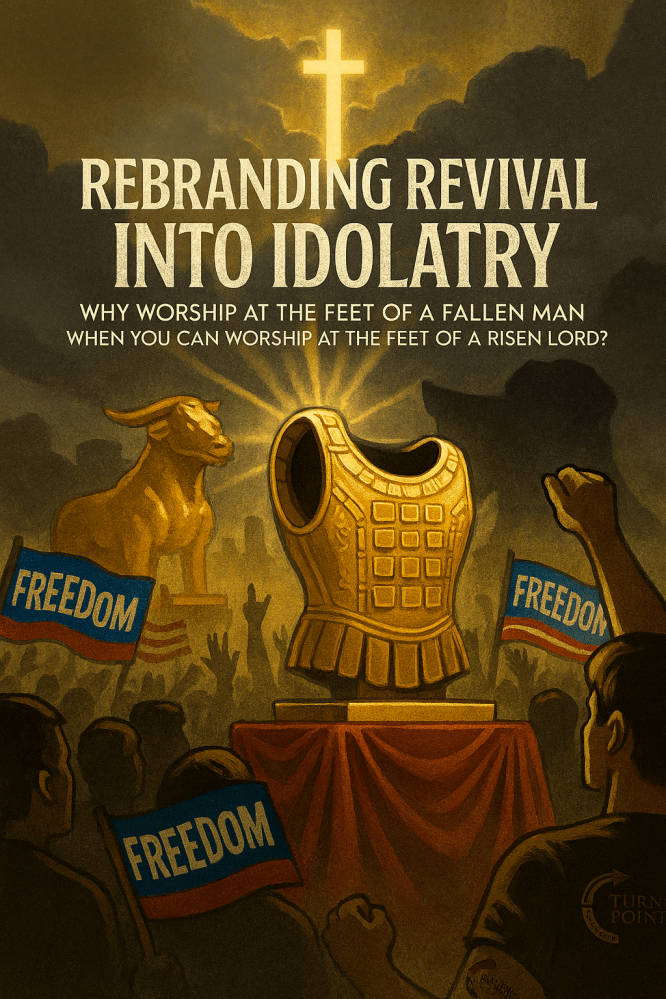
Rebranding Revival into Idolatry


Why Worship at the Feet of a Fallen Man When We Can Worship at the Feet of a Risen Lord?

In the weeks since Charlie Kirk’s assassination, the nation has seen a surge of energy. News reports describe stadiums filled with mourners who have become activists. “FREEDOM” tee-shirts are flying off shelves. Turning Point tattoos are being etched into skin. The movement is swelling with momentum. Some hail it as revival. Others see it as a political awakening.

But momentum is not the same as revival. And history—biblical history—warns us that what begins as a move of God can sour into a monument to man.

Gideon in the Winepress

When we first meet Gideon in Judges 6, he is threshing wheat in a winepress, hiding from Midianite raiders. Hardly a revolutionary. Yet God calls him “mighty warrior” and raises him up to deliver Israel.

But God made it clear: the victory would not belong to Gideon. He whittled Gideon’s army down to 300 men so that no one could boast, “My own hand has saved me” (Judges 7:2). The triumph over Midian was not Gideon’s brilliance, not the zeal of his men, but the power of God alone.

Charlie Kirk, in many ways, became a Gideon figure for this generation. He had unassuming beginnings and a small band of devoted followers. He achieved a victory that seemed impossible against the tide of cultural opposition. His courage inspired many. But just as in Gideon’s day, the danger comes after the battle.

Rebranding Revival into Idolatry

After his victory, Gideon asked for gold from the spoils of war and “made an ephod of it and put it in his city, in Ophrah. And all Israel prostituted themselves by worshiping it there, and it became a snare to Gideon and his family” (Judges 8:27).

Here’s the problem:

  • The ephod was a sacred priestly garment, commanded by God in Exodus 28 to be worn only by the high priest of Levi.
  • It bore the names of Israel’s tribes and was used with the Urim and Thummim to discern God’s will (Exodus 28:29–30).
  • Gideon was not a priest. He was from Manasseh (Judges 6:15). He had no authority to assume priestly garments.

By making an ephod, Gideon stepped outside his calling. And the people, instead of objecting, embraced it. They shifted their devotion from the God who delivered them to the symbol of victory. The ephod became a counterfeit center of worship.

And here is where the prophetic punch lands: Why worship at the feet of a fallen man when you can worship at the feet of a risen Lord?

Gold: Glory Turned to Graven

Gold was used to overlay the Ark of the Covenant, to adorn the tabernacle, and to craft the priestly garments. It symbolized God’s holiness and majesty. But when taken out of context—when melted down and molded by human hands—it became the golden calf (Exodus 32), a grotesque parody of divine worship.

Gideon’s ephod, fashioned from gold taken as spoils, echoes that same drift. What began as a symbol of victory became a snare. The people bowed not to God, but to the glitter of conquest.

Even Judas, in the shadow of the cross, traded the Son of God for thirty pieces of silver—precious metal once again used to betray glory.

Gold, when untethered from reverence, becomes the metal of misdirection.

Our Modern Ephods

Today, the parallels are sobering. Tee‑shirts, tattoos, slogans, and symbols are rising as rallying points. They are not evil in themselves. But they risk becoming ephods—objects of misplaced devotion that subtly shift the focus from the risen Christ to a fallen man, from the Deliverer to the movement.

The drift begins when no one raises the alarm. When the church accepts the symbol without questioning whether it has replaced the Savior. When we rally around the banner instead of the cross.


The Call Back to the Cross

Scripture is clear:

  • “And I, when I am lifted up from the earth, will draw all people to myself” (John 12:32).
  • “There is no other name under heaven given among men by which we must be saved” (Acts 4:12).
  • “He must increase, but I must decrease” (John 3:30).

It wasn’t Gideon. It wasn’t the 300. It wasn’t the ephod.
It was God.

And so it must be with us. Organizing for better government is not wrong. Honoring courage is not wrong. But rallying around a name other than Jesus Christ is always wrong.


Final Word

The ephod warns us: symbols can become snares.
The cross reminds us: salvation is not in the symbol but in the Savior.

So let us ditch the ephods of our age and cling to the risen Lord. For it was never Gideon, never Charlie, never Turning Point—it was, and always will be, God.


Why worship at the feet of a fallen man when you can worship at the feet of a risen Lord?

This has been “A VIEW FROM THE NEST.” And that is the way I see it. What say you?