Take It Slow in the Snow


A Winter Road. A Spiritual Lesson. A Faithful Captain.
Opening

The weather outside may be frightful, and the roads may be anything but delightful. Snow piles up, visibility drops, and ice hides beneath the surface waiting to surprise the unprepared. On days like this, the wise stay home. But if you must venture out, safety is job one.

Take it slow in the snow.
Because where there is snow… there is almost always ice.

1. The Four‑Wheel Drive Myth

A lot of folks hit the winter roads thinking four‑wheel drive makes them invincible. But every seasoned driver knows the truth:

All tires slide on ice.
Four‑wheel drive helps you get moving — it does nothing to help you stop.

And sometimes?
Four‑wheel drive just gets you into trouble faster.

Spiritually, pride works the same way.

1 Corinthians 10:12 — “Let him who thinks he stands take heed lest he fall.”

Overconfidence is black ice for the soul.

2. Weight: The Hidden Stability

Years behind the wheel taught me something most people don’t understand:

An empty truck bed is unstable.
A loaded truck settles down.

Weight increases traction.
Weight presses the tires into the road.
Weight gives you control.

Spiritually, the same is true.

Psalm 119:11 — “Your word I have hidden in my heart, that I might not sin against You.”

A believer with Scripture inside them has spiritual downforce.
An empty soul slides.
A weighted soul stands.

3. Traction: Obedience Under Pressure

Dualies give you more rubber on the road — but only when there’s weight pressing them down.

Empty dualies?
They float on snow.
They lose grip.
They slide sideways.

But load that truck…
and those dualies bite into the surface and hold steady.

Obedience works the same way.

James 1:22 — “Be doers of the word, and not hearers only.”

Traction isn’t about speed — it’s about grip.
It’s about consistency.
It’s about doing what God said even when conditions are slick.

4. Modern Parables from the Road

Parable 1 — The Invisible Ice

Black ice looks like pavement.
Temptation looks like opportunity.

Proverbs 14:12 — “There is a way that seems right to a man, but its end is the way of death.”

Parable 2 — The Slow Driver Who Arrives

The one who slows down in the storm is the one who makes it home.

Isaiah 30:15 — “In returning and rest you shall be saved; in quietness and confidence shall be your strength.”

5. The Road as an Altar — First Person Revelation

I’ve spent a lot of years behind the wheel.
Long roads. Long nights. Long storms.
And if there’s one thing driving has taught me, it’s this:

Experience helps… but experience alone won’t save you.

I’ve learned to feel the road through the steering wheel.
I’ve learned how a truck talks when the bed is empty,
and how it settles down when it’s carrying weight.
I’ve learned the difference between snow and ice,
between a slide I can correct
and a slide that’s already decided for me.

But even with all that experience,
I’ve had moments where the road reminded me:
You don’t know what you don’t know.

And that’s exactly what happened on the Sea of Galilee.

The disciples weren’t rookies.
They were experienced fishermen — men who grew up on that water.
They knew the winds.
They knew the currents.
They knew the storms that came out of nowhere.

But one night, a storm hit that was bigger than their experience.

Mark 4:37 — “And a great windstorm arose, and the waves beat into the boat…”

These seasoned men panicked.
Why?
Because experience can teach you a lot —
but it can’t teach you everything.

Experience can make you skilled —
but it can’t make you sovereign.

Experience can help you navigate storms —
but it can’t calm them.

Only Jesus can do that.

Mark 4:39 — “Then He arose and rebuked the wind, and said to the sea, ‘Peace, be still!’”

And someone always brings up Paul’s shipwreck as a rebuttal —
“See? Even a man of God can go down in a storm.”

But look closer.

The ship wrecked…
but the people didn’t.

Acts 27:22 — “There will be no loss of life among you, but only of the ship.”

Why?
Because a man of God was on board.
Because God had a purpose for Paul that no storm could cancel.
Because Jesus wasn’t just along for the ride —
He was the Captain of the outcome.

And that’s the lesson I’ve learned on the road:

I can have experience.
I can have skill.
I can have traction and weight and wisdom.
But if I try to navigate a storm on experience alone,
I’m headed for a wreck.

But if Jesus is in the cab with me —
better yet, if He’s the One holding the wheel —
then even if the truck slides,
even if the road gets rough,
even if the storm gets violent…

I’m going to make it.

Not because I’m a great driver.
But because He’s a faithful Captain.

Psalm 121:8 — “The LORD shall preserve your going out and your coming in…”

Final Reflection

And before I close this out, let me say one more thing — something personal, something true, something I carry with gratitude every single day:

I’ve survived over three million miles behind the wheel.
Accident‑free.
Incident‑free.
Storms, snow, ice, long nights, empty roads, and crowded highways —
and I’m still here.

Not because I’m the best driver.
Not because I always made the right call.
Not because experience never failed me.

I’m here because Jesus piloted my ship.

Three million miles…
and not one of them driven alone.

Thank You, Jesus.

Closing

If you have nowhere to go today, let it snow.
Rest. Be still.

But if God calls you forward, take it slow in the snow.
Move with wisdom.
Move with awareness.
Move with Him.

Because the One who guides you through the storm
is the same One who clears the road ahead.

Proverbs 3:6 — “In all your ways acknowledge Him, and He shall direct your paths”
The Christmas Light


“And the light goes on shining in the dark; it is not overcome by the dark.”
John 1:5 (BBE)

I was driving east on the Pennsylvania Turnpike late on Christmas Eve, logging mile after mile of deep darkness. The road was quiet. The sky was heavy with low clouds. The only light came from my headlights cutting a narrow path forward.

But as I approached the outskirts of Philadelphia, something unexpected happened. The sky began to brighten — not a little, but dramatically. It looked as if dawn were breaking, yet the clock insisted it was only 1 AM. The closer I drove toward the city, the brighter the sky became. Light bounced off the cloud cover. It reflected off the snow‑covered ground. This transformed the night into something that felt almost like day.

I had never seen anything like it. I even checked the time twice, just to be sure.

Light is like that. It doesn’t need permission. It doesn’t need ideal conditions. It doesn’t even need to be strong. A single source can transform an entire landscape. After more than 200 miles of darkness, one city’s glow changed everything.

And on that Christmas morning, it felt fitting — creation itself offering a reminder.

The Wise Men Followed a Light Too

Epiphany tells the story of travelers from the East. They saw a light in the sky. They knew it meant something. They didn’t understand it fully, but they recognized it as a sign worth following. Their journey took them to Jerusalem. Then they went to Bethlehem. They were guided by scripture and by a star that refused to be ignored.

They were seeking a King.

I wasn’t seeking anything that night — just heading east to be with family. That strange illumination across the sky whispered the same truth the wise men discovered. Jesus is the Light of the world. His light still breaks into the darkness.

Light That Leads Us Home

Jesus said, “He who follows Me shall not walk in darkness, but have the light of life.” (John 8:12)

That’s not poetic language — it’s a promise.

His light reveals the path.
His light exposes what would trip us.
His light brings warmth, clarity, and direction.
His light cannot be overcome.

And one day, His return will blaze across the sky from east to west — unmistakable, unmissable, undeniable.

A Question for the Road

Have you seen the Light?
Not the glow of a city on a snowy night, but the Light that shines into the human heart.

Are you following Him the way the wise men followed the star — with intention, with expectation, with readiness?

Because the same Jesus who came quietly in Bethlehem will come again in glory.

“Those who wait for the Lord will renew their strength;
they will rise up with wings like eagles.”
Isaiah 40:31

Until that day, every step of the journey matters.
Every mile.
Every moment of unexpected illumination.
Every reminder that darkness never gets the final word.

So as you take today’s Sunday drive, let this truth settle in your spirit:

The Light still shines.
The Light still leads.
And the Light is coming again.

The Road Already Traveled


The snow had fallen heavy across the fields, a white blanket covering everything in sight. Yet as I drove my route, the roads beneath my tires were clear. Someone had gone before me. Road crews had braved the cold, plowed the snow, and laid down salt so I could travel safely. I didn’t see their labor, but I reaped its benefit.

That picture stayed with me: the unseen work of those who prepare the way. And I realized—it’s not just true of winter roads. It’s true of the life of faith.

Scripture tells us we are “surrounded by so great a cloud of witnesses” (Hebrews 12:1). Men and women of faith who endured hardship, persecution, and trials have gone before us. They cleared the path, leaving behind testimonies of endurance and courage. Their footprints mark the way, showing us it can be done.

Paul could say at the end of his journey, “I have fought the good fight, I have finished the race, I have kept the faith” (2 Timothy 4:7). His words are like mile markers on the road, encouraging us to press on. The prophets, apostles, martyrs, reformers, and even faithful family members who walked with Christ—they all labored so we could travel confidently along the pathway they laid.

And here’s where the “comfort angel” comes in. Paul also writes that God comforts us in our affliction “so that we may be able to comfort those who are in any affliction, with the comfort with which we ourselves are comforted by God” (2 Corinthians 1:3–4). That’s the ministry of comfort: what once was frightening becomes manageable because someone else has already walked it, received God’s mercy, and left behind encouragement. Their testimony is like salt on icy roads, turning danger into safe passage.

Just as I thanked the road crews for their unseen work, I thank God for those who prepared the way of faith before me. Their endurance clears my doubts. Their testimony salts the icy patches of fear. Their example plows through the drifts of discouragement.

And now, the responsibility is ours. We are not only travelers—we are road crews for those who will come after. Our faithfulness today prepares tomorrow’s pathway. Our endurance becomes encouragement for the next generation.

So drive forward with confidence. The road is not uncharted. It has been traveled, tested, and proven. And as we follow Christ, we prepare the way for others to follow Him too—comforting them with the same comfort we ourselves have received.

We can travel the road of faith with confidence because of those who’ve cleared the way.

Reservoirs, Civilizations, and the Church’s Mission


Long before our highways and reservoirs, there was the Indus Valley Civilization — one of the world’s earliest advanced societies. They thrived between 5,000 and 3,500 years ago in what is now Pakistan and northwest India. Their cities were marvels of planning: paved streets, sewage systems, irrigation channels, and cisterns that stored precious water. For centuries they flourished, but when the rains ceased and the inflow slowed, their reservoirs and rivers could no longer sustain them. Over time, the people dispersed, their great cities abandoned, undone not by war but by drought.


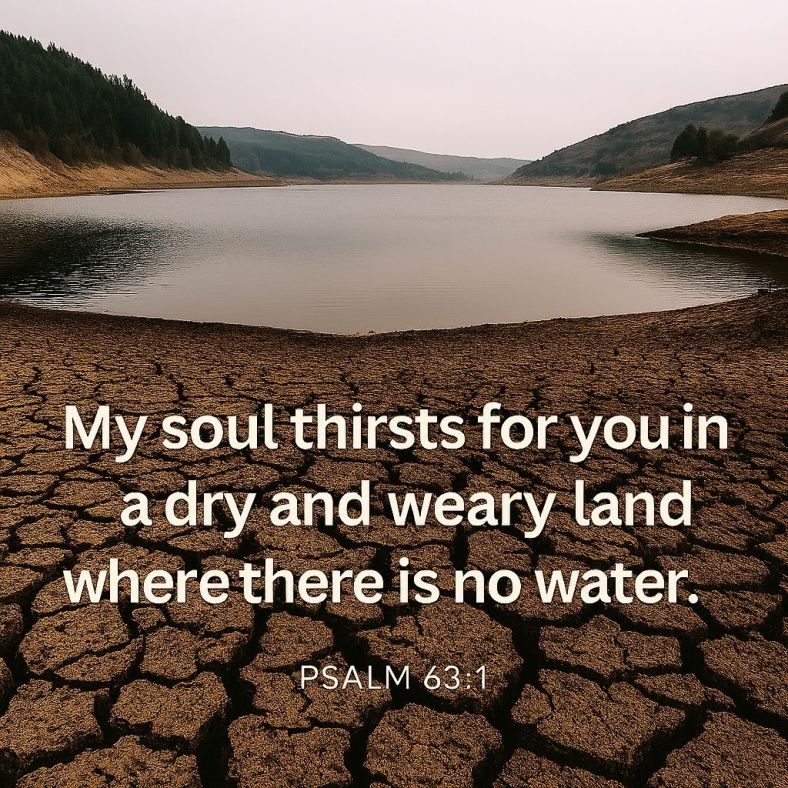
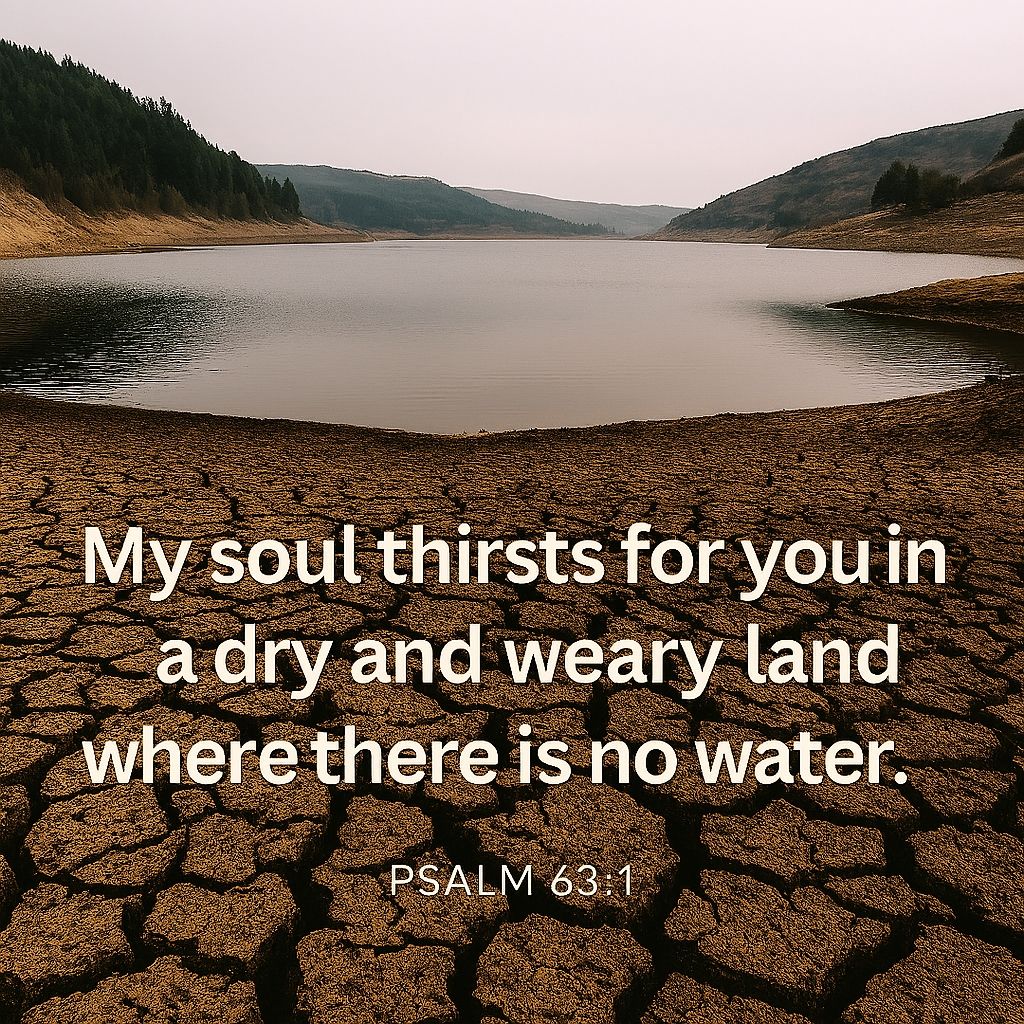
That history came to mind as I drove past the Oneida Valley Reservoir this week. Through the windshield I saw the shallow waterline, the exposed banks, the tired look of a system running on yesterday’s supply. And I thought of the church in our time.

The people gather as the season of Hope, Joy, Love, and Light approaches. They light candles, sing carols, and preach sermons. Yet many hearts are heavy, struggling to believe tomorrow will be brighter. Joy is thin, divisions are common, and Love is misplaced — poured into the institution or the season rather than the Lord Himself. The Light flickers, but shadows linger.

The watchman cries out with the words of Jeremiah:“My people have committed two evils: they have forsaken me, the fountain of living waters, and hewed out cisterns for themselves, broken cisterns that can hold no water” (Jeremiah 2:13).Do you not see? Our reservoir cannot survive on yesterday’s water. Hope cannot be sustained by slogans, Joy cannot be manufactured by programs, Love cannot be replaced by sentiment, and Light cannot shine without Christ Himself. We need fresh inflow — daily bread, living water, the Spirit poured anew — or our reservoir will run dry.

Even now, homes affected by low water levels are advised to reduce usage. Conservation helps, but it cannot restore the reservoir. The only way the water rises again is for the heavens to open and pour down refreshing rain. We can preserve all we want, but without a fresh inflow, the supply will eventually dry up.

Barna’s research confirms the warning. The number of religious “nones” — those with no faith affiliation — has climbed steadily, now representing nearly a quarter of U.S. adults. It is the sign of an organization failing its primary mission: to bring living water to a thirsty world. And when our own supply is uncertain, when we are in survival mode, our ability to offer even a drink of cold water to “the least of these” (Matthew 10:42) is greatly affected. A reservoir that has been dammed up for years cannot refresh others; its shallow waters leave both the church and the world parched.

Yet the promise remains: “If anyone thirsts, let him come to me and drink. Whoever believes in me… out of his heart will flow rivers of living water” (John 7:37–38). Christ is the Living Water. His Spirit is the inflow that renews Hope, restores Joy, rekindles Love, and shines Light into the darkness. And the truth is simple enough to remember as you drive past shallow waters or flickering lights:

Know Jesus, know peace. No Jesus, no peace.

SPIRITUAL CATARACTS: When Our Vision Gets Cloudy


As a professional driver with over 3 million incident-free miles, I’ve encountered my share of heavy fog—and other driving hazards. There’s something uniquely disorienting about fog: the way it swallows landmarks, blurs headlights, and forces you to slow down and trust your instincts. You grip the wheel tighter, strain to see what’s ahead, and pray for clarity.

In many ways, spiritual fog is just as disorienting. Cataracts form when the lens of the eye becomes clouded, scattering light and distorting clarity. In the natural, it’s a slow fade—vision dims, colors dull, and the world grows hazy. But in the Spirit, cataracts form when our gaze shifts from Christ to self, from Kingdom to culture, from eternal to temporal.

Jesus speaks directly to this in Revelation 3:18:

“I counsel you to buy from Me… salve to anoint your eyes, so that you may see.”

This isn’t earthly ointment—it’s divine clarity. It’s the Spirit’s touch that restores our ability to see rightly: to discern truth, to perceive eternity, to recognize our condition. Without this salve, we walk in spiritual blindness—thinking we see, but missing the Kingdom entirely.

👁 What Causes Spiritual Blindness?

  • Comparison with ourselves Paul warns in 2 Corinthians 10:12: “When they measure themselves by themselves and compare themselves with themselves, they are not wise.” This is the cataract of self-reference. We become our own standard, our own mirror, our own measure. Instead of gazing upon Christ—the Author and Perfecter of our faith—we stare at our own reflection, adjusting our righteousness by how we feel or how we perform. The result? Dimmed discernment. Blurred conviction. Lost awe.

See also Hebrews 12:2: “Fixing our eyes on Jesus, the pioneer and perfecter of faith…”

  • Fixation on worldly metrics Likes, followers, influence, income, applause—these are the fog machines of the soul. They scatter the light of truth and distort our spiritual depth. We begin to see ministry as platform, worship as performance, and prophecy as content. The lens gets cloudy.

See also 1 John 2:16: “For everything in the world—the lust of the flesh, the lust of the eyes, and the pride of life—comes not from the Father but from the world.”

See also Revelation 3:17: “You say, ‘I am rich; I have acquired wealth and do not need a thing.’ But you do not realize that you are wretched, pitiful, poor, blind and naked.”

  • Neglect of intimacy When we stop beholding Christ, we lose clarity. Psalm 36:9 says, “In Your light we see light.” Without His presence, we grope in shadows. Spiritual cataracts form when we trade communion for consumption, devotion for distraction.

See also Isaiah 29:13: “These people come near to me with their mouth and honor me with their lips, but their hearts are far from me…”

🚦 God’s Fog Lights: The Salve of Christ

Jesus offers salve—not just to see others rightly, but to see Him clearly. This salve is like fog lights for the soul—cutting through confusion, piercing the haze, and illuminating the road ahead. Fog lights are designed to shine low and wide, revealing what’s immediately in front of you when everything else is obscured. They don’t eliminate the fog, but they help you move forward safely, confidently, and with purpose.

In the same way, the salve of Christ doesn’t always remove the fog of life—but it gives us clarity to navigate it. It helps us see what matters, avoid spiritual hazards, and stay aligned with the path of righteousness.

  • Revelation: Eyes opened to the beauty, holiness, and supremacy of Christ. Like fog lights revealing the road’s edges, revelation helps us see the boundaries of truth and the brilliance of Jesus. → See also Ephesians 1:18: “I pray that the eyes of your heart may be enlightened in order that you may know the hope to which he has called you…”
  • Conviction: Seeing our true condition—not through shame, but through mercy. Fog lights expose what’s hidden—potholes, debris, or danger. Conviction reveals our spiritual condition so we can respond with repentance. → See also John 16:8: “When He comes, He will convict the world of guilt in regard to sin and righteousness and judgment.”
  • Discernment: Recognizing what is eternal, what is counterfeit, and what is Kingdom. Fog lights help us distinguish between safe paths and risky detours. Discernment helps us choose wisely in a world full of spiritual distractions. → See also Philippians 1:9-10: “And this is my prayer: that your love may abound more and more in knowledge and depth of insight, so that you may be able to discern what is best…”

This salve doesn’t come from effort—it comes from encounter. It’s bought through surrender, applied through repentance, and activated through worship.


Prophetic Exhortation If your vision has dimmed, don’t reach for self-help lenses. Ask for the salve. Let the Spirit anoint your eyes again. Stop comparing yourself with yourself. Fix your gaze on Jesus. Let Him become your lens, your light, your clarity.


So when the fog rolls in, grip the wheel of faith. Turn on the fog lights of revelation, conviction, and discernment. And drive forward—not by sight, but by light.