
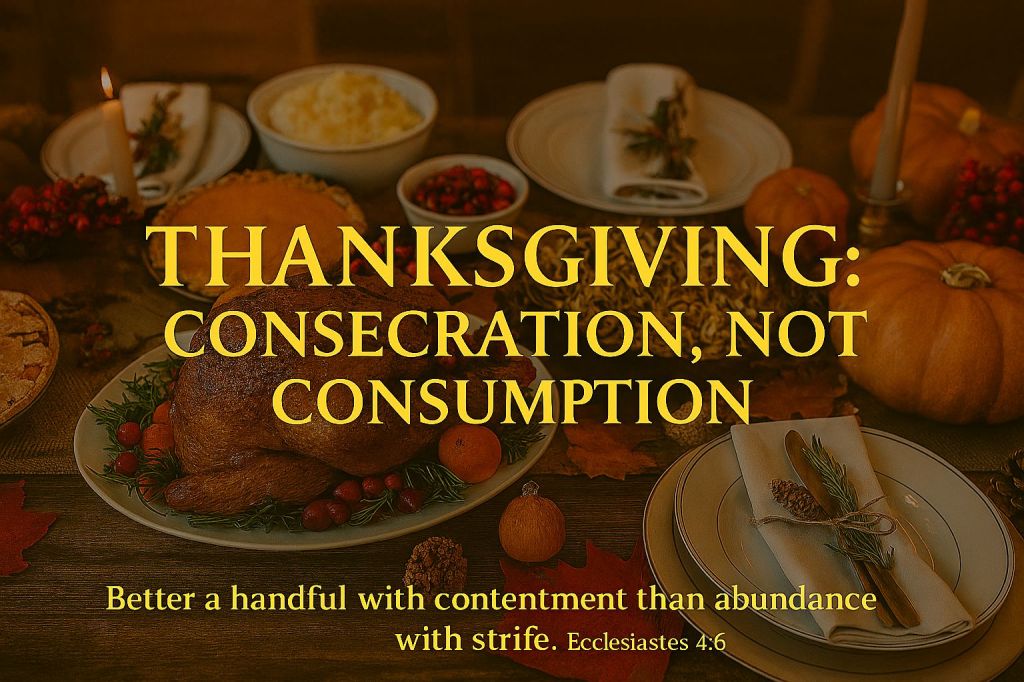
🌾 The Forgotten Feast
Thanksgiving in America has become a spectacle of excess—oversized turkeys, crowded tables, and competitive pie-making. But the original feast at Plymouth Rock was not about indulgence. It was about survival. It was about consecration.
In November 1620, the Pilgrims arrived in New England battered by storms and burdened by hope. They landed late in the season, with little time to prepare for winter. Disease, exposure, and starvation swept through the colony. By spring, nearly half had perished.
Their early experiment in communal living—mandated by their charter—required shared labor and shared harvest. It was a form of enforced equality. But instead of unity, it bred resentment and idleness. Governor William Bradford recorded that this system “was found to breed much confusion and discontent.” Young men balked at laboring for others’ families without reward. Productivity collapsed. Hunger deepened.
In 1623, Bradford made a bold change. He divided the land into private plots, allowing each family to plant and reap for themselves. The results were immediate. “This had very good success,” he wrote, “for it made all hands very industrious.” The colony flourished. The harvest came. And the Pilgrims gave thanks—not for abundance, but for survival.
📖 Scripture’s Model for Gratitude
The Pilgrims’ story echoes timeless biblical truths:
“Give thanks in all circumstances; for this is the will of God in Christ Jesus for you.” (1 Thessalonians 5:18)
“Whoever works his land will have plenty of bread.” (Proverbs 12:11)
“Whatever one sows, that will he also reap.” (Galatians 6:7)
“If anyone is not willing to work, let him not eat.” (2 Thessalonians 3:10)
And perhaps most fitting of all:
“Better a handful with contentment than abundance with strife.” (Ecclesiastes 4:6)
This verse pierces through the noise of modern Thanksgiving. It reminds us that peace and gratitude in simplicity are far richer than anxiety in excess.
⚖️ A Warning for Our Time
Today, we see an ever-expanding version of Bradford’s failed experiment. Promises of equality without responsibility have produced not abundance but poverty. Dependency has replaced diligence. Complaints about the cost of a Thanksgiving meal drown out gratitude for the little we have.
History warns us: when government replaces God as provider, bondage follows. When entitlement replaces stewardship, harvests shrink. When gratitude is lost, pride takes root.
The Pilgrims endured loss, yet they gave thanks. We endure abundance, yet we complain. This is the danger of complacency: forgetting the heights from which we have fallen.
🔔 A Pastoral Admonition
Beloved, Thanksgiving is not about who can host the biggest feast, carve the largest turkey, or bake the most pies. It is about a heart that has found contentment in what the Lord has provided. It is about gratitude in little or much.
Let us return Thanksgiving to its rightful place:
A daily rhythm of gratitude, morning and evening.
A national remembrance that every breath is mercy.
A consecrated altar where families pause to pray, repent, and give thanks for another year of life.
Let the Church lead the way. Let us honor God above government, stewardship above entitlement, and gratitude above complaint. For when we return to Him in thanksgiving, we will find not only provision for today but the promise of abundance in eternity.
“Blessed are those who are invited to the marriage supper of the Lamb.” (Revelation 19:9)
Now that’s a Thanksgiving meal I pray I get invited to!
Discover more from A View from the Nest
Subscribe to get the latest posts sent to your email.
